

Gen Z may become the most entrepreneurial generation in history. Discover why digital skills, side hustles, and values are shaping their future as business leaders.
Gen Z is redefining what it means to be an entrepreneur. With unmatched digital fluency, social impact values, and access to low-barrier startup tools, they are blending innovation with activism. Unlike previous generations, Gen Z embraces side hustles, crowdfunding, and AI-driven tools to create businesses at younger ages. These trends suggest they may indeed become the most entrepreneurial generation ever.
A Generation Wired for Entrepreneurship
Every generation has left its mark on the business world. Baby boomers built industries, Gen X quietly scaled corporate ladders, and millennials launched Silicon Valley startups that disrupted traditional sectors. But now, Gen Z—those born between 1997 and 2012—are rewriting the entrepreneurial playbook.
Why? Because they are not just inheriting the future—they are building it earlier, faster, and differently than any generation before them. Gen Z has grown up in a world shaped by the internet, global crises, and economic instability. This unique backdrop has given them both the tools and the motivation to pursue entrepreneurship in record numbers.
According to EY’s Gen Z Entrepreneur Survey (2023), nearly 45% of Gen Zers want to start their own business. That’s a staggering statistic, especially considering many of them are still in high school or college. For comparison, only 32% of millennials had such ambitions at the same stage in life.
But the real question remains: Will Gen Z truly become the most entrepreneurial generation ever? Let’s dig deeper.
1. Why Is Gen Z Considered the Most Entrepreneurial Generation?
Unlike previous generations who viewed entrepreneurship as risky or something pursued later in life, Gen Z embraces it as a default career path. Several reasons fuel this mindset:
- Digital-Native Advantage – They grew up with smartphones, social media, and AI tools. Launching a Shopify store or building a TikTok audience feels as natural as writing a résumé.
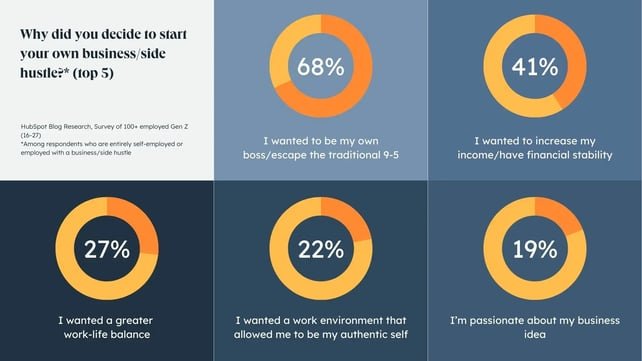
- Economic Necessity – They’ve seen millennials burdened with student debt, stagnant wages, and layoffs. Entrepreneurship represents financial freedom and security.
- Side Hustle Normalization – For Gen Z, side hustles are not just extra income—they’re steppingstones to independence.
- Value-Driven Mindset – Gen Z prioritizes businesses that align with sustainability, inclusivity, and social change.
Example: Emma Chamberlain, who started as a YouTube creator, leveraged her personal brand into Chamberlain Coffee, a multimillion-dollar business that represents Gen Z’s blend of authenticity and entrepreneurship.
2. How Does Gen Z Differ From Previous Generations in Entrepreneurship?
Each generation approaches entrepreneurship differently:
- Baby Boomers focused on brick-and-mortar businesses—restaurants, retail, and real estate.
- Millennials pioneered the digital startup era with companies like Uber, Airbnb, and Instagram.
- Gen Z, however, combines the best of both worlds: digital-first ventures that scale into real-world impact.
Case Study Examples:
- Ben Pasternak launched a viral app called Monkey at just 15 years old, proving how early Gen Zers are entering the startup world.
- Mikaila Ulmer, founder of Me & The Bees Lemonade, began at age 11 and now sells in major U.S. supermarkets.
- Kheris Rogers, creator of the fashion brand Flexin’ In My Complexion, started her company at 10 to combat bullying and empower diversity.
These examples showcase not just entrepreneurship, but entrepreneurship with purpose, which is unique to Gen Z.
3. What Industries Are Gen Z Entrepreneurs Disrupting?
Gen Z is not limited to a single industry. They’re diversifying across multiple spaces, often with tech-first and socially conscious approaches.
Key Industries Gen Z Is Reshaping:
- Creator Economy – Platforms like YouTube, Twitch, and TikTok have created micro-entrepreneurs who monetize personal brands.
- E-commerce & Dropshipping – Online stores on Shopify and Etsy allow teens to sell products without major capital.
- Tech & AI Startups – Building SaaS platforms, AI-driven apps, and no-code tools.
- Sustainable Products – Resale apps like Depop thrive because Gen Z values eco-conscious shopping.
- Finance & Crypto – Gen Z experiments with digital currencies, fintech startups, and decentralized finance models.
Example: Depop, a resale app heavily driven by Gen Z users, has turned second-hand fashion into a $600 million industry that reflects their values of sustainability and affordability.
4. How Do Economic Conditions Push Gen Z Into Entrepreneurship?
Gen Z didn’t grow up in economic stability—they grew up in crisis after crisis. From the 2008 recession to the COVID-19 pandemic, they’ve seen firsthand how fragile job markets can be.
This has shaped their “why” for entrepreneurship:
- Student debt crisis still looms large, even though Gen Z borrows slightly less than millennials.
- Job insecurity due to automation and AI replacing traditional roles.
- Rising cost of living, making multiple income streams essential.
Data Point: According to McKinsey’s 2024 Future of Work Report, 65% of Gen Z prefers flexible and independent work compared to just 48% of millennials. Entrepreneurship gives them that flexibility.
5. What Role Does Technology Play in Gen Z Entrepreneurship?
Technology is the secret weapon of Gen Z entrepreneurship.
- AI & Automation Tools – Platforms like ChatGPT, MidJourney, and Zapier allow them to run businesses solo that once required entire teams.
- Social Media Marketing – TikTok virality can make a product sell out overnight.
- E-commerce Platforms – Shopify, Amazon, and Etsy remove the need for costly physical stores.
- Low-Code/No-Code Apps – Gen Z can create websites, apps, or even AI bots without programming backgrounds.
Example: TikTok creator Addison Rae built her influencer brand into multiple businesses, including her beauty line Item Beauty, highlighting how digital-first entrepreneurship scales fast.
6. What Challenges Do Gen Z Entrepreneurs Face?
While optimism is high, Gen Z faces real barriers:
- Access to Capital – Young founders often lack credit history or collateral for loans.
- Market Saturation – Low barriers to entry mean intense competition in popular niches.
- Burnout & Mental Health – Side hustle culture often leads to overwork.
- Credibility Issues – Investors or customers may doubt very young founders.
Study Insight: A 2023 Harvard Business Review report found that 62% of Gen Z entrepreneurs experience burnout within their first year. This signals the importance of mental health resources.
7. How Do Gen Z Entrepreneurs Fund Their Startups?
Funding is one of Gen Z’s biggest hurdles, but they’ve found creative alternatives to banks:
- Crowdfunding Platforms like Kickstarter and GoFundMe.
- Angel Investors increasingly attracted to youth-led innovation.
- Pre-Orders via Social Media where TikTok or Instagram campaigns fund initial production.
- Bootstrapping by freelancing, gig work, or reselling.
Example: Omar Raja, founder of House of Highlights, started by building a massive Instagram following before monetizing through sponsorships and selling to Bleacher Report.
8. How Do Gen Z Balance Side Hustles With School or Jobs?
Many Gen Z entrepreneurs begin with side hustles while still in college or part-time work. These aren’t just hobbies—they’re launchpads for full-time businesses.
- A college student reselling thrift store finds on Depop can earn thousands monthly.
- High schoolers can run TikTok shops while studying.
- Some even use AI tools to automate customer service while in class.
LinkedIn’s Workplace Learning Report (2024) found that 65% of Gen Z believes skills are more important than degrees, fueling their shift toward entrepreneurship instead of traditional career paths.
9. FAQs: Trending Questions About Gen Z Entrepreneurs
1. Will Gen Z surpass millennials in entrepreneurship?
Yes. With early exposure to tech and a stronger drive for independence, Gen Z is already outpacing millennials in entrepreneurial ambitions.
2. Why is Gen Z obsessed with side hustles?
Side hustles provide independence, additional income, and a low-risk way to test business ideas before going full-time.
3. What percentage of Gen Z wants to be entrepreneurs?
Surveys suggest between 45–55% of Gen Z aspires to start a business—higher than millennials or Gen X at comparable ages.
4. What types of businesses are Gen Z most drawn to?
Popular sectors include e-commerce, content creation, sustainability-driven products, and fintech innovation.
5. How does Gen Z use social media differently in business?
They prioritize authenticity and storytelling over polished advertising, using TikTok and Instagram for viral growth.
6. What is the role of AI in Gen Z businesses?
AI accelerates efficiency, automates tasks, and allows solo founders to operate at a scale that once required teams.
7. Do Gen Z entrepreneurs value profit over purpose?
Not necessarily. Many balance both, prioritizing impact-driven entrepreneurship alongside financial success.
8. What barriers limit Gen Z founders?
Capital, competition, and credibility are major hurdles. Many turn to crowdfunding and social-first branding to overcome them.
9. At what age do most Gen Z entrepreneurs start?
Many begin in high school or college, launching businesses as young as 12–15 years old.
10. Will Gen Z build sustainable businesses that last?
Yes—while some ventures may start as experiments, many like Me & The Bees Lemonade prove they can scale sustainably.
10. Practical Advice for Aspiring Gen Z Entrepreneurs
If you’re a Gen Z aspiring entrepreneur, here’s how to start strong:
- Begin small and test ideas quickly before scaling.
- Use affordable digital tools (Canva, Shopify, AI tools) to minimize expenses.
- Build your personal brand online—it’s your most powerful asset.
- Avoid overworking—schedule downtime to prevent burnout.
- Join online Gen Z founder communities (Reddit, Discord, LinkedIn).
Key Takeaways
- Gen Z is positioned to become the most entrepreneurial generation in history.
- They leverage digital fluency, side hustles, and social media in ways past generations couldn’t.
- Real-world examples prove their ability to turn ideas into multimillion-dollar brands.
- Challenges like funding and burnout remain, but alternative financing and community support provide solutions.
- Their businesses are not just profit-driven—they embody authenticity, social impact, and inclusivity.