

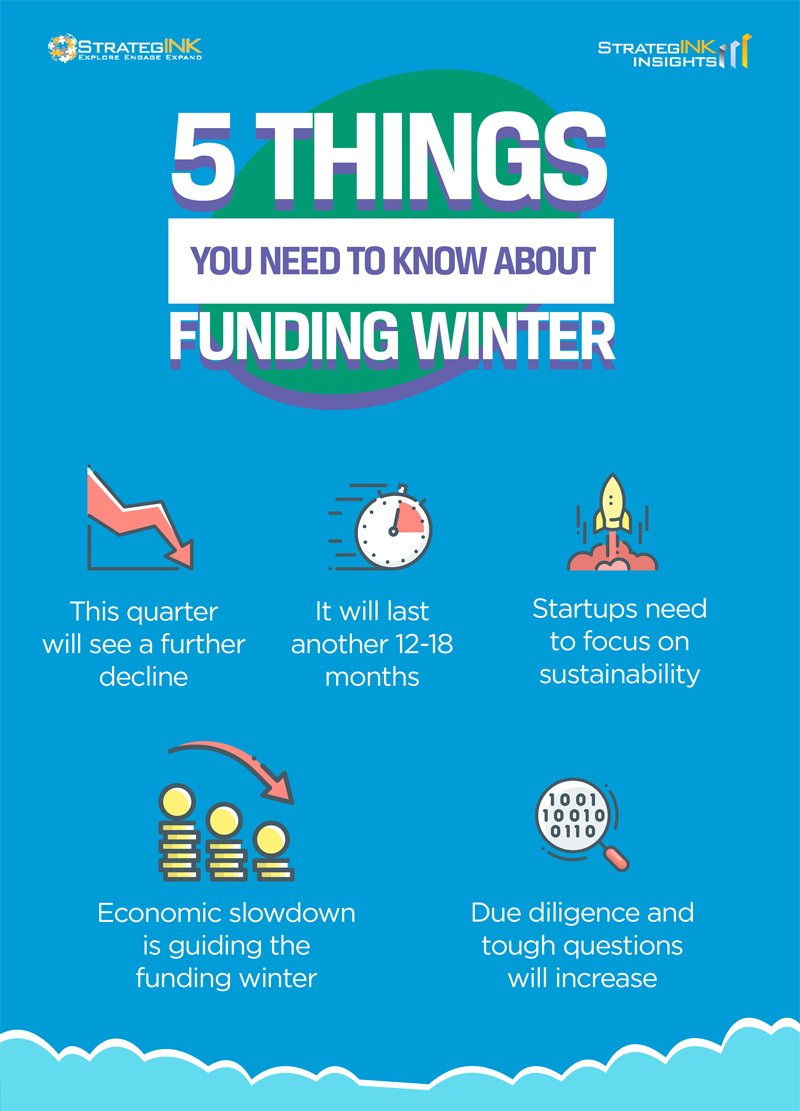
Could U.S. startups face a funding winter in 2025? Explore 7 signs, real-life examples, data insights, FAQs, and founder strategies to survive. Discover which sectors are at risk, how AI is changing funding, and practical advice to navigate tighter capital markets.
In early and mid-2025, U.S. startup funding has surged—largely driven by AI mega-deals—yet warning signs like VC fundraising slowdowns, compressed valuations, investor risk aversion, and macroeconomic headwinds point to a possible funding winter (a contraction in startup capital). Founders who adapt to efficiency, traction, and sustainable growth are best positioned to weather it.
Could U.S. Startups Face a Funding Winter in 2025?
The term “funding winter” is back in conversations across Silicon Valley, Wall Street, and startup ecosystems in 2025. Founders, investors, and analysts are asking: will the cash keep flowing, or is another dry season approaching?
In this in-depth article, we’ll examine data trends, real-life examples, sector-specific risks, and strategies for survival. We’ll also answer top trending questions Americans are asking right now about startup capital.
What is a “Funding Winter” and Why Are People Asking Now?
A “funding winter” (sometimes called a VC winter) describes a period when:
- Venture capital slows
- Valuations drop
- Terms tighten
- Many startups shut down or struggle to raise
These winters often follow periods of hype and overspending, as happened after the Dot-Com Crash (2000) or during the 2022-2023 downturn.
Now, in 2025, despite record AI funding, investor caution, macroeconomic pressures, and venture capital fundraising weakness suggest trouble may lie ahead.
What Does the Data Say So Far?
The numbers reveal a dual narrative: record strength on one side, red flags on the other.
| Signal | Signs of Strength | Warning Signs |
|---|---|---|
| Total Funding | U.S. startup funding in H1 2025 rose 75.6% YoY to $162.8B, fueled by AI mega-deals. (Reuters) | Early-stage rounds shrinking; seed valuations under pressure. |
| Investor Behavior | Big startups like Anduril secured multi-billion dollar rounds ($2.5B). | Fewer VC firms are raising fresh funds; H1 2025 saw only $26.6B raised across 238 funds, a 33.7% drop YoY. |
| Valuations | High-growth AI/defense valuations remain lofty. | Down-rounds and stricter terms outside “hot” sectors. |
| Macro Pressures | Exit activity (M&A) improving. | High interest rates, inflation, tariffs, and global uncertainty create headwinds. |
Why This Matters to Founders
For startup founders, the question is not abstract. A funding winter can:
- Cut off lifelines for companies dependent on external capital
- Force down valuations, diluting founder stakes
- Shift investor focus from growth to profitability and runway
- Trigger consolidation, layoffs, or shutdowns
Knowing the signs helps founders prepare and pivot before it’s too late.
7 Signs a Funding Winter Could Hit U.S. Startups in 2025
- Venture Capital Funds Are Struggling to Raise Money
While startups are still raising billions, VC firms themselves are bringing in less capital. This shrinking pool could dry up future funding pipelines. - Seed Stage Rounds Are Tightening
Median seed rounds hover around $6-7M, but many fall below expectations. Startups are asked for more traction earlier. - Concentration of Capital in AI & Defense
Billions flow into AI infrastructure and defense-tech, but consumer apps and speculative ventures face neglect. - Macro Headwinds (Rates, Inflation, Trade)
Higher borrowing costs, rising inflation, and geopolitical instability make investors cautious. - Valuation Compression Outside AI
Terms are tightening; more down-rounds are appearing. Non-AI founders face valuation cuts. - Startups Shutting Down at Higher Rates
In 2024, 966 startups shut down among Carta users, up from 769 in 2023. 2025 could see even more. - Exit Markets Still Fragile
IPOs are sluggish. While M&A is rising, it hasn’t yet absorbed the pressure of delayed exits.
FAQs: Questions Americans Are Asking About Startup Funding in 2025
1. Is startup funding decreasing in 2025?
Not across the board. While total dollar volumes are high thanks to AI mega-deals, many startups outside AI are raising less, later, and on worse terms.
2. Which sectors are most at risk?
- Consumer tech (apps, social media, marketplaces)
- Biotech and deep-tech (long R&D cycles)
- Startups with high burn rates or no clear revenue model
3. Can AI investments prevent a full funding winter?
AI is propping up the numbers, but creates an illusion of overall strength. If AI enthusiasm falters, the downturn could spread quickly.
4. How are valuations behaving?
- AI and defense valuations remain strong
- Consumer and early-stage valuations are compressed
- Investors demand proof of profitability and defensibility
5. Will fewer startups get funding or just smaller rounds?
Both. Expect:
- Fewer startups funded
- Smaller seed/pre-seed rounds
- Larger late-stage rounds concentrated in AI/defense
6. Are geographic patterns shifting?
Yes. Coastal hubs (Bay Area, NYC, Boston) dominate late-stage deals. But lower-cost regions like Austin, Miami, and parts of the Midwest attract leaner startups seeking longer runways.
7. How are macro factors affecting startups?
High interest rates, trade uncertainty, and inflation raise costs and reduce risk appetite. Investors prefer near-term revenue over speculative bets.
8. Which companies illustrate resilience vs. risk?
- Resilience: Anduril ($2.5B raise in Q2 2025) — defense + AI synergy
- Resilience: Thinking Machines Labs ($12B valuation) — top AI talent
- Risk: Many seed startups struggling to raise >$2-3M
- Losers: Rising number of shutdowns in 2024–25
9. What’s happening to VC funds themselves?
VC firms raised $26.6B across 238 funds in H1 2025, down 33.7% YoY. Less dry powder = fewer deals ahead.
10. How long could a funding winter last?
Historically, winters last 12–24 months. If AI stays strong, this one may be shorter or sector-specific. If macro shocks worsen, it could extend into 2026.
Why Some Analysts Say “No” to a Severe Winter
Not everyone is bearish. Arguments against a harsh winter:
- AI & defense are too strong to collapse quickly
- M&A activity is rebounding, softening risk
- Tougher funding may weed out weaker startups, leaving healthier survivors
Practical Advice for Founders
If you’re a founder, here’s how to survive and thrive:
- Extend runway: Aim for 18–24 months cash
- Control burn: Cut vanity projects, focus on essentials
- Show traction: User retention, ARR, contracts
- Build defensibility: IP, data, network effects
- Explore alternatives: Revenue-based financing, angels, government grants
- Negotiate terms wisely: Avoid excessive dilution
- Plan exit strategies: IPO is tough; consider M&A
- Maintain transparency: Build investor trust with honest updates
Possible Scenarios for 2025–2026
| Scenario | Triggers | Impact |
|---|---|---|
| Mild Winter | Rates stabilize, AI hype continues | Early-stage pain, later-stage insulated |
| Severe Winter | Global recession + AI bust | Broad collapse, 18–30 months pain |
| Localized Winter | Sector-specific downturns | Consumer tech/biotech hit, AI thrives |
Conclusion: Key Takeaways
- A funding winter is possible in 2025, especially in early-stage and consumer sectors.
- AI and defense startups are relatively safe havens, but over-concentration is risky.
- Founders who focus on traction, runway, and defensibility will survive.
- VC firms raising less money is the clearest warning sign of a future squeeze.