

Women founders are shaping the AI startup boom with groundbreaking ventures, record funding, and new innovations. Explore trends, examples, challenges, and future opportunities for female entrepreneurs in AI.
Women entrepreneurs are increasingly influential in the AI startup boom, though gaps remain in funding and leadership. In 2023, over 50% of U.S. AI investment went to startups with at least one female founder, yet women-only teams still face barriers. From Lucy Guo’s Scale AI to Aditi Avasthi’s Embibe, women are shaping AI’s future. This blog explores data, examples, challenges, and the road ahead.
Artificial Intelligence is no longer a futuristic concept—it is already shaping healthcare, education, finance, media, and creative industries. The AI startup boom is one of the defining features of the 2020s, with billions of dollars flowing into companies building generative AI, machine learning tools, data infrastructure, and ethical AI solutions.
But an important question is rising in search engines, boardrooms, and media: Are women entrepreneurs leading the AI startup boom?
This isn’t just about highlighting role models—it’s about understanding if structural barriers are shifting, whether women are seizing leadership positions, and what it means for the future of technology. In this blog, we’ll dive into the latest data, showcase real examples, highlight the unique challenges women face, and provide practical advice for the next generation of women founders.
What the Data Really Says
Women’s Share of AI Funding
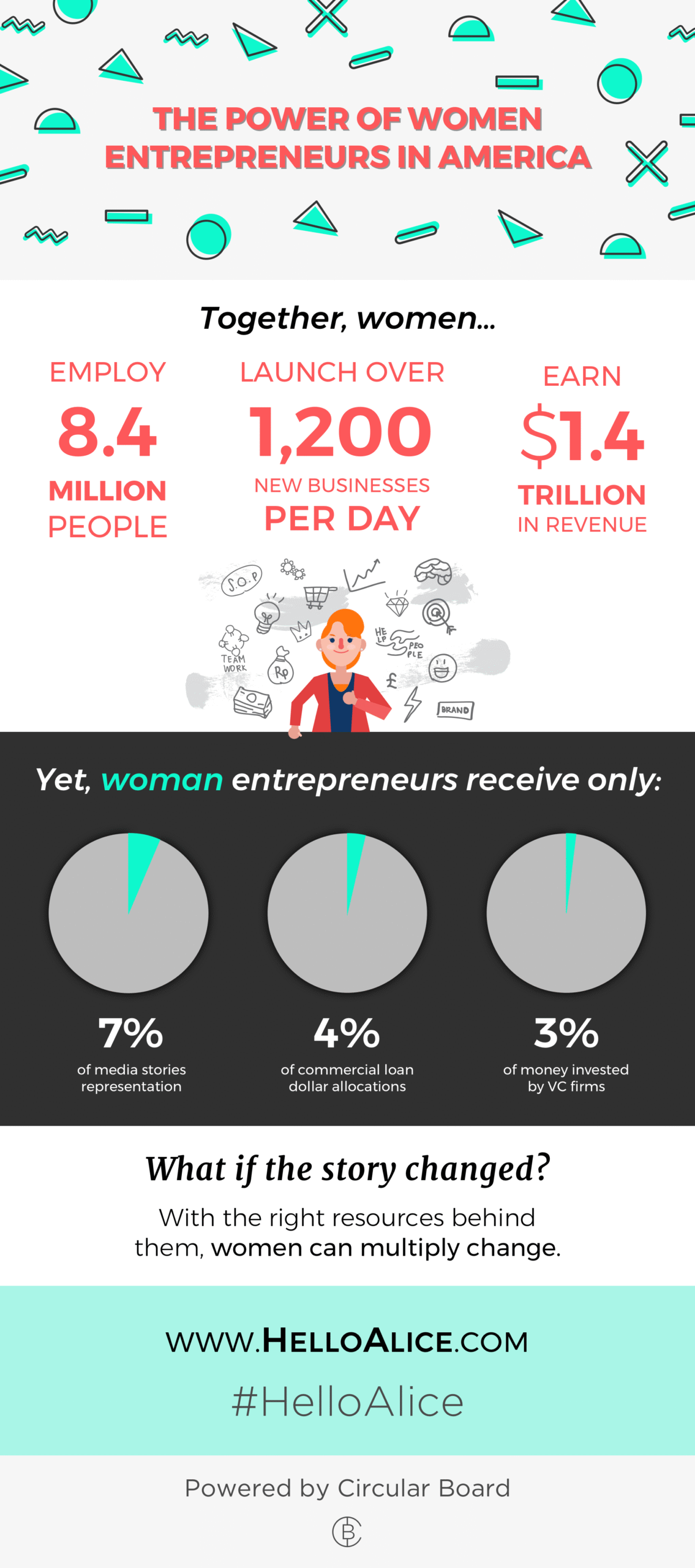
Crunchbase reported in 2023 that over 50% of AI startup investments in the U.S. went to firms with at least one female founder. That equates to more than $21 billion spread across 360+ deals. At first glance, that sounds like women are dominating AI funding—but the reality is nuanced.
- Startups with at least one female founder attract significant investment.
- But women-only teams receive a fraction of global VC dollars—just 2.3% in 2024, according to Women in VC’s 2025 global report.
- Mixed-gender teams, especially those including prominent male co-founders, account for much of the large deals.
This means women are present at the table, but not always leading alone.
Representation in AI Leadership
Globally, women account for just 15% of startup founders in tech, and AI is no exception. In corporate settings, about 25–30% of tech roles are filled by women, but fewer are in engineering and machine learning leadership.
The talent gap trickles into entrepreneurship. Fewer women in deep technical roles means fewer women founding AI-first companies. This pipeline challenge remains a bottleneck.
Adoption of Generative AI by Gender
Deloitte’s 2024 study found:
- 44% of U.S. men were using generative AI tools.
- 33% of U.S. women reported the same.
Though women lag slightly in adoption, the gap is narrowing, particularly in professional settings like marketing, HR, and healthcare—areas where women founders are building AI startups.
Real-Life Examples of Women Leading in AI
Lucy Guo – Scale AI
Lucy Guo, co-founder of Scale AI, has become a symbol of female success in AI. Scale provides the data infrastructure needed to train large AI models. In 2025, Lucy was recognized as the youngest self-made female billionaire, highlighting how women can lead critical infrastructure companies, not just niche applications.
Her success illustrates a powerful message: women can sit at the heart of the AI revolution.
Female Co-founders at OpenAI and Anthropic
Two of the biggest names in generative AI—OpenAI and Anthropic—were co-founded with women in leadership roles. Their multibillion-dollar funding rounds in 2023 significantly tilted statistics toward companies with female founders.
While these organizations still have predominantly male leadership teams, the presence of female co-founders at such scale demonstrates visibility and influence.
Emerging AI Founders in Europe
Europe is also witnessing a wave of women-led AI startups:
- Emma Burrows (Portia AI, UK) – Building AI solutions for enterprise training.
- Doinstruct & Gradient Labs – Women co-founders are raising significant capital at early stages.
These companies show that female AI founders are not only U.S.-centric but shaping the global landscape.
Aditi Avasthi – Embibe (India)
In India, Aditi Avasthi founded Embibe, an AI-powered education platform that personalizes learning for millions of students. Embibe has become a major edtech player, proving that women can lead AI innovations in emerging markets.
The Challenges Women Still Face
Despite progress, women entrepreneurs in AI still confront systemic barriers.
- Funding Bias: Investors often trust male technical founders more. Women-only teams face skepticism over scalability.
- Networking Gaps: Many venture capital circles remain male-dominated, limiting access for women.
- Technical Representation: Fewer women in machine learning research pipelines leads to credibility hurdles.
- Mentorship Scarcity: Fewer role models make it harder for aspiring founders to see themselves in leadership.
- Scaling Struggles: Even when women secure seed funding, Series B and C funding disproportionately flows to male-led startups.
Are Women Leading or Participating in the AI Boom?
It depends on the lens:
- Leading in visibility: High-profile founders like Lucy Guo and Aditi Avasthi are household names in tech media.
- Leading in impact niches: Women dominate in areas like healthtech, edtech, and ethical AI.
- Leading in co-founder roles: Many mixed-gender teams include women in significant co-founding positions.
But:
- Lagging in volume: Only 15% of AI founders are women.
- Lagging in exits: Major IPOs and acquisitions are still overwhelmingly male-led.
Thus, women are partly leading—they are shaping the direction of AI but haven’t yet achieved equal representation.
FAQs (Optimized for Search & Rank Math Schema)
Below are trending, long-answer FAQs structured for SEO.
1. What percentage of AI startups have female founders?
In the U.S., about 20% of AI startups involve a female founder. Crunchbase data shows that in 2023, over half of investment dollars in AI went to startups with at least one woman founder. However, globally, women-only founding teams received just 2.3% of all venture funding.
2. Do women-founded AI startups get less funding?
Yes. Studies show that even when women secure funding, the check sizes are smaller. Women-only teams raise significantly less capital at Series B and C compared to mixed or male-led teams. This “funding cliff” makes it harder for women-led startups to scale globally.
3. What are examples of women-founded AI startups?
Notable startups include:
- Scale AI (Lucy Guo) – AI data infrastructure.
- OpenAI & Anthropic – With female co-founders.
- Portia AI (Emma Burrows) – Enterprise training.
- Embibe (Aditi Avasthi) – Education AI in India.
4. What sectors see the most women AI founders?
Women are most visible in:
- Education AI – Personalized learning platforms.
- Healthcare AI – Diagnostics and telemedicine tools.
- Ethical AI – Tools ensuring fairness and bias mitigation.
- Creative AI – Applications in design and content generation.
5. What challenges do women face in AI entrepreneurship?
- Persistent gender bias in funding.
- Limited access to mentorship networks.
- Underrepresentation in technical leadership roles.
- Pressure to prove technical credibility repeatedly.
- Difficulty scaling after initial traction.
6. Are investors showing more interest in women-led AI startups?
Yes, gradually. Fortune’s 2025 Female Founder Survey showed 56% of women-only founding teams see more opportunities due to AI. Some venture firms now allocate diversity-focused funds. But systemic inequality in check sizes remains.
7. How does women’s role in AI look globally?
- Europe: Early-stage female founders like Emma Burrows are emerging.
- India: Aditi Avasthi (Embibe) leads one of Asia’s biggest edtech firms.
- Africa: Women are spearheading AI in fintech and agriculture.
8. Do women-led AI startups perform differently?
Evidence suggests women-led startups often prioritize social impact sectors (education, healthcare, fairness in AI). While returns may be slightly smaller in financial terms, the impact metrics are significantly higher, making them attractive for impact investors.
9. What skills help women succeed in AI entrepreneurship?
- Strong technical knowledge or trusted technical co-founders.
- Deep domain expertise in healthcare, finance, or education.
- Ability to communicate AI clearly to non-technical stakeholders.
- Access to accelerators, incubators, and mentors.
10. Will women dominate AI leadership in the future?
Not immediately. Structural barriers mean parity will take years. But the trend is positive—each year, more women are entering AI entrepreneurship, more funds are committed to diversity, and media visibility is growing. By 2030, it is plausible that women could hold 30–40% of AI founder roles.
Practical Advice for Women AI Founders
- Build strong technical partnerships. If you’re not an engineer, co-found with one.
- Focus on niches. AI in healthcare, edtech, and ethics often aligns with women’s expertise and investor interest.
- Leverage diversity programs. Join female founder accelerators and AI fellowships.
- Communicate ethics and fairness. Positioning your startup as trustworthy AI builds investor confidence.
- Find aligned investors. Seek out funds explicitly supporting women-led startups.
- Tell your story. Narratives resonate with media and investors—don’t downplay your journey.
Conclusion
So—are women entrepreneurs leading the AI startup boom?
The answer is yes, in visibility, impact, and influence—but not yet in volume or funding parity. From Lucy Guo’s billion-dollar valuation to Aditi Avasthi’s edtech revolution, women are rewriting the AI narrative. At the same time, structural inequities remain, especially in late-stage funding and exits.
The future, however, is brighter. Each new cohort of women entering AI entrepreneurship strengthens the pipeline, inspires new leaders, and pushes the ecosystem toward equity. With continued support, visibility, and investment, women won’t just participate in the AI boom—they’ll define it.