

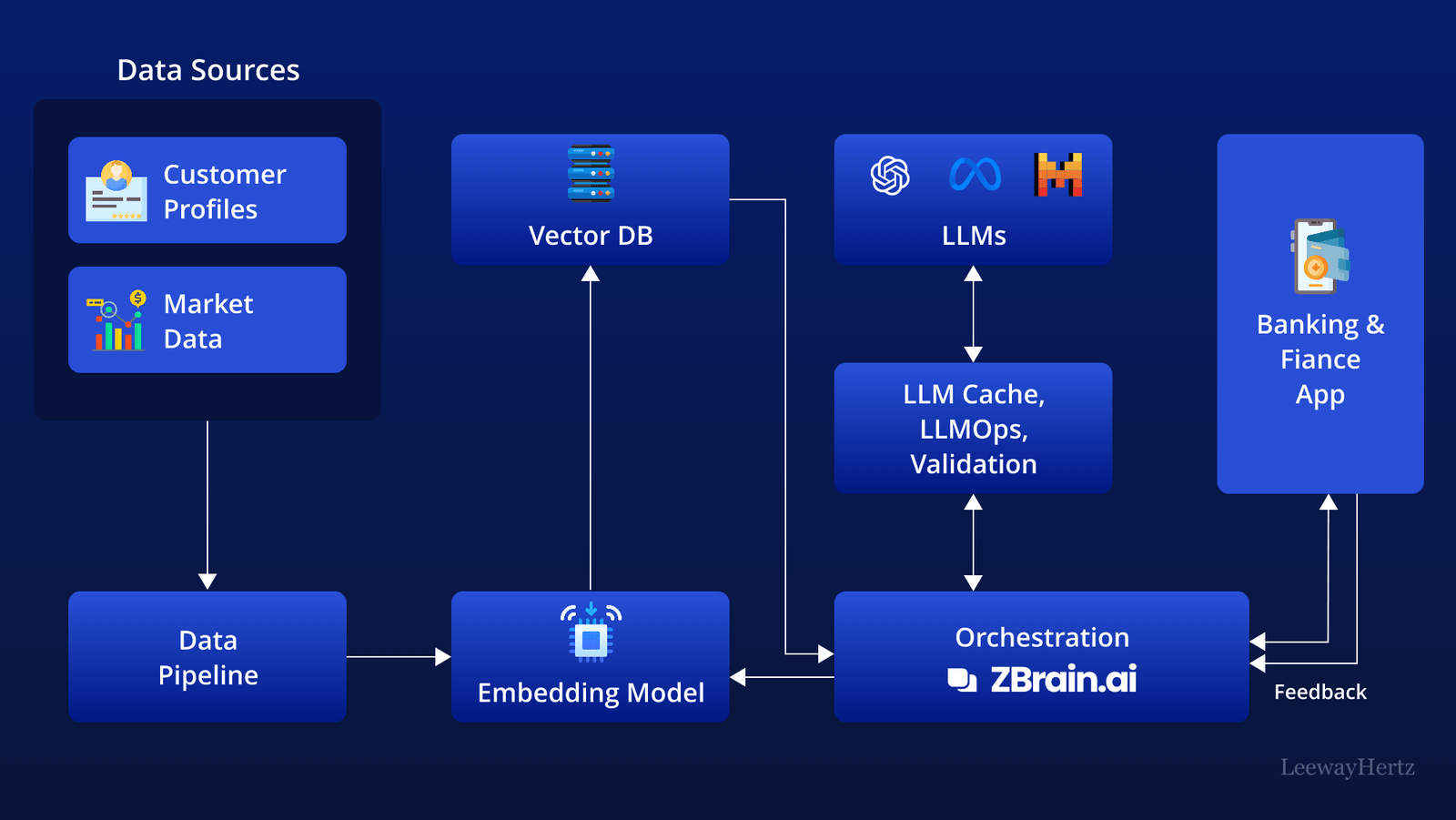
Discover how AI-powered blockchains are reshaping financial security with fraud prevention, compliance automation, and immutable audit trails. Explore real-life examples, FAQs, and 9 powerful strategies for the future of finance.
AI-powered blockchains combine artificial intelligence with decentralized ledger technology to enhance financial security. This powerful fusion enables real-time fraud detection, immutable audit trails, privacy-protecting protocols, and smarter regulatory compliance. By integrating AI models with blockchain’s decentralized trust, financial institutions can better reduce risks, prevent fraud, and defend against evolving cyber threats while increasing transparency.
The financial sector is at a crossroads. Cybercriminals are growing more sophisticated, fraud is increasingly digital, and traditional security methods are struggling to keep pace. At the same time, consumers demand faster, more transparent, and more secure services.
This is where AI-powered blockchains step in. Artificial Intelligence (AI) brings advanced data analysis and prediction, while blockchain technology provides immutable, decentralized, and transparent ledgers. Together, they form a next-generation security framework that financial institutions are rapidly exploring.
But can these two technologies truly transform financial security? Let’s dive deep into the facts, real-world examples, opportunities, and challenges.
What Exactly Is an AI-Powered Blockchain?
To avoid confusion, here are some definitions:
- Blockchain / DLT (Distributed Ledger Technology): A decentralized ledger of transactions that is secure, immutable, and often managed via consensus across multiple participants.
- Artificial Intelligence (AI): Machine learning, deep learning, and advanced analytics systems capable of pattern detection, anomaly identification, predictions, and decision support.
- AI-Powered Blockchain: A system where AI tools are integrated into blockchain workflows, providing advanced security, fraud detection, regulatory oversight, and adaptive smart contracts.
Think of blockchain as the trustworthy “memory” of financial activity, and AI as the “brain” analyzing that memory in real time to ensure safety.
Why Financial Security Needs AI + Blockchain Now
Market Data and Industry Adoption
- The global blockchain market in financial services is projected to hit US$22.46 billion by 2026 with a CAGR of ~43.7%.
- Around 81% of global financial institutions are actively testing or deploying blockchain.
- AI-driven fraud detection is expected to cut fraud losses by up to 40% by 2025.
- 85% of banks and financial service providers plan to use AI for credit risk and fraud management.
- Yet nearly 45% of firms reported AI-enabled cyberattacks, including deepfakes and data manipulation.
Clearly, threats are growing, but so is investment in solutions that combine AI and blockchain.
Real-World Examples of AI + Blockchain in Finance
1. Fraud Detection & Prevention
- Case Study: JPMorgan’s Onyx blockchain platform enables secure interbank transactions. Coupled with AI anomaly detection, it monitors real-time payment flows for suspicious activity.
- Impact: Prevents fraudulent transactions before they clear, saving millions in potential losses.
2. Immutable Audit Trails & Traceability
- Case Study: The London Stock Exchange Group (LSEG) recently completed a blockchain-based fundraising transaction with full issuance-to-settlement traceability.
- Impact: AI analyzes the audit trail for anomalies, improving regulator and investor trust.
3. Privacy and Data Protection
- AI and blockchain are being combined with zero-knowledge proofs so banks can verify customer identity or creditworthiness without exposing personal data.
- Impact: Preserves customer privacy while ensuring compliance.
4. Smart Contracts & Automated Compliance
- Smart contracts can automatically enforce rules in lending or payments. When paired with AI, they can add adaptive checks (e.g., flagging a high-risk borrower before releasing funds).
- Impact: Ensures compliance with KYC/AML rules at scale.
5. Cross-Border Regulatory Trust
- Research on blockchain-enabled cross-border compliance frameworks shows how international regulators could share immutable compliance data. AI then automates checks in real time.
- Impact: Faster, cheaper compliance across jurisdictions.
Challenges and Risks of AI-Powered Blockchains
Even promising technology comes with hurdles.
| Challenge | Description | Possible Solution |
|---|---|---|
| Smart Contract Bugs | Vulnerabilities in code can cause irreversible losses. | AI-powered contract audits, formal verification. |
| Scalability Issues | Public blockchains can be slow and costly. | Hybrid blockchains, Layer-2 scaling. |
| AI Bias | Poor training data may skew results. | Explainable AI, diverse datasets. |
| Privacy vs Transparency | Blockchain is open; finance needs privacy. | Zero-knowledge proofs, permissioned ledgers. |
| Legal Uncertainty | Smart contract enforceability varies. | Regulatory engagement, compliance frameworks. |
| Costs | High infrastructure and talent costs. | Pilot programs, fintech partnerships. |
Key Questions Americans Are Asking
1. Can AI-powered blockchains stop fraud more effectively?
Yes. AI models detect fraud in real time, while blockchain ensures data cannot be tampered with. Deloitte’s research shows the duo enhances payment security.
2. Does blockchain compromise privacy when combined with AI?
No—if designed correctly. Permissioned blockchains plus cryptographic tools like zero-knowledge proofs protect sensitive data while keeping systems auditable.
3. What are the U.S. regulatory hurdles?
- Digital asset laws (FIT21).
- State privacy laws (e.g., California CCPA).
- Cybersecurity rules (NYDFS AI risk guidance).
- Smart contract liability issues.
4. Can small banks adopt this tech?
Yes. Credit unions can adopt pilot programs for lending or compliance using cloud-based blockchain services. Costs are reduced through partnerships and consortium networks.
5. Which is better: permissioned or public blockchains?
- Public blockchains: open, transparent, decentralized, but slower.
- Permissioned blockchains: restricted access, faster, more compliant with regulation.
Most financial institutions prefer permissioned networks.
6. How does this help with compliance & auditing?
AI runs compliance checks automatically, while blockchain ensures the audit trail cannot be altered. Regulators gain confidence in immutable data.
7. What threats remain even with AI + blockchain?
- Deepfake scams.
- Insider attacks.
- Smart contract bugs.
- Adversarial AI attacks.
8. Will this save money for banks?
Yes. Blockchain reduces reconciliation costs, while AI lowers fraud losses. However, initial setup costs can be high. ROI depends on scale.
9. How fast will this transform U.S. financial security?
Incrementally. First in fraud detection and payments, later in broader applications like lending, cross-border finance, and auditing.
10. Are there ethical risks?
Yes. Risks include AI bias, lack of explainability, data misuse, and environmental impact from certain blockchain protocols.
9 Powerful Implementation Strategies
- Decentralized Identity & Biometric Verification
- AI-Enhanced Smart Contracts
- Predictive Fraud Monitoring Systems
- Automated Regulatory Reporting
- Cross-Institution Data Sharing Consortia
- Privacy-Preserving Computation Techniques
- AI-Based Smart Contract Auditing
- Threat Intelligence & Response Systems
- Tokenization of Assets with Built-in Security
Each of these represents a step-by-step path financial institutions can adopt today.
Case Studies
- Figure Technology Solutions (U.S.): Uses blockchain to manage loans and tokenized assets, reducing operational friction.
- London Stock Exchange Group: Blockchain-enabled private fundraising platform offering transparency, traceability, and compliance assurance.
Practical Advice for Organizations
- Engage regulators early to ensure compliance.
- Invest in explainable AI for transparency.
- Train staff in AI + blockchain literacy.
- Use consortium networks to reduce infrastructure costs.
- Communicate clearly with customers to build trust.
Future Outlook: 2030 and Beyond
By 2030, we may see:
- Real-time fraud detection embedded in every financial transaction.
- Immutable global audit trails for cross-border transactions.
- Privacy-protecting ID systems enabling customers to control their data.
- AI-verified compliance frameworks enforced via blockchain.
Financial security could become both faster and more trustworthy.
Conclusion
AI-powered blockchains are not science fiction. They are already being piloted by major banks, stock exchanges, and fintech innovators. Their ability to prevent fraud, secure compliance, and deliver transparency could revolutionize financial security in the U.S. and globally.