

“Explore the latest developments on the Child Tax Credit expansion in 2025. Learn about eligibility, application processes, and how it impacts American families.”
The Child Tax Credit (CTC) has been a pivotal component of U.S. tax policy, providing financial relief to families with children. In 2021, the American Rescue Plan temporarily expanded the CTC, increasing the credit amount and making it fully refundable. However, as of 2025, the credit has reverted to its pre-pandemic structure, prompting discussions about its future.
What Is the Child Tax Credit?
The CTC is a federal tax benefit aimed at assisting families in offsetting the costs of raising children. For the 2025 tax year, the CTC is worth up to $2,200 per qualifying child. The credit is partially refundable, meaning families may receive a refund if the credit exceeds their tax liability. The refundable portion, known as the Additional Child Tax Credit (ACTC), is worth up to $1,700 per qualifying child. jacksonhewitt.com
The 2021 Expansion: A Temporary Increase
In 2021, the American Rescue Plan temporarily increased the CTC to $3,600 for children under age 6 and $3,000 for children ages 6 to 17. This expansion aimed to provide immediate financial relief to families during the COVID-19 pandemic. The expansion was fully refundable, allowing families with little or no income to benefit. Additionally, the credit was paid out monthly, providing consistent support throughout the year.
The 2025 Reversion: Returning to Pre-Pandemic Levels
As of 2025, the CTC has reverted to its pre-pandemic structure. The credit amount is set at $2,200 per child, with a maximum refundable amount of $1,700. Eligibility has been tightened, with both parents in a household required to have a work-eligible Social Security number to claim the credit. These changes have raised concerns about the adequacy of the CTC in supporting families, particularly those with low incomes. Kiplinger
State-Level Expansions: A Patchwork of Policies
While the federal government has reverted to the pre-pandemic CTC structure, several states have implemented their own expansions to provide additional support to families.
New York
Governor Kathy Hochul proposed a sweeping expansion of the state’s Child Tax Credit, aiming to deliver up to $1,000 per child to families earning up to $200,000. This proposal is expected to support more than 2.75 million children across the state.
Colorado
Colorado lawmakers passed the Family Affordability Tax Credit, which builds on the state’s existing CTC. In 2024, qualifying families were eligible for an additional $3,200 per child under age 6 and $2,400 per child ages 6 through 16, in addition to the state’s Child Tax Credit.
Georgia
The Georgia Senate unanimously approved Senate Bill 89, initiating the creation of a state child tax credit. The bill provides a tax credit of up to $250 for children under age 7 and enhances existing child care tax credits, allowing parents to receive an additional $300 per child. Employers investing in on-site child care centers will also benefit from a larger tax credit. AP News
The Debate: Should the CTC Be Permanently Expanded?
The reversion of the CTC to its pre-pandemic structure has sparked a renewed debate about the adequacy of the credit and the need for permanent expansion.
Arguments for Expansion
Proponents of expansion argue that the CTC plays a crucial role in reducing child poverty and supporting working families. They point to the success of the 2021 expansion in reducing poverty rates and advocate for making the increased credit amounts permanent. For instance, Senator Michael Bennet introduced the American Family Act, which proposed increasing the CTC to $6,360 for newborns, $4,320 for children ages 1 to 6, and $3,600 for children ages 6 to 17, and making the credit fully refundable. Senator Bennet
Arguments Against Expansion
Opponents of expansion express concerns about the cost of permanently increasing the CTC and the potential impact on the federal budget. They argue that while the CTC is an important tool for supporting families, its expansion should be carefully considered to ensure fiscal responsibility.
Real-Life Impact: Stories from Families
To understand the real-life impact of the CTC, consider the experiences of the Johnson family from Denver, Colorado. With two young children, the Johnsons benefited from the state’s expanded CTC, receiving additional funds that helped cover childcare costs and other essential expenses. However, with the federal CTC reverting to its pre-pandemic amount, the family faces increased financial strain.
Similarly, the Martinez family in New York City is awaiting the implementation of the state’s proposed CTC expansion. With three children under age 6, the additional $1,000 per child would provide significant relief, helping to cover housing and educational expenses.
Frequently Asked Questions (FAQs)
1. What is the current amount of the federal Child Tax Credit?
As of 2025, the federal Child Tax Credit is $2,200 per child, with a maximum refundable amount of $1,700.
2. Are there any states that have expanded the Child Tax Credit?
Yes, several states, including New York, Colorado, and Georgia, have implemented their own expansions to provide additional support to families.
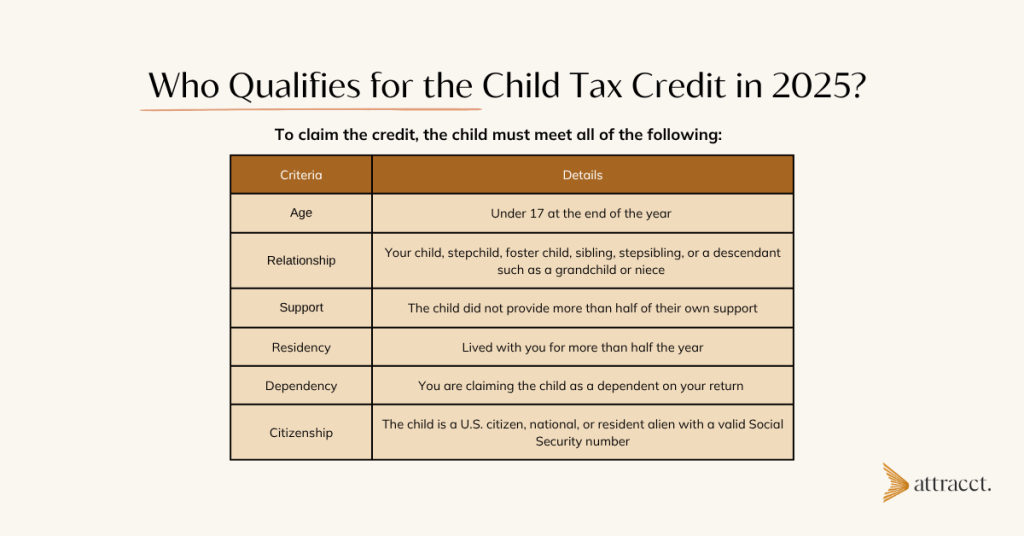
3. What are the eligibility requirements for the Child Tax Credit?
To qualify for the full amount of the Child Tax Credit, your annual income must not exceed $200,000 ($400,000 if filing a joint return). Additionally, both parents in a household must have a work-eligible Social Security number to claim the credit. Kiplinger
4. How can I apply for the Child Tax Credit?
The Child Tax Credit is claimed when you file your federal income tax return.
5. Will the Child Tax Credit amount increase in the future?
There are ongoing discussions in Congress about permanently expanding the Child Tax Credit, but no changes have been implemented as of 2025.
Conclusion
The Child Tax Credit has undergone significant changes in recent years, with temporary expansions providing increased financial support to families. However, as of 2025, the credit has reverted to its pre-pandemic structure, raising concerns about its adequacy in supporting families, particularly those with low incomes. While some states have implemented their own expansions, the debate continues at the federal level about the need for permanent expansion of the credit.