

Digital assets have evolved from a niche technological experiment into a recognized asset class in the United States. Financial institutions, regulators, and individual investors are increasingly evaluating how blockchain-based assets fit into modern portfolios. This article explores how digital assets gained legitimacy, what’s driving institutional adoption, and how everyday investors can approach this rapidly developing segment responsibly.
Understanding Digital Assets in Today’s Financial Environment
Digital assets refer to value that exists in digital form and is secured using technologies such as blockchain. The category includes cryptocurrencies, tokenized assets, stablecoins, and other blockchain-based financial instruments.
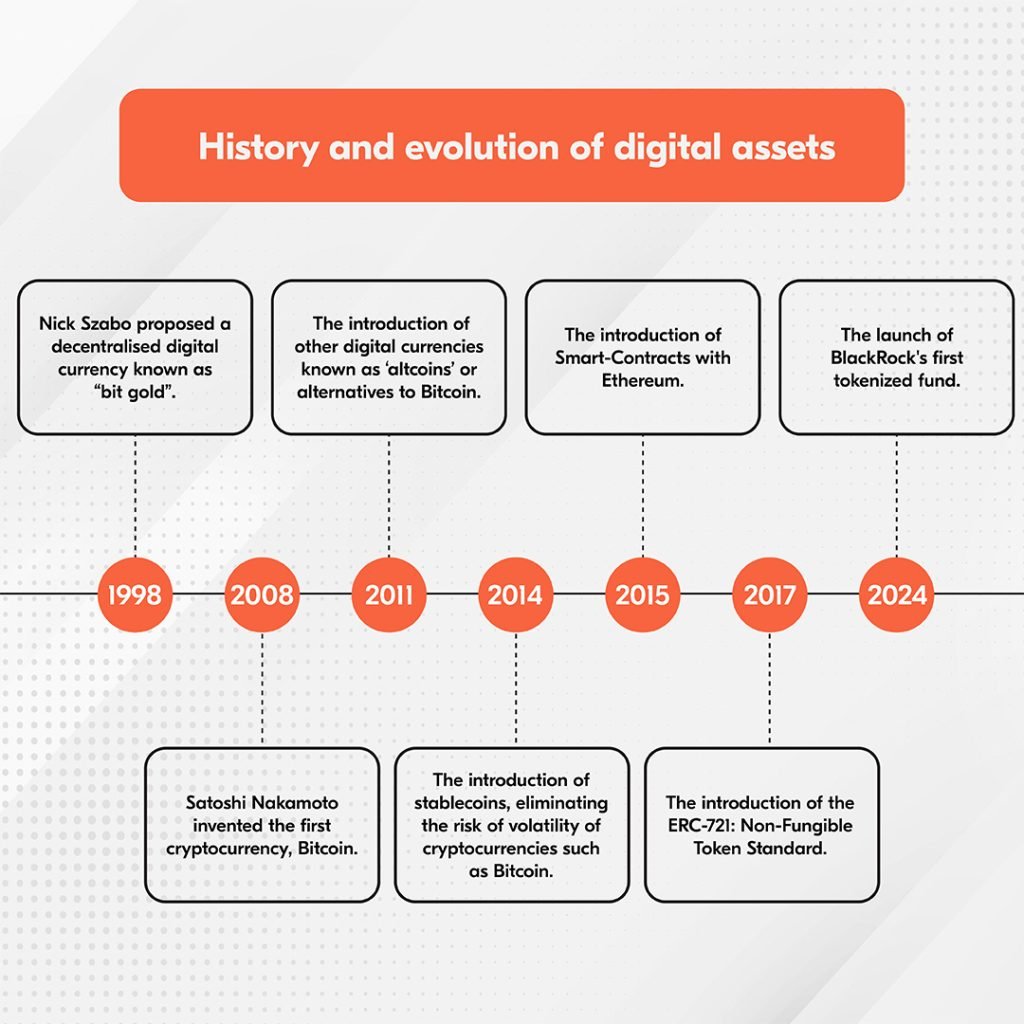
The earliest and most widely known example is Bitcoin, introduced in 2009. Over time, additional platforms such as Ethereum expanded what digital assets could represent, enabling decentralized applications, tokenized ownership, and automated financial contracts.
For years, digital assets were largely discussed within technology circles. However, the U.S. financial industry has gradually shifted its perspective. Major investment firms, pension funds, and asset managers now analyze digital assets alongside equities, commodities, and bonds.
This change reflects a broader trend: financial markets often absorb new technologies over time, eventually turning experimentation into structured investment opportunities.
How Digital Assets Moved Into the Mainstream
Digital assets did not become an asset class overnight. Their development followed a multi-stage evolution.
Early adoption focused primarily on technology enthusiasts and independent developers. Over the following decade, several factors helped digital assets gain wider attention:
- Growth of blockchain infrastructure
- Increasing institutional research coverage
- Development of regulated investment products
- Expansion of global crypto exchanges
- Improvements in custody and security solutions
The launch of spot exchange-traded funds tied to cryptocurrencies marked a particularly important moment in the United States. When the U.S. Securities and Exchange Commission approved spot Bitcoin ETFs in 2024, institutional investors gained a more familiar pathway to exposure.
Large asset managers, including BlackRock and Fidelity Investments, began offering digital asset products to clients through traditional financial channels.
The shift signaled that digital assets were no longer confined to early adopters. Instead, they were entering the broader financial system.
Institutional Interest and Market Legitimacy
Institutional adoption is one of the strongest indicators that digital assets are maturing as a financial asset class.
Investment institutions operate under strict regulatory frameworks and risk management standards. Their involvement often reflects growing confidence in market structure, custody solutions, and liquidity.
According to research from PwC and Deloitte, institutional interest in digital assets has increased steadily since 2021. Surveys show that many asset managers now view digital assets as a potential portfolio diversifier.
Institutions are approaching the market carefully. Their strategies generally focus on:
- Portfolio diversification rather than speculation
- Long-term investment horizons
- Strict risk management practices
- Regulated investment vehicles
- Custodial solutions designed for institutional security
This disciplined approach contrasts with the more speculative behavior that characterized early crypto markets.
Why Analysts Consider Digital Assets a New Asset Class
Financial analysts typically define an asset class based on characteristics such as return drivers, liquidity profile, and correlation with other investments.
Digital assets are increasingly evaluated within this framework.
Several attributes differentiate them from traditional investments:
Independent market drivers
Digital assets respond to technological development, network adoption, and regulatory changes rather than corporate earnings or interest rates.
Growing liquidity
Major exchanges and trading platforms now support deep liquidity across multiple digital assets, enabling institutional participation.
Low historical correlation
Some studies suggest digital assets have shown periods of lower correlation with traditional assets such as stocks and bonds, although this relationship can shift during market stress.
Global accessibility
Digital assets operate on decentralized networks, allowing investors worldwide to participate without geographic limitations.
These characteristics have led analysts to consider digital assets as a distinct category within diversified portfolios.
Regulatory Developments Shaping the U.S. Market
Regulation has been one of the most influential forces shaping the digital asset industry in the United States.
Multiple federal agencies oversee different aspects of the ecosystem:
- U.S. Securities and Exchange Commission
- Commodity Futures Trading Commission
- Financial Crimes Enforcement Network
Each agency addresses a different dimension of the market, including securities classification, derivatives oversight, and anti-money-laundering compliance.
While regulatory clarity is still evolving, recent developments suggest a gradual shift toward more defined rules. Clearer guidelines could encourage broader institutional participation by reducing legal uncertainty.
For investors, regulation matters because it influences:
- Market transparency
- Investor protections
- Financial reporting standards
- Custody requirements
These factors help determine how comfortable traditional financial institutions feel participating in the digital asset ecosystem.
Tokenization: Expanding the Meaning of Digital Ownership
One of the most significant developments in digital finance is tokenization.
Tokenization involves converting ownership of real-world assets into blockchain-based tokens. These tokens can represent a wide variety of assets, including:
- Real estate
- Private equity
- Bonds
- Commodities
- Intellectual property
In practical terms, tokenization could make certain investments more accessible by enabling fractional ownership.
For example, a commercial property valued at $20 million could theoretically be divided into thousands of digital tokens representing partial ownership. Investors could buy smaller positions rather than purchasing entire properties.
Several major financial institutions are experimenting with tokenized securities as part of broader blockchain initiatives.
Portfolio Diversification and Digital Assets
For investors, one of the most common questions is whether digital assets belong in a diversified portfolio.
Financial advisors generally emphasize that digital assets should be approached cautiously. Their volatility remains significantly higher than that of most traditional investments.
However, some portfolio strategies include small allocations to digital assets as a way to explore diversification.
When analysts discuss allocation strategies, they typically emphasize:
- Small portfolio exposure relative to traditional assets
- Long-term investment horizons
- Risk tolerance considerations
- Careful asset selection
The exact allocation varies widely depending on an investor’s goals and financial situation.
Security, Custody, and Risk Management
Security has been a central concern since the earliest days of cryptocurrency.
Institutional investors rely on specialized custodial services designed to safeguard digital assets. These services often include:
- Multi-signature authentication systems
- Cold storage wallets
- Insurance coverage
- Regulatory compliance frameworks
Firms such as Coinbase and BitGo provide institutional custody services that meet the operational requirements of large investors.
For individual investors, secure storage remains equally important. Hardware wallets, reputable exchanges, and two-factor authentication are commonly recommended safeguards.
What Individual Investors Can Learn from Institutional Strategies
Although individual investors do not operate on the same scale as large institutions, they can still learn from institutional investment approaches.
Several principles stand out:
Research before investing
Institutions conduct extensive analysis before allocating capital. Individual investors can adopt the same mindset by understanding asset fundamentals and market structure.
Focus on long-term perspectives
Institutional strategies often emphasize multi-year investment horizons rather than short-term trading.
Diversify exposure
Institutions rarely concentrate their entire portfolios in a single asset. Balanced diversification remains a core investment principle.
Evaluate risk carefully
Digital assets remain volatile. Investors should assess how potential losses could affect their overall financial plans.
Adopting these practices can help individuals approach digital assets with greater discipline.
Frequently Asked Questions
What are digital assets in simple terms?
Digital assets are financial or economic resources that exist electronically and are secured through technologies such as blockchain. Examples include cryptocurrencies, tokenized securities, and stablecoins.
Why are digital assets considered a new asset class?
Analysts classify digital assets as a new asset class because they have unique return drivers, global market access, and technological foundations that differ from traditional investments like stocks or bonds.
Are digital assets regulated in the United States?
Yes, multiple agencies oversee different aspects of the market, including the SEC, CFTC, and FinCEN. Regulation continues to evolve as the industry matures.
How do institutions invest in digital assets?
Institutions often gain exposure through regulated investment products such as exchange-traded funds, digital asset funds, or direct holdings managed through institutional custody services.
What risks are associated with digital assets?
Risks include market volatility, regulatory changes, cybersecurity threats, and evolving technological standards.
Do financial advisors recommend digital assets?
Some advisors consider small allocations for diversification, but recommendations depend heavily on an investor’s financial goals and risk tolerance.
What is tokenization in finance?
Tokenization converts ownership of real-world assets into digital tokens on a blockchain, allowing fractional ownership and potentially improved market accessibility.
Can digital assets replace traditional investments?
Most analysts believe digital assets will complement rather than replace traditional asset classes in diversified portfolios.
Are digital assets suitable for long-term investing?
Some investors view them as long-term opportunities tied to technological adoption, but their volatility requires careful risk management.
What should beginners learn before investing?
New investors should understand blockchain fundamentals, security practices, regulatory frameworks, and portfolio diversification principles.
A Financial Technology Transition Still in Progress
The evolution of digital assets illustrates how new technologies gradually integrate into established financial systems. What began as a decentralized experiment now occupies a growing space within global finance.
Financial institutions, regulators, and investors are still defining how digital assets will function within the broader economy. The process will likely continue for years as technology, regulation, and market practices mature.
For individual investors, the key lesson is not simply about adopting new investments—it is about understanding how innovation reshapes financial infrastructure over time.
Digital assets represent one example of this broader transformation.
Key Insights at a Glance
- Digital assets have evolved from experimental technology to a recognized financial asset class
- Institutional investors are increasingly researching and allocating small portions of portfolios to digital assets
- Regulatory frameworks in the United States continue to develop
- Tokenization may expand digital ownership to real-world assets
- Security and custody solutions remain essential for investor protection
- Long-term investment strategies typically emphasize cautious portfolio allocation
 Julia
Julia