

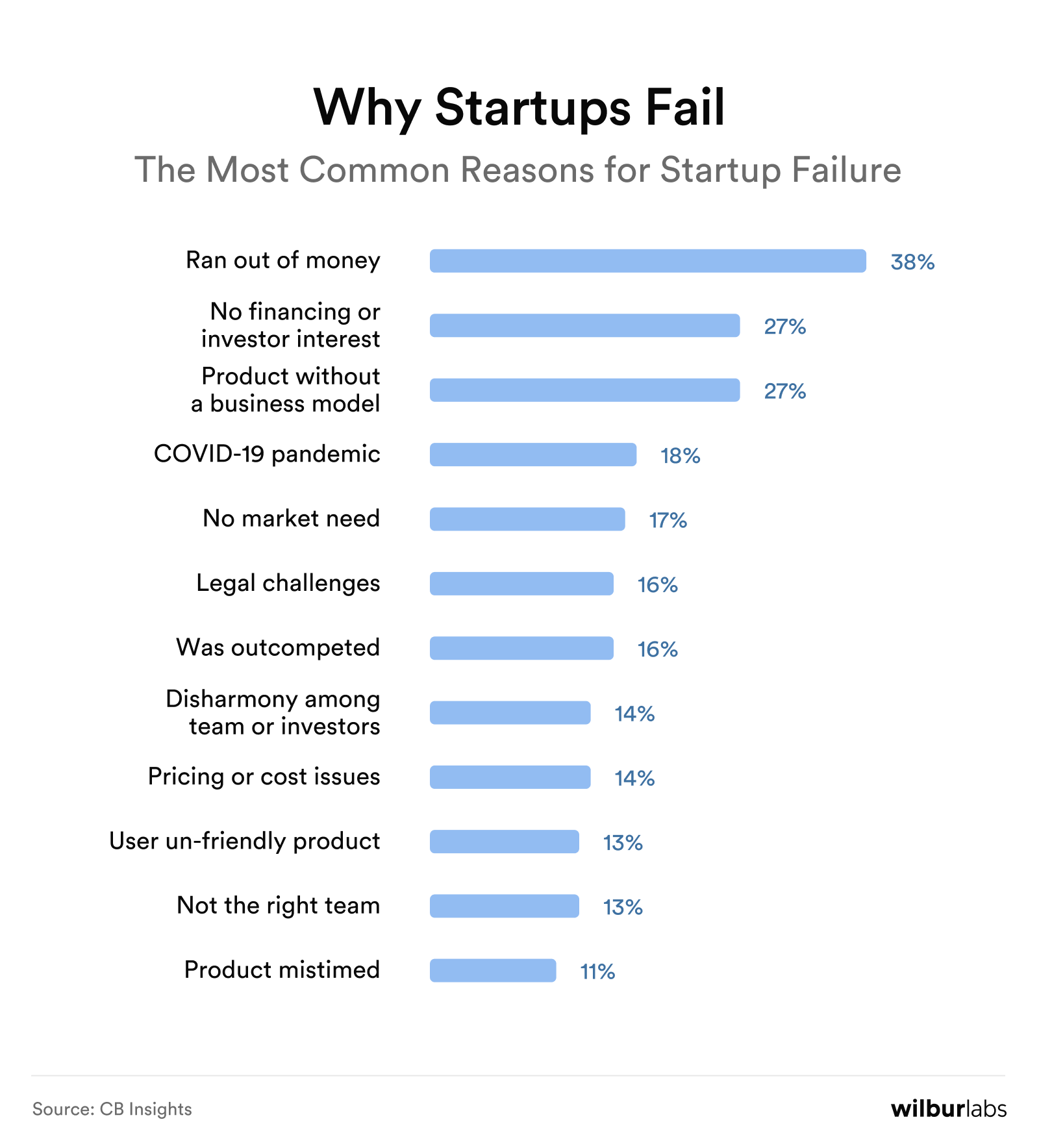
Startup growth rarely follows a predictable path. While some companies expand rapidly, others plateau despite promising ideas. Research and founder experience suggest that factors such as product-market fit, disciplined execution, customer focus, and financial strategy often determine whether a startup scales successfully. America’s new generation of founders is increasingly focused on sustainable growth rather than expansion alone.
The Startup Growth Puzzle
Every year thousands of startups launch across the United States, yet only a small percentage achieve significant growth. According to data from the U.S. Bureau of Labor Statistics, roughly 20% of new businesses fail within the first year, and nearly half do not survive beyond five years.
But failure statistics tell only part of the story.
Many startups do not collapse entirely—they simply stall. Revenue growth slows, customer acquisition plateaus, and expansion becomes difficult despite initial enthusiasm.
Meanwhile, other companies scale steadily, adding customers, employees, and revenue each year.
Understanding why this difference occurs has become a central focus for modern founders. The newest generation of entrepreneurs is studying not just how to launch companies, but how to build organizations capable of sustainable growth.
The Role of Product-Market Fit
One of the most widely discussed factors in startup success is product-market fit—a concept popularized by venture capitalist Marc Andreessen.
Product-market fit occurs when a company’s product clearly solves a meaningful problem for a specific group of customers.
When product-market fit is strong, several patterns usually appear:
- Customers adopt the product quickly
- Retention rates remain high
- Word-of-mouth referrals increase
- Sales become easier and more predictable
Startups that stall often struggle because this alignment has not yet been achieved.
Instead of solving a pressing problem, the product may address a minor inconvenience or target a market that is too small to sustain growth.
Modern founders increasingly focus on validating product-market fit before attempting large-scale expansion.
Customer Understanding Often Determines Early Growth
Another major difference between scaling startups and stalled ones is how deeply founders understand their customers.
Companies that grow successfully typically invest significant effort into understanding:
- Customer pain points
- Buying behavior
- Industry challenges
- Existing alternatives
This insight allows founders to build products that directly address real-world needs.
For example, a startup developing software for small accounting firms might initially conduct interviews with dozens of accountants to understand daily workflow frustrations.
Those insights help the company design features that genuinely improve productivity.
By contrast, startups that build products without this feedback often struggle to attract sustained demand.
Why Timing Matters in Startup Growth
Even strong ideas can stall if they enter the market at the wrong time.
Startup history includes many examples of companies that launched innovative concepts before the market was ready.
Technology adoption, regulatory environments, and consumer behavior all influence whether a product can scale.
Consider how cloud computing transformed the software industry.
Before cloud infrastructure became widely available, many software products required expensive installation and maintenance. Once cloud services matured, startups could deliver software through subscription platforms accessible from any browser.
This shift dramatically expanded opportunities for software companies.
Modern founders increasingly evaluate market timing carefully before committing large resources to new ventures.
Execution Often Matters More Than the Idea
In early startup discussions, ideas often receive the most attention. Yet many experienced founders emphasize that execution ultimately determines success.
Execution includes the daily decisions that shape how a company operates.
Key areas include:
- Product development speed
- Customer support quality
- Hiring decisions
- marketing strategy
- financial management
Two companies may start with similar ideas, but the one with stronger operational discipline often outperforms the other.
A startup that listens closely to customers, releases improvements quickly, and manages resources carefully can gradually outpace competitors.
The Financial Discipline Behind Sustainable Growth
Another factor separating scaling startups from stalled ones is financial discipline.
Some startups attempt rapid expansion before establishing stable revenue. Hiring large teams and increasing marketing spending can accelerate growth—but only if demand is strong enough to sustain those investments.
Companies that scale successfully often manage finances carefully during early stages.
Common practices include:
- Monitoring cash flow closely
- Hiring gradually as revenue grows
- Maintaining lean operational costs
- Testing marketing channels before increasing spending
This approach allows startups to grow without becoming overly dependent on outside funding.
Many founders today emphasize bootstrapping, or building companies primarily through revenue rather than venture capital.
While venture funding can accelerate growth, it also introduces pressure for rapid expansion that not every business model supports.
Founder Adaptability Is Often the Deciding Factor
Startups operate in environments where uncertainty is constant. Markets evolve, technologies change, and customer expectations shift.
In this environment, adaptability becomes a crucial skill for founders.
Entrepreneurs who succeed at scaling companies often demonstrate several behaviors:
- Willingness to revise product strategies
- Openness to customer feedback
- Ability to pivot when markets change
- Continuous learning from mistakes
A startup may begin targeting one type of customer and later discover that another group finds the product more valuable.
Founders who recognize these patterns early can redirect their strategy before growth stalls.
Building the Right Team at the Right Time
Team structure also plays a significant role in startup growth.
In the earliest stages, small teams often move quickly and communicate efficiently. As companies grow, hiring becomes necessary—but expanding too quickly can introduce complexity.
Startups that scale successfully typically follow a deliberate hiring strategy.
Common characteristics include:
- Hiring individuals with broad skill sets in early stages
- Prioritizing cultural alignment and collaboration
- Expanding specialized roles gradually
- Building leadership capacity as the company grows
A well-structured team allows founders to focus on strategic decisions while operational responsibilities are distributed effectively.
Market Focus Helps Avoid Early Stagnation
Another lesson from successful startups is the importance of focusing on a specific market segment before expanding broadly.
New companies sometimes attempt to serve too many customers at once.
However, focusing on a well-defined audience often leads to stronger traction.
For example:
A startup creating project-management software might initially target architecture firms rather than attempting to serve all professional services.
This narrow focus allows the company to build specialized features that provide clear value.
Once the product becomes widely adopted within that niche, expansion into other industries becomes easier.
Growth Metrics That Reveal Whether a Startup Is Scaling
Modern founders increasingly rely on data to understand whether their companies are truly scaling.
Several metrics provide early signals about business health:
- Customer acquisition cost (CAC)
- Customer lifetime value (LTV)
- Monthly recurring revenue (MRR)
- Customer retention rates
- Revenue growth rate
When these indicators remain stable or improve over time, startups typically have a strong foundation for expansion.
If metrics deteriorate, founders may need to revisit product design, pricing strategies, or marketing channels.
Data helps replace assumptions with evidence, allowing entrepreneurs to make more informed decisions.
The New Generation of Founders Is Rethinking Growth
In recent years, many founders have begun questioning the traditional “growth at all costs” philosophy that once dominated startup culture.
Instead, a growing number of entrepreneurs emphasize sustainable growth.
This mindset includes:
- Building profitable business models earlier
- Prioritizing customer value over rapid expansion
- Maintaining manageable operational complexity
- Creating companies designed for long-term resilience
These businesses may grow more gradually than venture-funded startups, but they often develop stronger foundations.
For many founders, success now means building companies that can endure—not simply scale quickly.
Frequently Asked Questions
1. Why do many startups fail to scale?
Startups often stall because they lack product-market fit, underestimate customer needs, or attempt to grow before building sustainable revenue.
2. What is product-market fit?
Product-market fit occurs when a product successfully solves a meaningful problem for a specific group of customers.
3. How long does it take for a startup to scale?
There is no universal timeline. Some companies grow quickly, while others require several years to refine their products and markets.
4. Do all successful startups receive venture capital?
No. Many profitable companies grow through revenue rather than external funding.
5. What industries currently show strong startup growth in the U.S.?
Technology services, healthcare innovation, digital education, financial technology, and sustainability sectors are currently active areas.
6. How important is the founding team?
Team composition strongly influences execution quality, which plays a major role in startup growth.
7. What role does marketing play in scaling a startup?
Effective marketing helps startups reach customers efficiently and maintain consistent demand.
8. Can startups pivot if their initial idea fails?
Yes. Many successful companies changed their products or markets after discovering better opportunities.
9. How do founders know when a startup is ready to scale?
Indicators include strong customer retention, steady revenue growth, and clear product-market fit.
10. Are sustainable startups more resilient than high-growth startups?
In many cases, sustainable startups face less financial pressure and can adapt more gradually to market changes.
A Founder’s Perspective on What Growth Really Means
The difference between startups that scale and those that stall rarely comes down to a single factor. Instead, growth emerges from the interaction of product design, customer understanding, financial discipline, and strategic execution.
America’s new generation of founders increasingly recognizes that scaling a company requires more than a promising idea. It requires patience, careful experimentation, and a willingness to learn continuously from customers and markets.
Startups that embrace these principles often discover that sustainable growth—built step by step—can be far more durable than rapid expansion driven by assumptions alone.
Key Insights From Modern Startup Growth Patterns
- Product-market fit is often the most critical factor in startup growth
- Deep customer understanding improves product design and adoption
- Financial discipline helps startups avoid premature expansion
- Adaptability allows founders to respond to changing markets
- Focused niche markets often provide the best early traction
- Data-driven decision-making improves long-term scalability
 Julia
Julia