

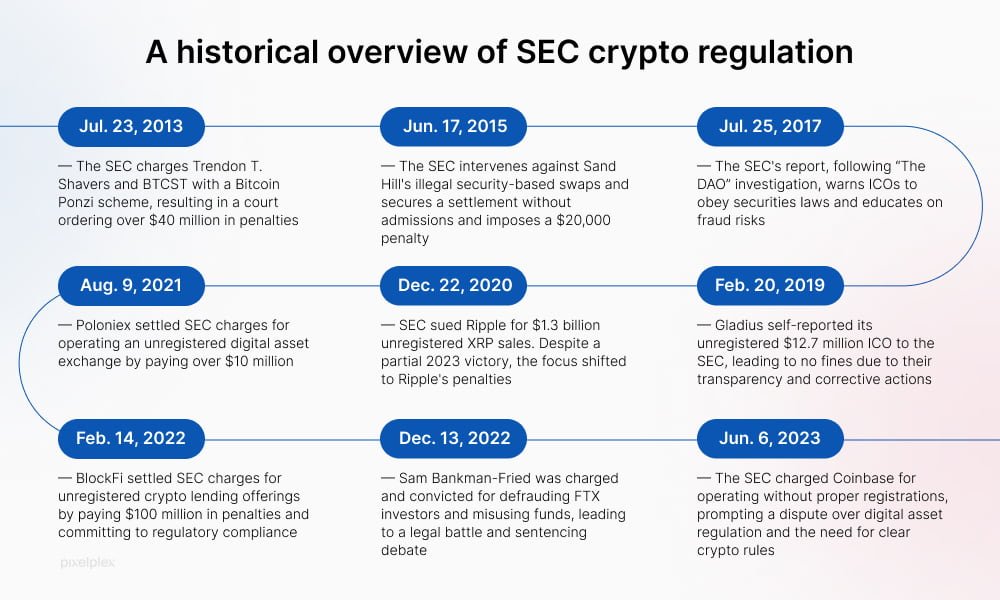
The U.S. Securities and Exchange Commission (SEC) recently shifted its stance on cryptocurrency regulation, softening its enforcement and rolling out clearer rules for investors and businesses. These moves—dropping lawsuits, clarifying token classifications, and introducing “Project Crypto”—signal a more predictable environment for crypto. For investors, the ruling could open doors to new opportunities, ETFs, and improved protections while reducing uncertainty in digital asset markets.
Cryptocurrency has always lived in a gray zone when it comes to U.S. regulation. For years, the SEC maintained a heavy-handed approach, treating most tokens as unregistered securities and aggressively pursuing lawsuits against exchanges, startups, and even individual investors. This unpredictability discouraged institutional adoption and scared away everyday investors.
But 2025 marks a turning point. Under new leadership, the SEC has pivoted toward a more pragmatic and investor-friendly stance. Instead of “regulate by enforcement,” the agency is now emphasizing transparency, dialogue, and support for blockchain innovation.
So, is the SEC’s latest ruling actually good news for investors—or just a temporary shift? Let’s unpack the details, look at real-life examples, and explore what this means for anyone putting their money into crypto in the U.S.
What Is the SEC’s Latest Ruling on Crypto?
The SEC’s approach has evolved dramatically in the last year. Here are the three main pillars of the latest ruling and policy direction:
1. Launch of “Project Crypto”
In August 2025, the SEC introduced “Project Crypto,” a landmark initiative aimed at modernizing U.S. securities laws for the digital era.
Key features of Project Crypto include:
- Clear guidelines on digital asset classifications – Most tokens will not be considered securities if traded on open exchanges.
- Support for tokenized securities – Opening the door for stock, bonds, and real estate to exist on blockchain platforms.
- Promotion of blockchain integration – Encouraging financial institutions to adopt distributed ledger technology.
Chairman Paul Atkins, who now leads the SEC, emphasized that “most crypto tokens are not securities”—a 180-degree shift from previous leadership. (SEC.gov)
2. Formation of the Crypto Task Force
To reduce confusion, the SEC established a dedicated Crypto Task Force. This division provides real-time guidance on compliance and helps firms avoid pitfalls before enforcement kicks in.
The task force’s role includes:
- Helping startups understand whether their token sales require SEC registration.
- Publishing case studies and rulings for public reference.
- Working with Congress on long-term digital asset legislation.
This proactive approach replaces the old “wait and sue” strategy with an educational, forward-looking model.
3. Shift in Enforcement Strategy
In a major announcement, the SEC stated it will now notify businesses of technical violations before taking legal action.
That means instead of hitting an exchange with a billion-dollar lawsuit overnight, the SEC will:
- Issue a notice outlining compliance concerns.
- Give the company time to make corrections.
- Reserve enforcement for repeated or intentional violations.
For investors, this means less shock-and-awe news that tanks markets overnight. Stability and predictability are becoming the new norm. (Reuters)
How Does This Affect Crypto Investors?
1. Reduced Market Volatility
In the past, news of a sudden SEC lawsuit could wipe billions off Bitcoin and Ethereum’s market cap in a single day. By providing clarity and advance warnings, the SEC is removing the element of surprise that has historically driven wild swings.
This is particularly good for:
- Long-term investors (HODLers) who prefer steady growth.
- Institutional investors who need regulatory predictability to justify crypto exposure.
2. Expansion of Investment Opportunities
With the SEC softening its classification of tokens, new financial products are emerging.
- Crypto ETFs (Exchange-Traded Funds): More likely to gain approval under the new framework.
- Tokenized assets: Real estate, equities, and even art may soon trade as tokens.
- Bank-backed crypto services: Traditional institutions feel safer offering custody and lending products.
This is huge for retirement accounts, hedge funds, and even everyday traders who want easier access to diversified crypto exposure.
3. Stronger Investor Protection
While critics feared a “deregulation free-for-all,” the SEC’s new model still prioritizes investor safety:
- Fraudulent ICOs (Initial Coin Offerings) will be monitored.
- Exchanges will be expected to implement stronger KYC/AML protections.
- Misleading marketing of tokens could face penalties.
This balance ensures investors benefit from innovation without falling victim to scams.
Real-Life Examples of the SEC’s Impact
Ripple Labs (XRP Case)
For years, Ripple Labs fought a legal battle with the SEC over whether XRP is a security. In 2025, a federal court ruled that XRP sold on exchanges is not a security, removing uncertainty and giving XRP’s price a significant boost.
This ruling not only strengthened Ripple but also set precedent for other altcoins, reducing fear among investors. (Gordon Law)
Binance Lawsuit Paused
Earlier, Binance faced a major lawsuit from the SEC, threatening the platform’s U.S. operations. But under the new enforcement policy, the case was paused, allowing Binance to negotiate compliance instead of facing an outright ban.
For investors, this meant continued access to one of the world’s largest trading platforms and reduced panic selling.
Key Takeaways for Investors
- Expect greater clarity on what qualifies as a security vs. commodity.
- Watch for new ETFs and tokenized investment products hitting U.S. markets.
- Anticipate lower volatility due to fewer surprise lawsuits.
- Stay alert: scams and fraudulent offerings will still face enforcement.
- Institutional adoption is likely to accelerate, benefiting long-term market growth.
Frequently Asked Questions (FAQs)
1. Why did the SEC change its stance on crypto?
The SEC shifted to encourage innovation, attract investment, and provide legal certainty. The previous “lawsuit-first” model created fear, which hurt U.S. competitiveness.
2. Does this mean crypto is deregulated?
Not at all. The SEC is still regulating crypto, but it’s moving from punishment to partnership. Fraud and manipulation remain top priorities.
3. Which cryptos benefit the most?
Tokens like XRP, Ethereum, and Solana—previously at risk of being labeled securities—stand to gain the most clarity. Bitcoin, already considered a commodity, remains largely unaffected.
4. Will this attract institutional investors?
Yes. Pension funds, ETFs, and banks prefer regulatory certainty. The SEC’s friendlier stance makes crypto more investable for Wall Street.
5. Could the SEC reverse course again?
Regulation often shifts with politics. While today’s ruling is positive, a future administration could pivot back. Investors should watch elections closely.
6. How will this affect Bitcoin ETFs?
Approval odds are higher now. BlackRock and Fidelity’s ETF applications, previously stalled, may gain traction in 2025–2026.
7. Is the U.S. now competing with crypto-friendly regions like Europe and Asia?
Yes. Europe’s MiCA framework and Asia’s pro-crypto policies were drawing innovation away. The SEC’s ruling is an attempt to keep the U.S. competitive.
8. What risks still remain for investors?
- Market manipulation by whales.
- Exchange hacks and cybercrime.
- Tax and reporting requirements that remain complex.
9. How can everyday investors prepare?
- Diversify holdings across multiple tokens.
- Use regulated exchanges with strong compliance.
- Stay updated on SEC announcements.
10. Where can I track SEC updates on crypto?
Visit the official SEC crypto page or follow financial outlets like Reuters, CoinDesk, and Bloomberg for real-time updates.
Conclusion: Is This Good News for Investors?
Yes—the SEC’s latest ruling is overwhelmingly positive for investors.
For the first time in years, the agency is offering clarity, predictability, and fairness. Markets are less likely to suffer from sudden shocks, new opportunities are emerging (like ETFs and tokenized assets), and investor protections remain in place.
This doesn’t mean risks vanish. Political shifts, cybersecurity threats, and fraudulent schemes will remain challenges. But overall, the U.S. crypto market is becoming more mature, attractive, and safer for both retail and institutional investors.
In short: If you’ve been waiting on the sidelines for regulatory clarity before investing in crypto, 2025 may be your green light.
 Julia
Julia