

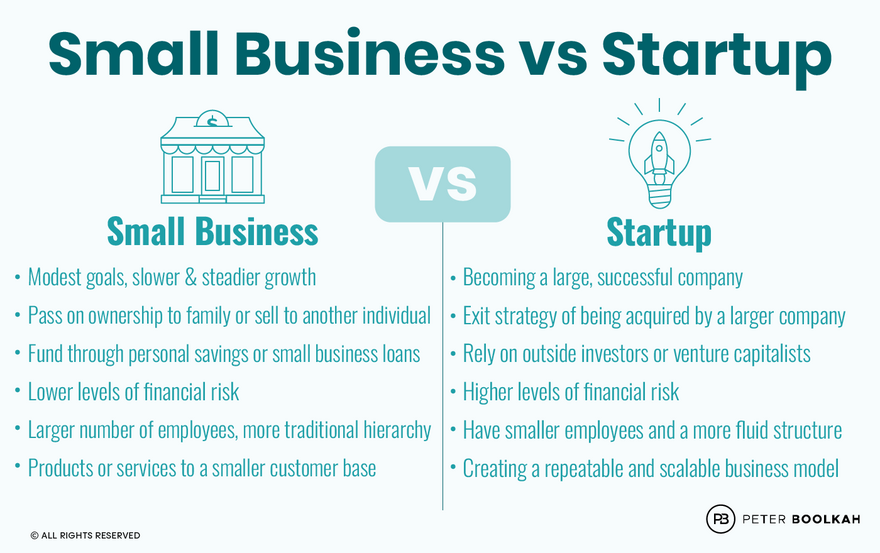
Across the United States, a growing number of entrepreneurs are shifting their focus from high-growth startups to small, profitable businesses. Rather than pursuing venture capital and rapid scale, many founders are prioritizing sustainability, independence, and predictable revenue. This shift reflects changing economic realities, evolving definitions of success, and a deeper understanding of how long-term profitability can create both financial stability and entrepreneurial freedom.
A Quiet Shift in Entrepreneurial Ambition
For decades, the dominant narrative in American entrepreneurship revolved around building the next billion-dollar company. Startup culture celebrated venture capital funding rounds, rapid growth, and the pursuit of “unicorn” status. Founders were often encouraged to scale quickly, capture market share, and prioritize growth over profitability.
In recent years, however, a different model has gained momentum. A growing segment of entrepreneurs is intentionally choosing to build smaller, profitable companies rather than pursuing hypergrowth. These businesses may generate a few hundred thousand dollars—or a few million—in annual revenue, but they often operate with healthy margins, manageable teams, and long-term sustainability.
This change reflects both practical and philosophical shifts in how Americans think about entrepreneurship. Many founders now view profitability, autonomy, and resilience as more meaningful measures of success than rapid expansion alone.
Several factors have contributed to this evolution. Economic uncertainty, increased access to digital tools, and the visibility of successful “indie founders” have all demonstrated that a profitable small business can offer financial security, flexibility, and meaningful work without the pressures associated with venture-backed startups.
The Changing Definition of Entrepreneurial Success
In the early 2000s and 2010s, the technology startup ecosystem shaped much of the entrepreneurial conversation in the United States. Silicon Valley culture emphasized raising venture capital and scaling rapidly to dominate markets.
While that model continues to produce major companies, it also carries significant risk. Research from the U.S. Bureau of Labor Statistics shows that roughly 20% of small businesses fail within their first year, and nearly half close within five years. High-growth startups can face even greater pressure due to aggressive expansion and investor expectations.
As a result, many founders are reconsidering the traditional path. Instead of chasing exponential growth, they are asking different questions:
- Can this business generate consistent profit?
- Can it operate efficiently with a small team?
- Can it provide long-term financial stability for the owner?
These questions reflect a broader redefinition of entrepreneurial success. Rather than measuring achievement solely through valuation or scale, many entrepreneurs now prioritize:
- Sustainable revenue
- Owner independence
- Work-life balance
- Control over decision-making
In practical terms, this means building companies designed to be profitable from an early stage rather than relying on outside funding to support growth.
Why Profitability Is Regaining Importance
One of the most significant drivers of this shift is the growing emphasis on profitability. For many years, venture-backed startups operated under a “growth first” philosophy. Companies often ran at a loss while prioritizing user acquisition and market expansion.
While this strategy has produced successful companies, it also created a culture where profitability sometimes became secondary.
Today, many founders are moving in the opposite direction. They want businesses that generate positive cash flow quickly and maintain strong margins over time.
There are several reasons for this change.
First, economic uncertainty has made financial resilience more important. During periods of market volatility, companies that depend on external funding may struggle to raise capital. Profitable businesses, on the other hand, can continue operating without relying on investors.
Second, profitability allows founders to retain ownership. Venture capital funding typically requires founders to give up equity and accept investor influence. By building profitable companies without outside investment, entrepreneurs maintain full control over strategy and decision-making.
Third, profitability provides flexibility. When a business generates steady income, founders can choose how aggressively they want to grow—or whether they want to grow at all.
The Rise of the “Lifestyle Business” — Reframed
The term “lifestyle business” once carried negative connotations in the startup world. It implied a company designed primarily to support the owner’s lifestyle rather than dominate a market.
Today, that perception is changing.
Many entrepreneurs now view these businesses as strategically designed companies that balance profitability, sustainability, and personal autonomy.
Examples include:
- Specialized consulting firms
- Boutique software companies
- Digital product businesses
- Professional service agencies
- E-commerce brands with focused product lines
What these companies share is intentional scale. Rather than growing indefinitely, founders often design them to reach a size that is financially rewarding yet operationally manageable.
For instance, a small software company generating $2 million in annual revenue with a five-person team may be far more profitable—and far less stressful—than a venture-backed startup employing hundreds while operating at a loss.
Technology Is Lowering the Barrier to Profitable Businesses
Another reason small profitable companies are becoming more attractive is the accessibility of modern technology.
Cloud software, automation tools, and digital distribution channels allow entrepreneurs to operate efficiently with minimal overhead. Tasks that once required large teams can now be managed by a few people using specialized platforms.
Common examples include:
- Accounting automation tools
- E-commerce platforms
- Customer relationship management systems
- Marketing automation software
- AI-powered analytics tools
These technologies allow founders to launch and manage profitable businesses without the infrastructure that once required significant capital.
In addition, digital marketplaces and online audiences make it easier to reach customers across the country—or around the world—without opening physical locations.
For many entrepreneurs, this combination of low overhead and broad market access makes profitability achievable at a much smaller scale.
Why Entrepreneurs Are Prioritizing Control and Independence
Another major factor driving this trend is the desire for independence.
Venture-backed startups typically involve a network of investors, board members, and external stakeholders. While this structure can accelerate growth, it also introduces pressure to pursue aggressive expansion strategies.
Some entrepreneurs prefer a different model.
By building smaller, profitable companies without outside investors, founders maintain control over important decisions, including:
- Product direction
- Growth strategy
- Hiring pace
- Pricing models
- Company culture
This independence can also reduce stress. Without investor expectations for rapid growth or a predetermined exit timeline, entrepreneurs can focus on building a business that aligns with their own goals.
For many founders, that freedom is as valuable as financial success.
Real-World Examples of Profitable Small Businesses
Across the United States, many entrepreneurs have demonstrated that small, profitable companies can be both sustainable and impactful.
Examples include:
- Specialized software firms serving niche industries such as logistics, healthcare, or construction.
- Professional consulting practices built around deep expertise in finance, marketing, or operations.
- Direct-to-consumer e-commerce brands with carefully curated product lines and strong margins.
- Digital education platforms focused on professional skills or industry training.
In many cases, these businesses operate with fewer than 20 employees yet generate substantial annual profits.
The key commonality is strategic focus. Instead of trying to serve the largest possible market, successful founders often concentrate on solving specific problems for well-defined customer groups.
This specialization allows them to charge premium prices while maintaining efficient operations.
What Types of Entrepreneurs Are Choosing This Path?
The shift toward smaller, profitable businesses is attracting a wide range of entrepreneurs.
Some are first-time founders who want to build sustainable companies without the pressure of venture funding. Others are experienced professionals leaving corporate careers to create independent businesses based on their expertise.
Common motivations include:
- Greater flexibility in work schedules
- Control over business decisions
- Reduced financial risk
- The ability to focus on meaningful projects
- Long-term financial stability
Younger entrepreneurs are also showing interest in this model. Many are influenced by independent founders who share their experiences online, demonstrating that profitability and autonomy can coexist with innovation and growth.
Challenges of Building a Small, Profitable Company
Despite its advantages, this approach is not without challenges.
Entrepreneurs who pursue smaller businesses must often rely on slower, organic growth rather than large injections of capital. This can require patience and careful financial management.
Common challenges include:
- Limited marketing budgets
- Slower hiring timelines
- Greater personal responsibility for operations
- The need for disciplined cash flow management
However, many founders consider these challenges worthwhile trade-offs for the independence and stability that profitable businesses can provide.
Frequently Asked Questions
Why are entrepreneurs moving away from venture-backed startups?
Many founders want greater control, lower financial risk, and businesses that generate steady profit rather than focusing solely on rapid growth and investor expectations.
What is a profitable small business?
A profitable small business consistently generates revenue that exceeds its operating costs, providing sustainable income for the owner and allowing reinvestment for growth.
Can small businesses still grow significantly?
Yes. Many profitable companies grow steadily over time. The key difference is that growth is usually intentional and financially sustainable rather than driven by external funding.
Are profitable small businesses common in the United States?
Yes. According to the U.S. Small Business Administration, small businesses account for 99.9% of all U.S. businesses, and many operate profitably without venture capital.
Do profitable businesses need investors?
Not necessarily. Many profitable businesses are funded through personal savings, revenue reinvestment, or small business loans.
What industries are best for small profitable companies?
Common sectors include consulting, software development, specialized services, digital products, and niche e-commerce markets.
Is it harder to scale a profitable business?
Scaling can be slower without large capital investments, but profitability often creates a strong financial foundation for sustainable growth.
What is a “bootstrapped” business?
A bootstrapped business is built without external investment, relying on the founder’s resources and business revenue to fund operations.
Why do many entrepreneurs prefer smaller teams?
Smaller teams can operate more efficiently, maintain strong company culture, and reduce operational complexity.
Is profitability more important than growth?
Both matter, but many modern entrepreneurs believe profitability creates stability that makes long-term growth more sustainable.
A Different Kind of Entrepreneurial Ambition
The rise of small, profitable companies does not signal the end of high-growth startups. Venture-backed innovation remains an important part of the American economy.
What is changing is the range of acceptable entrepreneurial paths.
Today’s founders increasingly recognize that success can take many forms. For some, building a global technology company remains the ultimate goal. For others, the ideal outcome is a smaller business that generates strong profit, supports a balanced life, and provides long-term independence.
As the entrepreneurial landscape continues to evolve, profitable small businesses are likely to play an increasingly important role—demonstrating that sustainable success does not always require massive scale.
Key Insights for Entrepreneurs Considering This Path
- Profitability is becoming a central goal for many modern founders.
- Smaller businesses can achieve financial stability without venture capital.
- Technology allows companies to operate efficiently with lean teams.
- Independence and control are major motivations for entrepreneurs.
- Niche markets often support highly profitable business models.
 Julia
Julia