

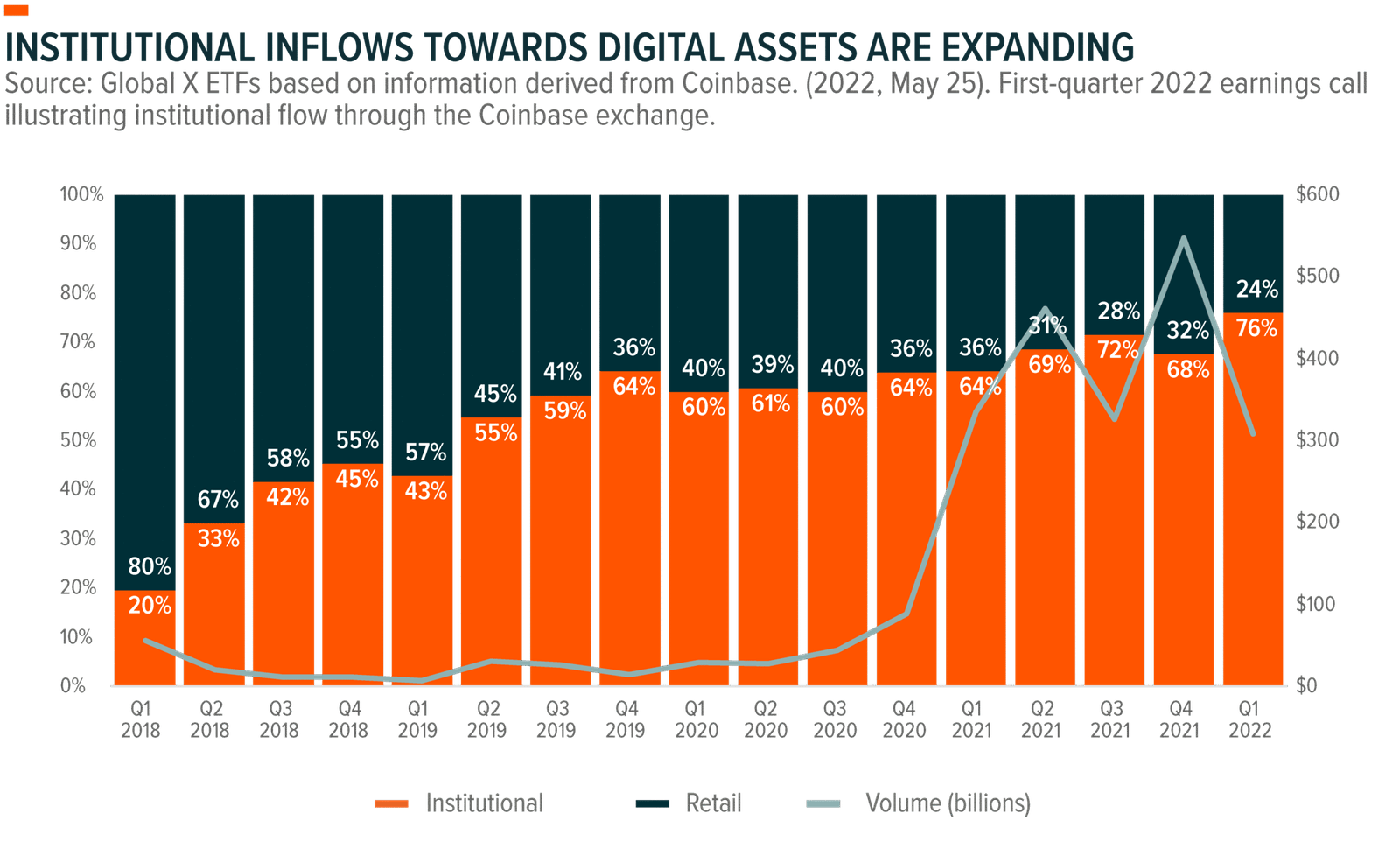
Digital assets are increasingly being evaluated alongside traditional investments such as stocks, bonds, and real estate. Financial professionals and individual investors alike are exploring how cryptocurrencies, tokenized assets, and blockchain-based financial tools may fit within diversified portfolios. This article explains why the shift is happening, what investors should consider, and how digital assets are gradually becoming part of modern investment strategies.
Why Digital Assets Are Entering Investment Conversations
A decade ago, digital assets were often associated with niche technology communities and early cryptocurrency enthusiasts. Today, they are being discussed in mainstream financial planning meetings, investment committees, and portfolio strategy sessions across the United States.
The shift did not happen overnight. Instead, it emerged gradually as technology matured, infrastructure improved, and investors began asking serious questions about the long-term role of blockchain-based assets in financial markets.
One major reason for the growing interest is institutional involvement. According to surveys conducted by Fidelity Digital Assets, a significant portion of institutional investors—including pension funds, hedge funds, and family offices—have explored or invested in digital assets in recent years. This attention from professional investors has encouraged broader discussions around their role in diversified portfolios.
Another important factor is education. Financial advisors, analysts, and portfolio managers now have access to deeper research, regulatory guidance, and institutional trading platforms that make digital assets easier to evaluate.
The conversation is no longer centered on speculation alone. Instead, it focuses on how digital assets might complement existing investment strategies.
What Counts as a Digital Asset?
The term digital asset can refer to several types of blockchain-based financial instruments. While cryptocurrencies are the most widely recognized example, the category has expanded considerably.
In modern investment discussions, digital assets typically include:
- Cryptocurrencies such as Bitcoin and Ethereum
- Stablecoins designed to maintain stable value relative to traditional currencies
- Tokenized real-world assets like real estate or commodities
- Non-fungible tokens (NFTs) representing ownership of unique digital items
- Decentralized finance (DeFi) tokens used within blockchain-based financial systems
Each of these assets operates differently and carries its own risk profile. For instance, stablecoins aim to reduce volatility, while cryptocurrencies may experience larger price swings.
Professionals analyzing digital assets usually treat them as a distinct asset class, similar to commodities or emerging market investments.
Why Investors Are Exploring Digital Assets
Several trends are contributing to the increasing presence of digital assets in investment portfolios.
Portfolio Diversification
Diversification is one of the core principles of investing. Investors typically seek a mix of assets that behave differently under various economic conditions.
Some studies have suggested that certain digital assets have historically shown periods of low correlation with traditional markets such as equities or bonds. While these correlations change over time, even modest diversification benefits can attract attention from portfolio managers.
For example, a small allocation to digital assets—often between 1% and 5% of a portfolio—is sometimes explored as a way to broaden overall exposure without significantly increasing risk.
Technological Innovation
Blockchain technology, the foundation of most digital assets, has introduced new possibilities for financial infrastructure.
Blockchain allows transactions to be recorded on decentralized ledgers that are transparent and resistant to tampering. This system can reduce reliance on intermediaries in some financial processes.
Applications include:
- Cross-border payments
- Digital identity verification
- Automated financial contracts
- Secure asset tracking
These developments have encouraged investors to consider digital assets not just as investments, but as part of a broader technological transformation.
Institutional Adoption
Institutional participation has played a critical role in legitimizing digital assets within professional finance.
Several developments have accelerated this shift:
- Launch of institutional cryptocurrency custody services
- Introduction of regulated digital asset investment products
- Increased research coverage by major financial institutions
- Growing regulatory discussions around digital markets
As institutional infrastructure improves, digital assets become easier for professional investors to analyze and access.
How Digital Assets Fit Into Portfolio Strategy
Digital assets are rarely considered a replacement for traditional investments. Instead, they are typically evaluated as complementary assets within diversified portfolios.
Portfolio managers often approach digital assets cautiously and strategically.
Common approaches include:
- Allocating a small percentage of total portfolio value
- Diversifying across multiple digital assets rather than relying on a single one
- Using long-term holding strategies rather than frequent trading
- Monitoring regulatory developments closely
For example, a diversified portfolio might include equities, bonds, commodities, real estate, and a modest digital asset allocation. The goal is not to rely on any single asset class but to balance risk across multiple sources.
Investors considering digital assets should always evaluate how they align with their broader financial objectives.
Real-World Example: A Diversified Investor Approach
Consider a hypothetical investor with a balanced portfolio valued at $500,000. Traditionally, the portfolio might include:
- 60% equities
- 30% bonds
- 10% alternative assets such as commodities or real estate
After researching digital assets, the investor may choose to reallocate a small portion—perhaps 2% of the portfolio—toward a basket of digital assets.
This adjustment might look like:
- 58% equities
- 30% bonds
- 10% traditional alternatives
- 2% digital assets
In this scenario, digital assets represent a limited exposure designed to explore potential diversification benefits while keeping overall risk manageable.
Financial advisors often emphasize that such decisions should be based on individual risk tolerance and long-term goals.
The Role of Tokenization in Modern Finance
One of the most discussed developments in digital asset markets is tokenization, which involves representing real-world assets on blockchain networks.
Tokenization allows assets to be divided into digital tokens that represent fractional ownership.
Examples include:
- Real estate ownership shares
- Private equity investments
- Art and collectibles
- Corporate debt instruments
Tokenization may improve accessibility by lowering the minimum investment required for certain asset classes. It can also make transactions faster and more transparent.
Several global financial institutions are exploring tokenization pilots, suggesting that this technology could influence financial markets in the coming years.
Key Risks Investors Should Understand
Although digital assets are gaining attention, they also carry unique risks that investors must evaluate carefully.
Price Volatility
Digital asset prices can fluctuate significantly within short periods. This volatility makes them unsuitable for investors seeking stable returns.
Regulatory Developments
In the United States, multiple agencies—including the Securities and Exchange Commission (SEC) and the Commodity Futures Trading Commission (CFTC)—are involved in shaping digital asset regulation.
Because the regulatory environment continues to evolve, investors should stay informed about policy changes.
Security Considerations
Digital assets rely on cryptographic keys for ownership. Losing access to these keys can result in permanent loss of funds.
Professional investors typically rely on institutional custody services that provide secure storage solutions.
Market Maturity
Digital asset markets are still relatively young compared with traditional financial markets. As a result, liquidity, transparency, and regulation may vary across different assets and platforms.
Investors should conduct thorough research before participating.
How Financial Professionals Evaluate Digital Assets
Investment professionals tend to analyze digital assets using frameworks similar to those applied to traditional assets.
Key evaluation factors include:
- Market capitalization and liquidity
- Network usage and transaction activity
- Developer participation and technological progress
- Regulatory status and compliance requirements
- Security history of the blockchain network
For example, a blockchain network with strong developer activity and consistent adoption by businesses may be viewed as more sustainable than one driven primarily by speculation.
This analytical approach reflects a broader trend: digital assets are increasingly being evaluated through structured investment frameworks rather than hype-driven narratives.
Frequently Asked Questions
What are digital assets in investing?
Digital assets are blockchain-based financial instruments such as cryptocurrencies, tokenized securities, or decentralized finance tokens that can be owned, traded, or stored electronically.
Why are digital assets gaining popularity with investors?
Investors are exploring digital assets because of technological innovation, potential diversification benefits, and increasing institutional involvement.
Are digital assets safe investments?
Digital assets can carry significant risks, including price volatility and regulatory uncertainty. They should be approached carefully and usually represent only a small portion of a diversified portfolio.
How much of a portfolio should be allocated to digital assets?
Many professionals suggest modest allocations—often between 1% and 5%—depending on an investor’s risk tolerance and long-term strategy.
Are cryptocurrencies the same as digital assets?
Cryptocurrencies are one type of digital asset. The category also includes stablecoins, tokenized assets, NFTs, and decentralized finance tokens.
What is tokenization in finance?
Tokenization converts ownership of real-world assets into blockchain-based tokens that can be traded or transferred digitally.
Are digital assets regulated in the United States?
Yes, but regulation is still evolving. Agencies such as the SEC and CFTC oversee different aspects of digital asset markets.
Can digital assets help diversify investments?
Some investors believe digital assets may provide diversification benefits, although correlations with traditional markets can change over time.
How do investors store digital assets securely?
Digital assets are typically stored in digital wallets. Institutional investors often use specialized custody services that provide enhanced security.
What should beginners learn before investing in digital assets?
Beginners should understand blockchain technology, market risks, regulatory considerations, and how digital assets fit into broader financial strategies.
The Broader Financial Implications of the Digital Asset Shift
The increasing attention toward digital assets reflects a broader transformation in the financial world. Technology is reshaping how assets are issued, traded, and stored.
While digital assets remain a developing market, their influence is already visible in areas such as payments, asset tokenization, and decentralized financial services.
For investors, the key takeaway is not that digital assets will replace traditional investments. Instead, they represent an emerging component of a rapidly evolving financial ecosystem.
Understanding this shift allows investors to approach the space thoughtfully, balancing innovation with prudent risk management.
What Investors Should Remember About the Digital Asset Evolution
- Digital assets are becoming part of mainstream investment discussions
- Institutional adoption has accelerated research and infrastructure development
- Blockchain technology underpins many new financial innovations
- Tokenization may expand access to traditionally illiquid assets
- Most professionals recommend modest allocations rather than large exposures
- Regulatory clarity will continue shaping the market
- Education and research remain essential before investing
 Julia
Julia