


Summary
Compensation planning goes far beyond base salary. The structure of pay—bonuses, equity, retirement contributions, tax timing, and benefits—can significantly influence long-term financial outcomes. Understanding how compensation is structured helps employees and business owners reduce taxes, align incentives, and build wealth more efficiently while maintaining financial stability and compliance with evolving tax and labor rules.
Understanding Compensation Planning
When most people evaluate a job offer, the first number they look at is the salary. While base pay is important, compensation planning involves much more than a single figure on an offer letter. The structure of compensation—how income is distributed across salary, bonuses, stock options, benefits, and retirement contributions—can have a profound impact on taxes, long-term wealth accumulation, and financial security.
In many U.S. workplaces, total compensation packages include several components that collectively determine an employee’s financial outcome. According to data from the U.S. Bureau of Labor Statistics, benefits alone account for roughly 30% of total compensation costs for employers in the United States. This means a large portion of an employee’s financial value may come from sources beyond salary.
Compensation planning is therefore about designing a pay structure that balances income, tax efficiency, incentives, and long-term benefits. Financial advisors and HR professionals increasingly encourage employees to evaluate offers through a broader lens—one that considers both immediate earnings and long-term financial impact.

The Core Components of a Compensation Package
A well-structured compensation plan usually contains multiple elements that work together. While not every employer offers the same benefits, most U.S. compensation packages include some combination of the following components.
Common elements of total compensation include:
- Base salary
- Performance bonuses or incentive pay
- Equity compensation such as stock options or restricted stock units (RSUs)
- Retirement contributions, including 401(k) matching
- Health insurance and other benefits
- Deferred compensation programs
- Paid time off and other non-cash benefits
Each element can affect taxes, financial planning, and risk exposure differently. For example, salary provides predictable income, while bonuses or stock options may fluctuate depending on company performance.
Understanding how these components interact is essential when comparing job offers or designing compensation strategies.
Why Compensation Structure Matters Financially
A compensation package’s structure determines not only how much someone earns but also when income is taxed, how wealth grows, and how risk is distributed.
Consider two employees earning identical total compensation of $150,000 annually. One receives most of the amount as salary, while the other receives $110,000 in salary plus $40,000 in equity incentives. Their long-term financial outcomes could differ significantly.
Key ways compensation structure affects financial outcomes include:
- Tax treatment: Different compensation types are taxed differently.
- Income timing: Deferred income can reduce tax burdens in certain years.
- Investment growth: Equity compensation can appreciate in value.
- Risk exposure: Stock-based pay ties income to company performance.
These factors illustrate why compensation planning is often discussed alongside tax strategy and wealth management.
Salary vs Incentive Compensation
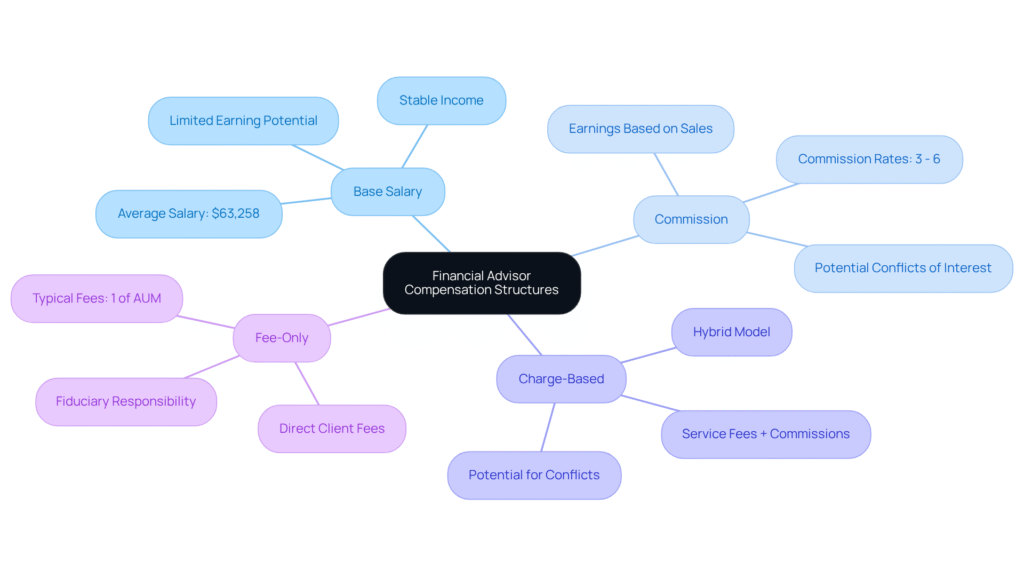
Salary provides consistency and financial stability. Incentive-based compensation—such as bonuses or profit-sharing—links income to performance or company results.
Organizations often combine both structures to motivate employees while maintaining predictable payroll costs.
Advantages of salary-heavy compensation:
- Stable and predictable income
- Easier budgeting and financial planning
- Reduced dependence on company performance
Advantages of incentive-heavy compensation:
- Potential for higher earnings
- Alignment with company performance
- Stronger motivation for productivity
Professionals in industries such as finance, technology, and sales frequently receive large portions of their compensation through incentives. However, individuals must evaluate whether the potential upside justifies the variability.
Equity Compensation and Long-Term Wealth
Equity compensation has become increasingly common in the U.S., especially in technology and startup environments. Companies often grant employees stock options or restricted stock units as part of their compensation packages.
This structure allows employees to participate in the company’s growth, but it also introduces complexity.
Common forms of equity compensation include:
- Stock options: The right to purchase shares at a fixed price.
- Restricted stock units (RSUs): Company shares granted after a vesting period.
- Employee stock purchase plans (ESPPs): Discounted opportunities to buy company stock.
While equity compensation can create significant wealth if a company grows, it also concentrates financial risk. Employees should consider diversifying investments rather than relying heavily on employer stock.
Financial advisors often emphasize that equity compensation should be viewed as potential upside rather than guaranteed income.
Tax Implications of Compensation Structure
Different types of compensation are taxed in different ways under U.S. tax law. Structuring income thoughtfully can influence overall tax liability.
For example, salary is taxed as ordinary income, while certain capital gains from stock sales may receive lower tax rates if shares are held long enough.
Some tax planning strategies related to compensation include:
- Timing the exercise of stock options
- Deferring bonuses into future tax years
- Contributing to tax-advantaged retirement accounts
Retirement accounts such as those governed by the Employee Retirement Income Security Act provide tax-deferred growth opportunities that can reduce current taxable income.
Employers may also offer deferred compensation plans that allow high-income professionals to postpone income until retirement or lower-tax years.
The Role of Benefits in Total Compensation
Benefits are often overlooked during salary negotiations, but they represent a substantial portion of compensation.
Health insurance, retirement contributions, and employer-sponsored wellness programs can significantly improve financial security.
Key benefit categories include:
- Employer-paid health insurance premiums
- Retirement contributions such as 401(k) matching
- Disability and life insurance
- Tuition reimbursement programs
- Flexible spending or health savings accounts
For example, a company that offers a 5% 401(k) match effectively adds thousands of dollars annually to an employee’s retirement savings.
According to research from the Society for Human Resource Management, benefits remain one of the most influential factors affecting employee satisfaction and retention.
Compensation Planning for Business Owners
Compensation planning is just as important for business owners as it is for employees.
Entrepreneurs often have flexibility in how they pay themselves, which creates opportunities for tax optimization and financial planning.
Business owners frequently consider:
- Salary versus dividend distributions
- Profit-sharing structures
- Retirement plan contributions
- Timing of income recognition
For example, owners of S-corporations often balance salary and distributions to meet IRS requirements while managing tax efficiency.
However, compensation decisions must follow regulations and should always be reviewed with a qualified accountant or tax professional.
Evaluating a Job Offer Beyond Salary
When comparing job offers, focusing solely on salary can lead to misleading conclusions.
A lower salary offer may actually deliver higher total compensation once benefits, equity, and bonuses are considered.
Professionals evaluating offers should examine:
- Total compensation value
- Retirement contributions
- Health insurance coverage
- Bonus structures
- Equity vesting schedules
- Work-life benefits
Looking at compensation holistically helps individuals understand the real financial value of an employment opportunity.
Compensation Planning Across Career Stages
Compensation priorities often shift as careers progress.
Early-career professionals may prioritize salary growth and skill development. Mid-career professionals may focus more on retirement contributions, tax efficiency, and equity accumulation.
Common priorities by career stage include:
Early career
- Higher salary growth
- Performance bonuses
- Professional development benefits
Mid career
- Retirement contributions
- equity compensation
- family-related benefits
Late career
- Deferred compensation plans
- retirement security
- predictable income streams
Adjusting compensation strategies over time helps individuals align earnings with evolving financial goals.

Frequently Asked Questions
What is compensation planning?
Compensation planning is the process of structuring salary, bonuses, benefits, and other financial incentives to optimize income, motivation, and long-term financial outcomes.
Why does compensation structure matter?
Different compensation types have different tax treatments, risk levels, and growth potential. The structure of pay can influence long-term financial results as much as the total amount earned.
What is total compensation?
Total compensation includes salary plus bonuses, benefits, retirement contributions, stock compensation, and other financial perks offered by an employer.
How do bonuses affect taxes?
Bonuses are generally taxed as ordinary income in the United States and may be subject to withholding rates that differ from regular salary.
What is equity compensation?
Equity compensation involves receiving company stock or stock options as part of a pay package, allowing employees to benefit from company growth.
Should employees negotiate benefits as well as salary?
Yes. Negotiating benefits such as signing bonuses, flexible schedules, and retirement contributions can significantly improve total compensation.
What is deferred compensation?
Deferred compensation allows employees to postpone receiving income until a later date, often reducing taxes during high-income years.
How can compensation planning reduce taxes?
Strategies may include retirement contributions, income deferral, or optimizing equity compensation timing.
Are benefits really that valuable?
Yes. Benefits like health insurance and retirement contributions can represent thousands of dollars annually in additional value.
When should someone review their compensation strategy?
Major life events, job changes, promotions, or tax law changes are common times to reassess compensation structure.
Designing a Pay Strategy That Supports Long-Term Financial Stability
Compensation planning is not simply about maximizing income in the present year. It involves creating a structure that balances stability, growth potential, and tax efficiency across an entire career.
Professionals who evaluate compensation holistically—considering salary, benefits, equity, and tax implications—often make more informed financial decisions. By understanding how each component contributes to long-term wealth, individuals and employers alike can design compensation structures that support sustainable financial progress.
Key Insights to Remember
- Salary is only one component of total compensation.
- Benefits can represent a substantial portion of financial value.
- Equity compensation offers growth potential but also risk.
- Tax treatment varies across compensation types.
- Compensation priorities often evolve with career stages.
- Evaluating job offers holistically leads to better financial decisions.
 Robert Weber