


Summary
Co-working spaces have evolved from niche hubs for freelancers into a core part of the U.S. office landscape. As companies rethink long-term leases, hybrid work, and employee expectations, flexible workspaces offer scalable, cost-efficient alternatives to traditional offices. This guide explores how co-working is reshaping commercial real estate, supporting startups and corporations, and defining the future of work in America.
The Rise of Co-Working in the United States
Over the past decade, co-working spaces have transformed from small collaborative offices into a major segment of the U.S. commercial real estate market. What began as shared desks for freelancers has evolved into a flexible workspace ecosystem serving startups, remote teams, and even Fortune 500 companies.
Several forces have driven this shift. Remote work adoption accelerated during the COVID-19 pandemic, and many organizations discovered that productivity did not require centralized corporate headquarters. According to data from JLL and CBRE, flexible office space is projected to account for approximately 30% of corporate real estate portfolios by 2030.
At the same time, employees increasingly expect flexibility. Many professionals prefer hybrid arrangements that balance remote work with occasional office access. Co-working spaces have emerged as a practical solution, offering professional environments without the rigid commitments of traditional leases.
In cities like Austin, Denver, Miami, and New York, co-working locations have expanded rapidly, often filling underutilized office buildings and revitalizing commercial districts.
What Exactly Is a Co-Working Space?
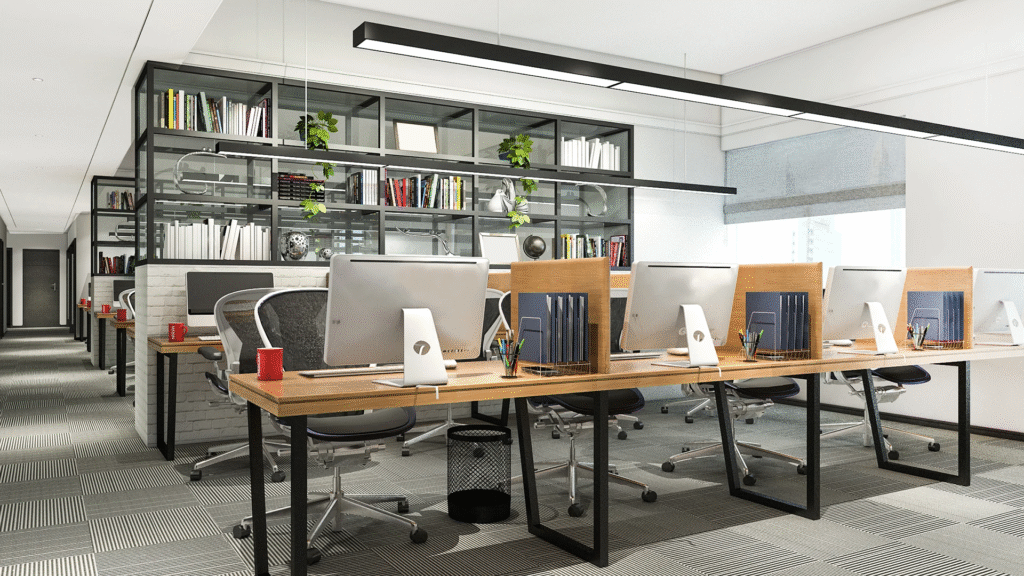
A co-working space is a shared office environment where individuals or companies rent desks, private offices, or meeting rooms on flexible terms. Instead of committing to long leases and managing office infrastructure, businesses can access fully equipped workspaces with minimal setup.
Most co-working providers offer a range of membership options designed to accommodate different work styles.
Common workspace options include:
- Hot desks: open seating used on a first-come basis
- Dedicated desks: reserved desks within shared spaces
- Private offices: enclosed spaces for teams
- Meeting rooms and conference facilities
- Event and networking spaces
Amenities typically include:
- High-speed internet
- Reception services
- Printing and office equipment
- Coffee bars or kitchens
- Phone booths for private calls
- Community events and professional networking
For many businesses, the ability to scale workspace needs month-to-month is a major advantage.
Why Businesses Are Choosing Flexible Offices
Traditional office leases in the U.S. often require commitments of five to ten years, substantial upfront build-out costs, and long negotiation cycles. For growing companies or uncertain economic conditions, that level of commitment can be risky.
Co-working spaces address these challenges by providing flexibility.
Key benefits driving adoption include:
Reduced Overhead
Setting up a traditional office involves furniture, utilities, internet infrastructure, maintenance, and administrative staff. Flexible offices bundle these costs into a predictable monthly membership.
Scalability
Startups and growing companies can add or reduce workspace capacity as teams change size. Instead of relocating or renegotiating leases, they can simply adjust memberships.
Access to Prime Locations
Many co-working spaces operate in central business districts or desirable neighborhoods that smaller companies might otherwise struggle to afford.
Professional Environment for Remote Workers
Remote employees often seek alternatives to working from home. Co-working spaces offer a structured environment that can improve focus and work-life boundaries.
The Hybrid Work Era Is Fueling Demand
Hybrid work models—where employees split time between home and office—are now common across many U.S. industries. Major corporations including tech firms, consulting companies, and financial institutions have adopted hybrid policies.
This shift has changed how organizations think about office space.
Instead of maintaining large headquarters designed for daily occupancy, companies increasingly use:
- satellite offices
- flexible coworking memberships
- regional hubs for distributed teams
For example, a company headquartered in Chicago might provide co-working memberships for employees living in other cities, allowing them to work near home while still having access to professional facilities.
This distributed model can improve employee satisfaction while reducing real estate costs.
How Corporations Are Using Co-Working Spaces
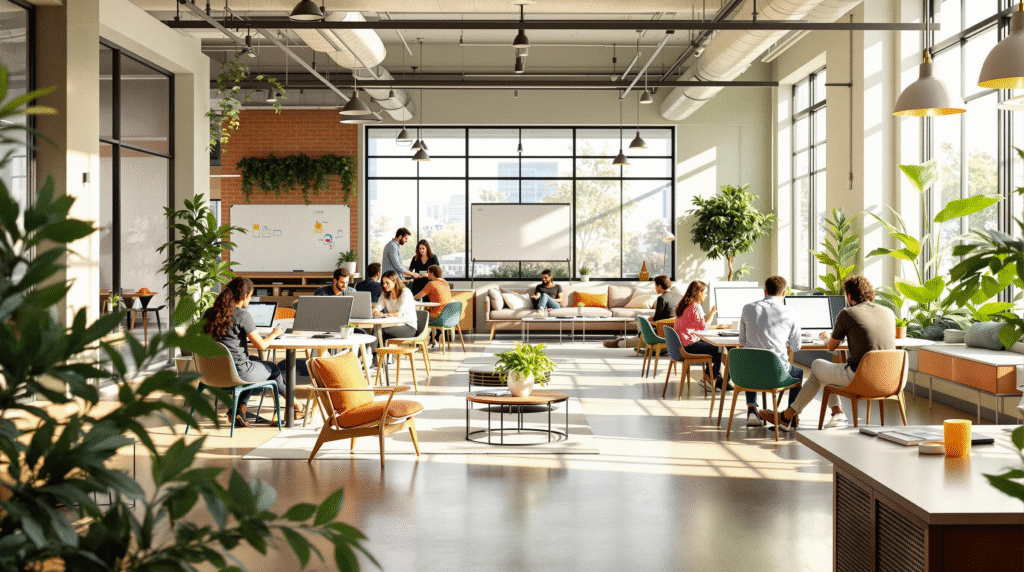
While freelancers and startups helped popularize co-working, large corporations are now among the fastest-growing customers.
Companies use flexible offices for several strategic purposes.
Temporary Project Teams
Corporations often launch short-term initiatives that require workspace for six months to two years. Flexible offices eliminate the need for long leases.
Market Expansion
When entering a new city, companies can test the market with a co-working location before committing to a permanent office.
Distributed Workforce Support
Instead of requiring employees to commute to headquarters, companies can provide access to local co-working hubs.
Innovation and Collaboration
Some firms intentionally place teams in co-working environments to encourage cross-industry collaboration and exposure to startup culture.
This shift has pushed co-working providers to develop more enterprise-grade services, including secure networks, branded offices, and customized workspace layouts.
The Role of Co-Working in Revitalizing Office Buildings
The U.S. office market has faced rising vacancy rates since 2020. Many downtown buildings remain underutilized as companies reduce office footprints.
Flexible workspace providers are increasingly filling that gap.
Property owners are partnering with co-working operators to transform traditional office floors into flexible workspace environments. In some cases, landlords are launching their own flexible office brands.
These partnerships can benefit both parties:
- Building owners maintain occupancy and revenue.
- Co-working providers gain access to prime locations.
- Businesses gain flexible workspace options.
Cities such as San Francisco, Washington D.C., and Los Angeles are experimenting with this model as a way to stabilize commercial real estate markets.
Challenges Facing the Co-Working Industry
Despite its growth, the co-working industry has experienced significant challenges.
The most visible example occurred when a major flexible workspace company attempted to expand too quickly, highlighting risks associated with aggressive growth models.
Key challenges include:
Economic Sensitivity
Because memberships are flexible, co-working demand can decline during economic downturns when companies reduce costs.
Competition
As the concept has matured, competition has intensified among providers, landlords, and boutique operators.
Operational Complexity
Running successful co-working spaces requires balancing hospitality, real estate management, community building, and technology infrastructure.
Changing Office Demand
While flexible offices are growing, the overall office market is still adapting to post-pandemic work patterns.
The most resilient operators tend to focus on sustainable growth and strong local communities rather than rapid expansion.
What the Next Decade of Flexible Offices May Look Like
The future of co-working in the United States will likely extend beyond shared desks. Several trends are shaping the next phase of the industry.
Distributed Office Networks
Large providers are building nationwide networks that allow members to work from multiple cities. This flexibility supports companies with remote teams.
Suburban Work Hubs
Demand is growing in suburban areas where professionals live, reducing long commutes to downtown offices.
Specialized Workspaces
Some co-working environments now cater to specific industries, such as:
- media and podcast production
- biotech and laboratory research
- legal professionals
- creative agencies
Technology-Driven Workspaces
Smart building systems, mobile access control, and digital booking platforms are becoming standard features in flexible offices.
Community-Focused Design
Modern co-working spaces prioritize collaboration areas, social events, and professional networking opportunities that traditional offices often lack.
Choosing the Right Co-Working Space
For individuals or companies considering a co-working membership, evaluating the right environment is important.
Factors to consider include:
- Location and commute convenience
- Internet reliability and technology infrastructure
- Availability of meeting rooms
- Privacy options for calls and focused work
- Community culture and networking opportunities
- Pricing transparency and contract flexibility
Visiting the space during typical working hours can help determine whether the environment matches your work style.
Many professionals find that the right co-working environment can significantly improve productivity compared to working from home.

Frequently Asked Questions
1. Are co-working spaces cheaper than traditional offices?
For small teams and startups, co-working spaces are often significantly cheaper because they eliminate build-out costs, furniture purchases, and long-term lease commitments.
2. Who typically uses co-working spaces?
Users include freelancers, remote workers, startups, consultants, corporate teams, and entrepreneurs who need professional workspace without permanent leases.
3. Are co-working spaces secure for business work?
Most reputable spaces provide secure Wi-Fi networks, private offices, and access control systems, though companies handling sensitive data may require additional security measures.
4. Can large companies use co-working spaces?
Yes. Many corporations use flexible offices for satellite teams, temporary projects, or employees working outside headquarters locations.
5. What industries benefit most from co-working?
Technology startups, creative agencies, consulting firms, marketing teams, and remote-first companies often benefit from flexible workspace models.
6. How much does a co-working membership cost in the U.S.?
Pricing varies widely by city but typically ranges from $150 to $400 per month for hot desks, with private offices costing significantly more.
7. Are co-working spaces good for networking?
Yes. Many spaces host professional events, workshops, and informal gatherings that help members connect and collaborate.
8. Do co-working spaces replace traditional offices?
Not entirely. Instead, they are becoming part of a broader mix that includes headquarters, hybrid work, and distributed teams.
9. Are suburban co-working spaces becoming more common?
Yes. As remote work expands, providers are opening locations closer to residential areas where professionals live.
10. What should I check before joining a co-working space?
Evaluate internet speed, noise levels, meeting room availability, contract terms, and overall community atmosphere.
How Flexible Workspaces Are Reshaping the American Office Landscape
Co-working spaces are no longer just temporary offices for freelancers. They have become an important infrastructure layer for modern work—supporting remote teams, startups, corporations, and independent professionals alike.
As companies continue rethinking real estate commitments and employees demand more flexibility, flexible offices are likely to play an increasingly central role in the U.S. workplace ecosystem.
Rather than replacing traditional offices, co-working spaces are helping redefine how and where work happens.
Key Insights to Remember
- Co-working spaces provide flexible, scalable alternatives to long-term office leases.
- Hybrid work models are accelerating demand for distributed workspaces.
- Large corporations increasingly use flexible offices for remote teams and short-term projects.
- Co-working providers are helping fill vacancies in underused office buildings.
- Suburban and specialized workspaces are emerging as major industry trends.