

Summary
Commercial real estate is reshaping American skylines as cities adapt to remote work, sustainability demands, population shifts, and technological innovation. Mixed-use districts, supertall towers, adaptive reuse projects, and green buildings are redefining downtowns across the United States. Understanding these development trends helps investors, planners, and business leaders anticipate how cities will grow, attract talent, and remain economically competitive.
The Changing Shape of American City Skylines
For more than a century, commercial development has shaped the identity of American cities. The skyline of New York, Chicago, Houston, and Seattle reflects waves of economic growth, architectural innovation, and evolving workplace needs.
Today, a new transformation is underway.
Post-pandemic work patterns, climate regulations, population migration, and technology integration are reshaping the way developers approach commercial projects. Office towers are being redesigned, downtown districts are becoming mixed-use hubs, and sustainability standards are increasingly influencing design decisions.
According to the Urban Land Institute, U.S. cities are prioritizing “resilient, flexible, mixed-use urban environments” to remain competitive in the modern economy. Meanwhile, the Council on Tall Buildings and Urban Habitat reports that supertall towers and hybrid commercial spaces continue to redefine global skylines.
Understanding these trends helps explain why the next generation of commercial buildings looks dramatically different from those built just two decades ago.
1. Mixed-Use Mega Developments Are Redefining Downtowns
One of the most visible changes in city skylines is the rise of large mixed-use developments.
Traditional central business districts once consisted almost entirely of office towers that emptied out after 5 p.m. Today, developers are creating environments where people can work, live, shop, and socialize within the same district.
Cities like Dallas, Nashville, and Denver have embraced this model.
Large projects now often combine:
- Office towers
- Residential apartments
- Retail space
- Hotels
- Entertainment venues
- Public plazas
This approach helps cities maintain activity throughout the day and evening while improving economic resilience.
A well-known example is Hudson Yards in New York, one of the largest private real estate developments in U.S. history. The project integrates office space, luxury housing, retail, and public attractions into a single urban district.
Mixed-use development has become particularly attractive because it reduces reliance on traditional office demand, which remains uncertain after the shift toward hybrid work.
2. The Evolution of the Modern Office Tower
Office buildings are still central to city skylines, but the way they are designed has changed dramatically.
In the past, developers focused primarily on maximizing rentable square footage. Today, employers want office spaces that attract workers back to the workplace.
Modern office towers emphasize experience and flexibility.
Key design priorities now include:
- Large outdoor terraces and rooftop gardens
- Natural light through floor-to-ceiling windows
- Flexible floorplates that support hybrid work layouts
- Shared amenities such as gyms, cafes, and conference centers
- Advanced air filtration and ventilation systems
These features help companies compete for talent in a labor market where workplace experience matters more than ever.
New office towers in cities such as Austin, Atlanta, and Miami increasingly resemble lifestyle destinations rather than purely functional workspaces.
3. Sustainability Is Driving Building Design
Environmental sustainability has become one of the strongest forces influencing commercial construction.
Buildings account for roughly 40% of global carbon emissions, according to the International Energy Agency, making the built environment a major focus of climate policy.
Cities across the United States are adopting stricter building standards, including energy benchmarking laws and emissions caps.
As a result, developers are prioritizing:
- Net-zero energy buildings
- LEED-certified construction
- Low-carbon building materials
- Smart energy systems
- Green roofs and stormwater management
Major corporations are also demanding sustainable office spaces to meet their own environmental commitments.
For example, companies seeking ESG compliance often prefer buildings with advanced energy efficiency systems and sustainability certifications.
This shift is influencing skyline design as developers incorporate visible green features such as rooftop gardens, solar panels, and environmentally responsive facades.
4. Adaptive Reuse Is Transforming Older Buildings
Not all skyline changes involve new construction.
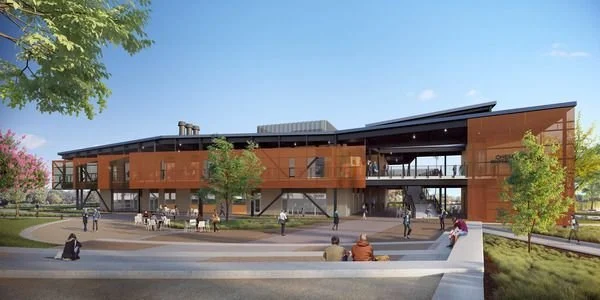
Across the United States, developers are increasingly converting older commercial buildings into new uses. This practice, known as adaptive reuse, is gaining popularity for economic and environmental reasons.
Many cities have aging office buildings with high vacancy rates, especially in downtown cores affected by remote work.
Rather than demolish these structures, developers are transforming them into:
- Residential apartments
- Hotels
- Life science labs
- Co-working spaces
- Mixed-use developments
Cities like Chicago, Philadelphia, and Los Angeles are offering incentives to encourage office-to-residential conversions.
Adaptive reuse projects preserve historic architecture while revitalizing underutilized districts.
In many cases, they also cost less and produce fewer emissions than building entirely new structures.
5. The Rise of Supertall Buildings
Even as some office markets struggle, developers continue to push the limits of vertical construction.
Supertall towers—defined as buildings taller than 984 feet—are becoming more common in major U.S. cities.
Advances in structural engineering and materials allow architects to design towers that are both taller and more slender than previous generations.
These buildings often combine multiple uses, including:
- Luxury residences
- Premium office space
- Hotels
- Observation decks
New York continues to lead the United States in supertall construction, particularly along Manhattan’s “Billionaires’ Row.”
However, cities such as Chicago and Miami are also seeing new high-rise developments that dramatically alter their skylines.
Supertall buildings often become symbolic landmarks that influence a city’s global identity.
6. Life Science and Innovation Districts
Another major commercial development trend is the rise of life science hubs and innovation districts.
Cities with strong universities and research institutions are developing clusters designed to support biotech companies, laboratories, and startups.
Examples include:
- Boston’s Kendall Square
- San Diego’s Torrey Pines district
- South San Francisco’s biotech corridor
Life science buildings require specialized infrastructure such as advanced ventilation, lab facilities, and high-capacity power systems.
These districts often include collaborative office spaces, research labs, residential housing, and public gathering areas.
Because of their specialized requirements, life science developments frequently produce unique architectural forms that add new visual elements to city skylines.
7. Transit-Oriented Development
Commercial development is increasingly aligned with public transportation networks.
Transit-oriented development (TOD) places major office, retail, and residential projects near rail stations, subway lines, and bus corridors.
This strategy helps reduce traffic congestion while encouraging more sustainable commuting patterns.
Cities such as Washington, D.C., Seattle, and Los Angeles have embraced TOD as a central urban planning strategy.
Benefits of transit-focused development include:
- Reduced reliance on cars
- Increased foot traffic for local businesses
- Higher property values near transit hubs
- Lower carbon emissions from commuting
TOD projects often create dense clusters of commercial buildings that reshape the surrounding skyline.
8. Smart Buildings and Digital Infrastructure
Technology is becoming a core component of commercial real estate.
Modern buildings now incorporate digital systems that improve efficiency, security, and tenant experience.
These smart buildings use sensors, automation, and data analytics to manage building operations in real time.
Common features include:
- AI-driven climate control systems
- Smart lighting that adjusts to occupancy
- App-based building access
- Real-time energy monitoring
- Predictive maintenance systems
Technology companies and major employers increasingly prefer buildings equipped with this digital infrastructure.
As a result, developers are integrating smart systems into new commercial towers from the earliest design stages.
9. Migration Patterns Are Reshaping Development
Population shifts within the United States are also influencing skyline growth.
Over the past decade, several southern and western cities have experienced rapid population increases.
Cities experiencing strong commercial development growth include:
- Austin
- Nashville
- Charlotte
- Phoenix
- Tampa
These markets are attracting new corporate headquarters, technology firms, and financial institutions.
As companies relocate or expand into these regions, developers are building new commercial towers and mixed-use districts to accommodate demand.
This shift is gradually redistributing skyline growth beyond traditional hubs like New York and Chicago.
Frequently Asked Questions
What is commercial development in urban planning?
Commercial development refers to the construction of buildings intended for business activities, including offices, retail centers, hotels, and mixed-use developments. These projects play a major role in shaping city skylines and economic activity.
Why are mixed-use developments becoming more popular?
Mixed-use developments create neighborhoods where people can live, work, and socialize in the same area. This model supports economic resilience and reduces reliance on single-purpose office districts.
How has remote work influenced commercial real estate?
Remote and hybrid work has reduced demand for traditional office space in some markets. Developers are responding by creating flexible offices, converting buildings to residential use, and building mixed-use districts.
What is a supertall building?
A supertall building is defined as a structure taller than 984 feet (300 meters). These towers often combine residential, commercial, and hospitality uses.
What is adaptive reuse in commercial real estate?
Adaptive reuse involves repurposing older buildings for new uses, such as converting office buildings into apartments or hotels.
How do green building standards affect commercial development?
Green standards encourage developers to build energy-efficient structures that reduce emissions and operating costs while meeting environmental regulations.
What is transit-oriented development?
Transit-oriented development focuses construction around public transportation hubs to promote walkability and reduce reliance on cars.
Why are life science districts growing in U.S. cities?
The biotechnology and pharmaceutical industries require specialized research facilities. Cities with strong universities and research ecosystems are attracting these developments.
What role does technology play in modern buildings?
Smart building technology improves energy efficiency, security, and tenant experience through automated systems and data analytics.
Which U.S. cities are experiencing the fastest skyline growth?
Cities such as Austin, Miami, Nashville, and Charlotte have seen significant commercial construction growth due to population migration and corporate relocation.
How Commercial Architecture Will Define the Next Generation of Cities
City skylines are more than architectural statements—they reflect economic priorities, technological progress, and cultural identity.
The commercial buildings rising today are designed for a world that values sustainability, flexibility, connectivity, and urban livability.
Developers are no longer simply building office towers. They are creating integrated urban environments that combine work, housing, transportation, and public space.
As these trends continue, the skylines of American cities will evolve in ways that mirror the changing nature of work and urban life.
Key Insights from Today’s Skyline Transformation
- Mixed-use developments are replacing single-purpose office districts
- Office towers now prioritize amenities and employee experience
- Sustainability standards are influencing building design and materials
- Adaptive reuse is revitalizing aging commercial buildings
- Supertall towers remain powerful architectural symbols
- Life science districts are reshaping innovation-focused cities
- Transit-oriented development supports sustainable urban growth
- Smart building technology is transforming property management
- Migration trends are shifting skyline growth toward emerging cities