

Explore how tokenized real estate is transforming property investment. Learn about its benefits, challenges, and real-world examples shaping the future of this emerging asset class.
Tokenized real estate is revolutionizing property investment by leveraging blockchain technology to enable fractional ownership, increased liquidity, and broader access to global markets. This innovative approach is poised to democratize real estate investment, offering both opportunities and challenges for investors and developers alike.
Real estate has long been considered a stable and lucrative asset class. However, traditional barriers such as high capital requirements, illiquidity, and complex transaction processes have limited access to many potential investors. Enter tokenized real estate—a groundbreaking development that utilizes blockchain technology to transform physical properties into digital tokens, allowing for fractional ownership and enhanced liquidity.
This article delves into the concept of tokenized real estate, examining its potential to become a dominant asset class. We will explore its benefits, challenges, real-world applications, and future outlook, providing a comprehensive guide for investors, developers, and industry professionals.
What Is Tokenized Real Estate?
Tokenized real estate involves converting ownership rights of a physical property into digital tokens on a blockchain. Each token represents a share of the property, allowing investors to purchase fractions of real estate assets. This process is facilitated through smart contracts, which automate transactions and ensure transparency and security.
Key Components of Tokenized Real Estate
- Blockchain Technology: Provides a decentralized ledger for recording transactions.
- Smart Contracts: Automate and enforce the terms of agreements without intermediaries.
- Digital Tokens: Represent fractional ownership in the property.
By digitizing real estate assets, tokenization lowers the entry barriers for investors, enabling participation with smaller capital investments.
Benefits of Tokenized Real Estate
Tokenized real estate offers several advantages over traditional property investment methods:
1. Fractional Ownership
Investors can purchase fractions of a property, reducing the need for substantial capital outlay. For instance, platforms like RealT allow investments starting from as low as $50, making real estate accessible to a broader audience (scnsoft.com).
2. Enhanced Liquidity
Tokenized properties can be traded on secondary markets, providing investors with greater flexibility to buy or sell their holdings. This liquidity is a significant improvement over traditional real estate investments, which often involve lengthy transaction processes.
3. Global Access
Blockchain technology enables cross-border transactions, allowing investors from different parts of the world to participate in real estate markets that were previously inaccessible due to geographical or regulatory constraints (debutinfotech.com).
4. Transparency and Security
The immutable nature of blockchain ensures that all transactions are recorded transparently, reducing the risk of fraud and enhancing trust among investors. Smart contracts further automate processes, minimizing human error and increasing efficiency.
5. Lower Transaction Costs
By eliminating intermediaries such as brokers and lawyers, tokenization can significantly reduce transaction fees, making real estate investment more cost-effective.
Challenges and Considerations
Despite its promising benefits, tokenized real estate faces several challenges:
1. Regulatory Uncertainty
The legal framework surrounding tokenized assets is still evolving. Inconsistent regulations across jurisdictions can create compliance challenges and hinder the widespread adoption of tokenized real estate
2. Market Volatility
The value of tokenized assets can be subject to significant fluctuations, influenced by market conditions and investor sentiment. This volatility may pose risks for investors seeking stable returns.
3. Technological Risks
Dependence on blockchain technology introduces risks related to cybersecurity and potential technical failures. Vulnerabilities in smart contracts or blockchain networks could lead to security breaches
4. Limited Historical Data
As a relatively new concept, there is limited historical data on the performance of tokenized real estate investments. This lack of data can make it challenging for investors to assess risks and returns accurately.
5. Legal Recognition of Ownership
While blockchain provides an immutable ledger, the legal recognition of token ownership as valid property ownership remains uncertain in many jurisdictions (thebulldog.law).
Real-World Applications and Case Studies
Several platforms and projects are pioneering the tokenization of real estate:
- RealT: Tokenized over 970 properties in the U.S., allowing investors to purchase tokens representing fractional ownership. The platform offers dividends and operates transparently, with 88% of users investing less than $5,000 (scnsoft.com).
- REI Capital Growth: Tokenized a portfolio of multifamily apartment complexes in Texas, providing investors with digital tokens representing fractional ownership. The project received positive feedback for its transparency and ease of access (antiersolutions.com).
- Seazen Group: A Chinese property developer exploring the tokenization of real-world assets, including intellectual property and asset income, to address liquidity challenges in China’s property sector (reuters.com).
These examples demonstrate the practical application of tokenized real estate and its potential to reshape the investment landscape.
The Future Outlook
The tokenized real estate market is poised for significant growth:
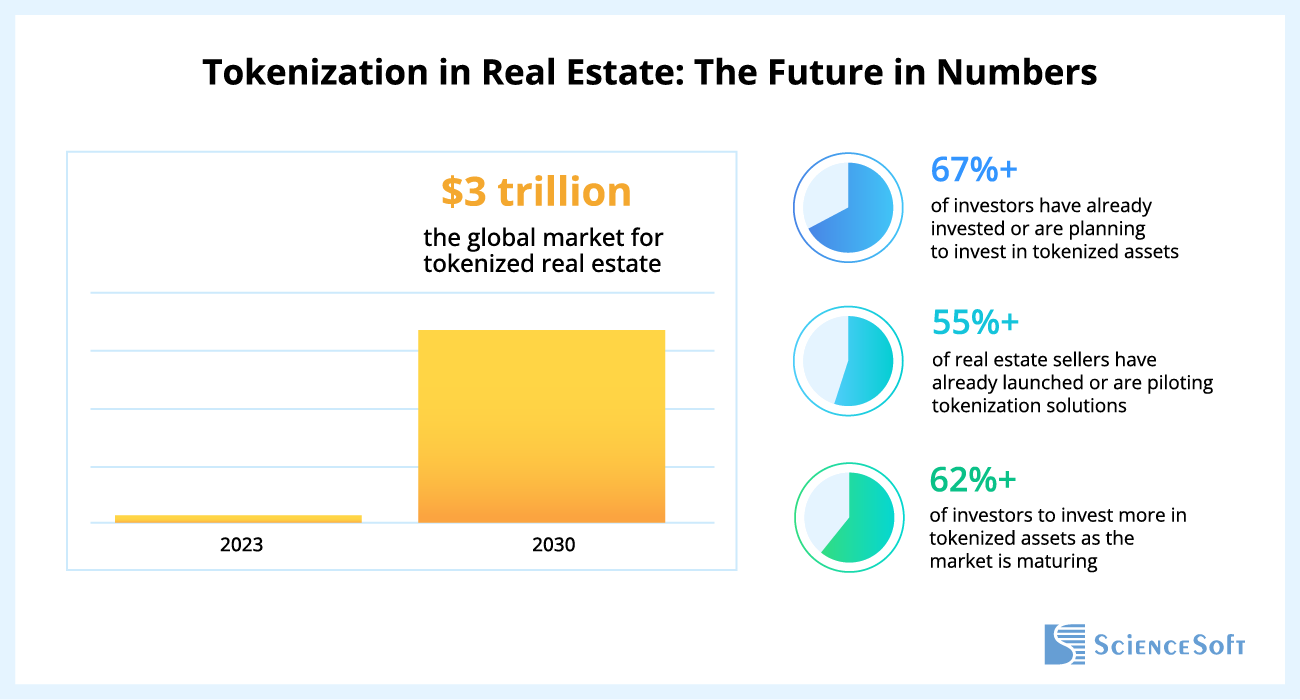
- Market Growth: The share of tokenized assets in real estate portfolios is projected to increase from 1.3% in 2023 to about 6.0% by 2027, indicating growing confidence in this approach
- Institutional Adoption: Major financial institutions, including BlackRock and Nasdaq, are exploring tokenization. Nasdaq has filed a proposal with the U.S. Securities and Exchange Commission to allow trading of tokenized securities, potentially integrating traditional and digital finance
- Regulatory Developments: As the market matures, regulatory bodies are likely to develop clearer guidelines for tokenization, providing more security for investors and encouraging institutional participation
These developments suggest a promising future for tokenized real estate as it becomes an integral part of the global investment ecosystem.
Frequently Asked Questions (FAQs)
1. What is tokenized real estate?
Tokenized real estate involves converting ownership rights of a physical property into digital tokens on a blockchain, allowing for fractional ownership and easier transferability.
2. How does tokenization benefit investors?
Tokenization offers benefits such as fractional ownership, enhanced liquidity, global access, transparency, security, and lower transaction costs.
3. What are the risks associated with tokenized real estate?
Risks include regulatory uncertainty, market volatility, technological vulnerabilities, limited historical data, and challenges in legal recognition of ownership.
4. How can I invest in tokenized real estate?
Investors can participate through platforms like RealT, REI Capital Growth, and Propy, which facilitate the purchase of tokenized property shares.
5. Is tokenized real estate legal?
The legal status of tokenized real estate varies by jurisdiction. It’s essential to consult with legal professionals to understand the regulatory framework in your area.
6. Can tokenized real estate replace traditional property investment?
While tokenized real estate offers many advantages, it is unlikely to replace traditional property investment entirely. Instead, it provides an alternative that complements existing investment strategies.
7. What is the future of tokenized real estate?
The future looks promising, with projections indicating significant growth in tokenized assets within real estate portfolios and increasing institutional adoption.
8. Are there tax implications for investing in tokenized real estate?
Tax implications vary by jurisdiction. Investors should consult with tax professionals to understand the tax treatment of tokenized real estate investments in their area.
9. Can I sell my tokenized property shares?
Yes, tokenized property shares can be traded on secondary markets, providing liquidity to investors.
10. How do I ensure the security of my tokenized real estate investments?
Investors should choose reputable platforms with robust security measures, including encryption and compliance with regulatory standards.
Conclusion
Tokenized real estate represents a transformative shift in property investment, offering enhanced accessibility, liquidity, and transparency. While challenges remain, the growing adoption by investors and institutions signals a promising future for this emerging asset class. By staying informed and engaging with reputable platforms, investors can navigate this evolving landscape and capitalize on the opportunities presented by tokenized real estate.