

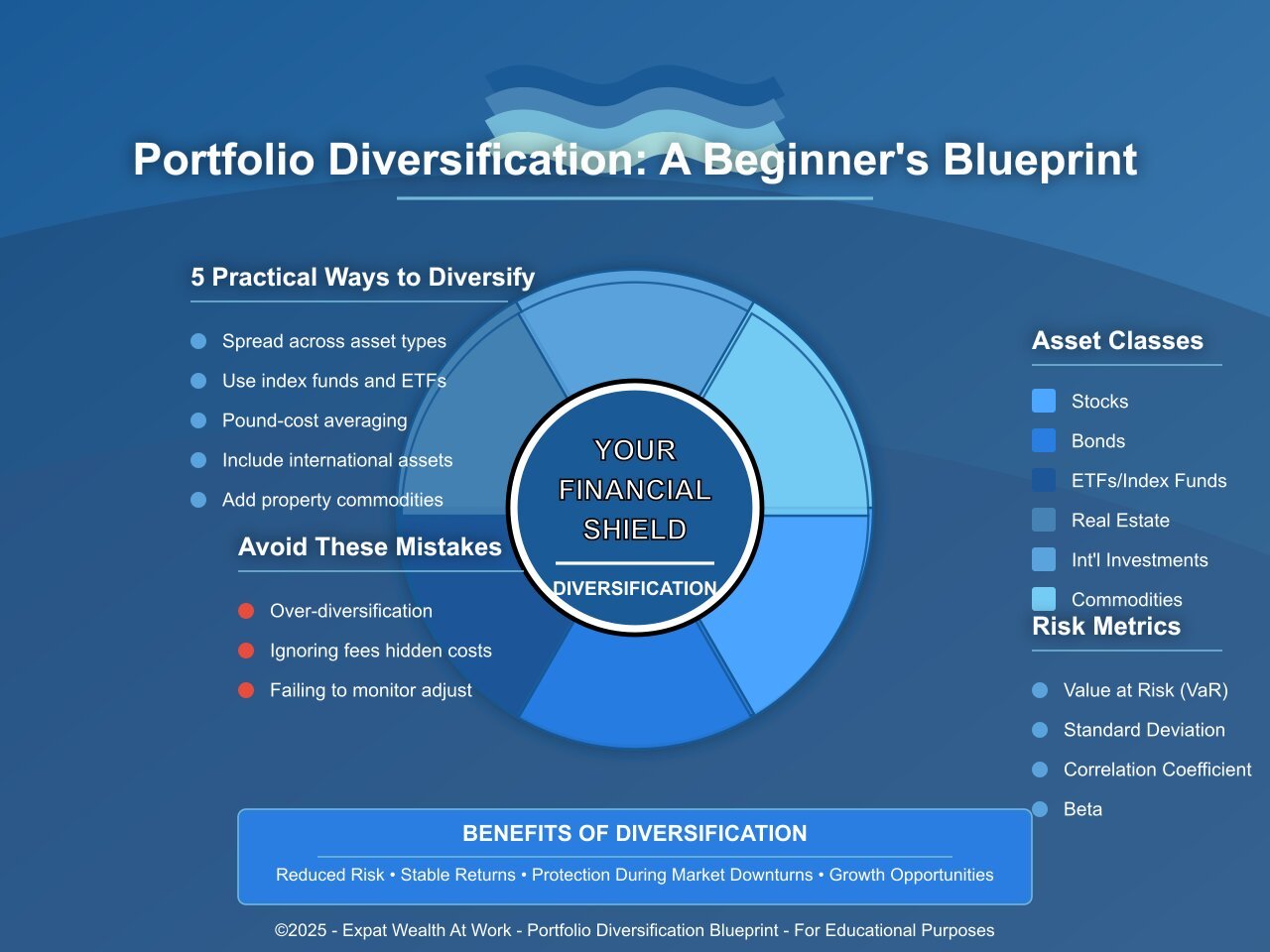
Digital assets are increasingly studied as potential diversification tools in investment portfolios. Academic research and institutional analysis suggest that cryptocurrencies and other blockchain-based assets may behave differently from traditional markets under certain conditions. This article examines what current research says about digital assets, how they may influence diversification strategies, and what investors should realistically consider before including them in portfolios.
Why Diversification Matters in Modern Portfolio Management
Diversification has long been one of the central principles of portfolio management. The idea is straightforward: spreading investments across multiple asset classes can reduce overall risk by limiting exposure to any single market.
Traditional diversified portfolios typically include a mix of:
- Equities (stocks)
- Fixed income securities (bonds)
- Real estate
- Commodities
- Cash equivalents
Each of these asset classes behaves differently depending on economic conditions. Stocks may perform well during periods of economic growth, while bonds often provide stability during downturns. Commodities can respond to inflation, while real estate may benefit from long-term population growth.
In recent years, digital assets have entered conversations about diversification because they represent a new category of financial instruments with distinct characteristics.
For investors, the key question is not simply whether digital assets can produce returns, but whether they can improve the risk-adjusted performance of a diversified portfolio.
What Counts as a Digital Asset in Investment Research?
When researchers study digital assets in the context of portfolio diversification, they usually focus on blockchain-based financial instruments such as cryptocurrencies.
However, the broader category of digital assets may include several types of investments:
- Cryptocurrencies such as Bitcoin and Ethereum
- Stablecoins designed to maintain a fixed value
- Tokenized assets representing real-world assets on blockchain networks
- Decentralized finance (DeFi) tokens used in blockchain-based financial applications
- Non-fungible tokens (NFTs) representing unique digital ownership
Most academic and institutional research currently focuses on cryptocurrencies because they have the longest track record and the most reliable market data.
Among these, Bitcoin is frequently analyzed because it has the largest market capitalization and the longest price history.
What Academic Research Says About Digital Asset Diversification
Several universities and financial research institutions have studied the role of digital assets in diversified portfolios.
A widely cited study by researchers at Yale University suggested that cryptocurrencies may offer diversification benefits due to historically low correlations with traditional assets.
Similarly, research from the University of Cambridge Centre for Alternative Finance and various institutional reports have examined how cryptocurrencies interact with equity markets, commodities, and foreign exchange.
The key insight from many of these studies is that digital assets have sometimes shown low or changing correlations with traditional investments.
In portfolio theory, this matters because assets that behave differently during market cycles can help reduce overall volatility.
However, researchers also emphasize that correlations between digital assets and traditional markets have evolved over time. During certain periods, particularly market stress events, cryptocurrencies have moved more closely with equities.
This means diversification benefits may exist, but they are not guaranteed and may vary across market conditions.
Understanding Correlation and Its Importance
Correlation measures how closely two assets move relative to each other.
If two assets move in the same direction consistently, they have a high positive correlation. If they move in opposite directions, they have a negative correlation.
Diversification works best when assets have low or negative correlation.
Historically, cryptocurrencies have shown periods of relatively low correlation with traditional assets such as:
- U.S. equities
- Government bonds
- Gold
For example, early research from institutional analysts found that Bitcoin’s correlation with the S&P 500 was often low during its early years.
However, correlations are dynamic. As the digital asset market grows and more institutional investors participate, correlations may change.
This is one reason financial professionals emphasize continuous monitoring rather than assuming diversification benefits will always remain constant.
How Portfolio Allocations Are Being Studied
Portfolio researchers frequently test hypothetical allocations to evaluate how digital assets might influence portfolio performance.
In many academic simulations, researchers explore small allocations—typically between 1% and 5% of total portfolio value.
These studies often test scenarios such as:
- A traditional 60/40 portfolio (60% equities, 40% bonds)
- A diversified portfolio including commodities
- A portfolio with a small allocation to cryptocurrencies
Some research findings suggest that limited exposure to digital assets may improve portfolio returns over certain historical periods, though the impact on volatility varies.
It is important to note that historical simulations do not guarantee future outcomes. Digital asset markets remain relatively young compared with traditional financial markets.
Practical Example: A Diversified Portfolio Scenario
To understand how digital assets may affect diversification, consider a simplified example.
An investor has a portfolio worth $250,000 structured as follows:
- 60% U.S. equities
- 30% bonds
- 10% real estate investment trusts (REITs)
After researching digital assets, the investor decides to allocate 2% of the portfolio to a cryptocurrency investment.
The revised allocation becomes:
- 58% equities
- 30% bonds
- 10% REITs
- 2% digital assets
In this scenario, digital assets represent a small exploratory position rather than a core portfolio component.
This approach reflects how many financial professionals evaluate emerging asset classes—through modest allocations that limit downside risk while allowing exposure to potential diversification benefits.
Institutional Perspectives on Digital Asset Diversification
Institutional investors have increasingly studied digital assets as part of broader alternative investment strategies.
Research from Fidelity Digital Assets indicates that institutional investors are exploring cryptocurrencies primarily for three reasons:
- Portfolio diversification potential
- Exposure to emerging financial technology
- Long-term growth possibilities in blockchain ecosystems
Similarly, several large asset managers have published research analyzing how cryptocurrencies behave relative to traditional markets.
Many institutions remain cautious, emphasizing the importance of risk management, regulatory clarity, and long-term research.
Still, the fact that major institutions are studying digital assets at all reflects how the conversation around diversification has evolved.
Risks That Affect Diversification Benefits
Although digital assets may provide diversification in certain circumstances, they also carry unique risks that investors must understand.
Market Volatility
Cryptocurrency prices can experience significant swings within short timeframes. This volatility can offset diversification benefits if the allocation is too large.
Regulatory Uncertainty
Regulatory developments may influence market behavior, liquidity, and institutional participation.
Market Maturity
Digital asset markets are still developing. Liquidity, infrastructure, and regulation continue to evolve.
Behavioral Risk
Because digital assets attract significant media attention, investors may be tempted to allocate too much of their portfolios to speculative opportunities.
Financial advisors often emphasize that diversification works best when allocations remain balanced and disciplined.
Key Factors Investors Should Evaluate
Before including digital assets in a diversified portfolio, investors typically analyze several important factors.
These include:
- Personal risk tolerance
- Investment time horizon
- Liquidity needs
- Regulatory developments
- Portfolio size and diversification level
Many financial professionals also recommend viewing digital assets through the lens of long-term strategy rather than short-term speculation.
Investors who choose to explore digital assets often do so as part of a broader financial plan rather than treating them as stand-alone investments.
Frequently Asked Questions
Do digital assets actually improve portfolio diversification?
Some research suggests that digital assets may offer diversification benefits due to periods of low correlation with traditional assets, though results vary depending on market conditions.
How much digital asset exposure is typical in diversified portfolios?
Many portfolio simulations explore allocations between 1% and 5%, though the appropriate amount depends on individual risk tolerance.
Are cryptocurrencies considered alternative investments?
Yes. Cryptocurrencies are generally categorized as alternative investments alongside assets such as commodities, hedge funds, and private equity.
Why do institutions study digital assets?
Institutional investors study digital assets for diversification potential, exposure to new technology, and long-term investment opportunities.
Can digital assets reduce overall portfolio risk?
They may reduce risk in certain scenarios if correlations with other assets remain low, but their volatility can also increase risk if allocations are too large.
Are digital assets correlated with the stock market?
Correlations have varied over time. In some periods cryptocurrencies have moved independently of equities, while in others they have shown stronger correlations.
What is the biggest risk of adding digital assets to a portfolio?
High price volatility remains the most significant risk for most investors.
Are digital assets suitable for retirement portfolios?
Some investors include small allocations, but suitability depends on risk tolerance, time horizon, and overall financial planning.
How do investors store digital assets?
Digital assets are typically stored in digital wallets or through institutional custody services.
Is diversification still important if investing in digital assets?
Yes. Digital assets should generally be viewed as one component within a diversified investment strategy rather than a replacement for traditional assets.
Where Digital Assets May Fit in the Evolving Investment Landscape
The role of digital assets in portfolio diversification is still being studied. While early research suggests potential benefits under certain conditions, the long-term behavior of these markets remains uncertain.
What is clear is that digital assets represent a new category of financial innovation. As blockchain technology develops and regulatory frameworks evolve, researchers and investors will continue analyzing how these assets interact with traditional markets.
For investors, the most practical approach may be cautious exploration—supported by research, careful allocation, and a strong commitment to diversification.
Important Lessons From the Diversification Research
- Digital assets are increasingly studied as potential diversification tools
- Research suggests cryptocurrencies have sometimes shown low correlations with traditional assets
- Small allocations are commonly used in portfolio simulations
- Institutional investors are researching digital asset strategies
- Market volatility remains a major risk factor
- Correlations between digital assets and traditional markets can change
- Diversification works best when allocations remain disciplined and balanced