

Summary
Industrial real estate forms the physical backbone of modern manufacturing. From advanced production facilities to strategically located logistics hubs, the design, location, and management of industrial properties directly influence productivity, supply chains, and economic growth. Understanding how factories and industrial real estate interact helps businesses scale operations efficiently while supporting domestic manufacturing, workforce development, and resilient supply networks.
Understanding the Foundation of Modern Manufacturing
Factories have evolved far beyond the traditional image of smokestacks and assembly lines. Today’s manufacturing facilities are sophisticated environments integrating robotics, data systems, advanced materials, and streamlined logistics networks. Yet despite the technological transformation, one fundamental requirement remains unchanged: manufacturing needs the right physical space.
Industrial real estate refers to properties designed for production, storage, distribution, and related operational functions. This includes manufacturing plants, warehouses, flex spaces, research facilities, and distribution centers.
In the United States, industrial real estate has become one of the most strategically important sectors in commercial property. According to data from CBRE and JLL, industrial vacancy rates in major U.S. markets have remained historically low in recent years, reflecting strong demand driven by manufacturing growth, reshoring initiatives, and e-commerce logistics expansion.
Factories rely on these properties not just as buildings, but as operational ecosystems where supply chains, equipment, labor, and transportation intersect.
Why Industrial Real Estate Matters to Manufacturing
The location and design of a factory influence almost every aspect of production efficiency.
A well-planned industrial property supports smooth material flow, employee productivity, and cost control. Poorly located or outdated facilities can increase transportation costs, limit expansion potential, and disrupt supply chains.
Industrial real estate plays several critical roles in modern manufacturing:
- Operational efficiency – layouts designed for production workflows
- Supply chain connectivity – proximity to highways, rail, ports, or airports
- Scalability – space for expansion and equipment upgrades
- Regulatory compliance – zoning, safety, and environmental standards
- Labor accessibility – proximity to skilled workforce pools
For example, automotive suppliers often cluster factories within a few hundred miles of assembly plants to reduce transportation costs and improve delivery reliability.
In practice, industrial real estate becomes part of a manufacturer’s long-term strategy rather than simply a leased building.
The Evolution of Factory Design
Manufacturing facilities today are dramatically different from factories built decades ago.
Older factories were often designed around large assembly lines with minimal flexibility. Modern facilities must adapt quickly to automation, robotics integration, and shifting production volumes.
Key design features now common in modern industrial real estate include:
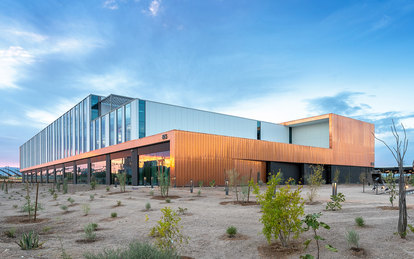
- High ceilings to accommodate robotics and automated storage systems
- Reinforced floors for heavy machinery
- Advanced ventilation and climate control systems
- Energy-efficient lighting and smart building systems
- Flexible floor plans for changing production needs
These features allow manufacturers to integrate technologies such as automated guided vehicles (AGVs), robotic arms, and AI-driven quality control systems.
For instance, many electronics manufacturers now use modular production layouts that allow equipment lines to be reconfigured as product demand changes.
Industrial real estate developers increasingly collaborate with manufacturers early in the design process to ensure buildings support advanced production environments.
Strategic Location: The Geography of Modern Factories
Where a factory is located can determine whether operations run smoothly or face constant logistical challenges.
Manufacturers evaluate several factors when choosing industrial real estate:
- Transportation infrastructure
- Access to suppliers
- Labor availability
- Energy costs
- Tax incentives
- Environmental regulations
In the United States, several manufacturing corridors have emerged due to these advantages.
Examples include:
- The Midwest manufacturing belt – strong automotive and heavy machinery production
- The Southeast manufacturing corridor – growing automotive and aerospace sectors
- Texas industrial hubs – electronics, semiconductors, and energy manufacturing
- California logistics clusters – ports and advanced technology production
Proximity to ports has become especially important for manufacturers involved in global supply chains.
For example, companies importing components from Asia often locate facilities near ports in Los Angeles, Long Beach, Savannah, or Houston to reduce transit time.
The Rise of Reshoring and Domestic Manufacturing
In recent years, many U.S. manufacturers have begun shifting production closer to domestic markets.
This trend—often called reshoring—accelerated during global supply chain disruptions in the early 2020s. Companies recognized the risks associated with overly long supply chains.
Industrial real estate demand increased significantly as manufacturers sought new factory space within the United States.
According to the Reshoring Initiative, more than 350,000 manufacturing jobs were announced for reshoring or foreign direct investment in 2022 alone.
New factory construction is especially visible in industries such as:
- Semiconductors
- Electric vehicles and batteries
- Medical equipment
- Aerospace components
- Advanced materials
Large industrial developments are emerging near technology hubs and logistics centers where workforce and infrastructure already exist.
These projects require significant land parcels and specialized building specifications, which industrial real estate developers must plan years in advance.
The Role of Industrial Parks and Manufacturing Clusters
Industrial parks have become an increasingly popular model for modern manufacturing.
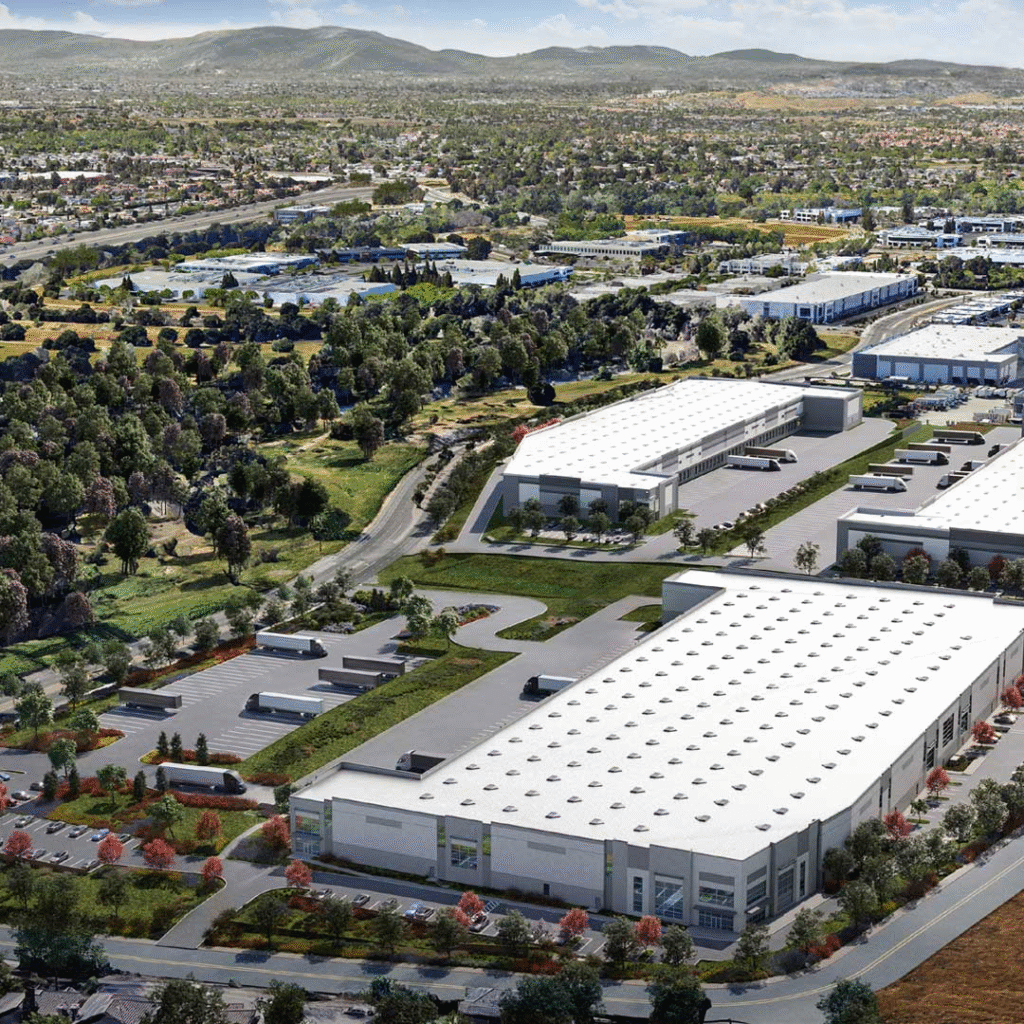
Instead of isolated factories, many companies now operate within planned industrial zones designed to support multiple manufacturers and logistics providers.
These developments offer several advantages:
- Shared infrastructure such as utilities and transportation access
- Proximity to suppliers and partners
- Lower construction costs through standardized designs
- Access to specialized labor pools
A practical example can be seen in the automotive manufacturing clusters in the Southeast, where suppliers often locate facilities near major assembly plants.
This clustering reduces transportation time and allows manufacturers to implement just-in-time delivery systems, where parts arrive exactly when needed on the production line.
Industrial real estate developers frequently work with local governments to create these clusters through zoning incentives and infrastructure investment.
Warehousing and Logistics Integration
Modern manufacturing depends heavily on efficient logistics.
Factories no longer operate as isolated production sites. Instead, they are part of interconnected networks involving suppliers, distribution centers, and transportation hubs.
Industrial real estate increasingly combines manufacturing space with logistics capabilities.
Many facilities now include:
- On-site warehousing
- Automated inventory systems
- Truck loading docks and logistics yards
- Integrated distribution operations
This integration allows companies to streamline operations and reduce inventory holding costs.
For example, a manufacturer producing consumer appliances may build a facility where production lines feed directly into automated storage and shipping systems. Finished products can be loaded onto trucks within hours of assembly.
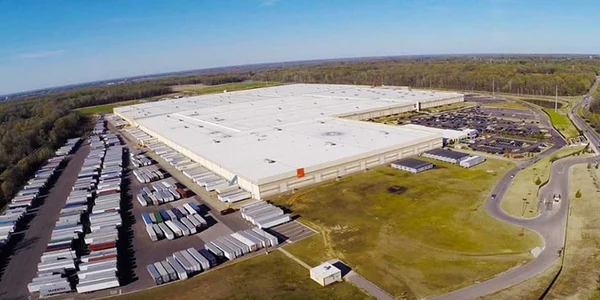
Industrial buildings supporting this model often exceed 500,000 square feet and require significant land for vehicle access and storage.
Sustainability in Industrial Real Estate
Environmental responsibility has become an important consideration in factory design.
Manufacturers face increasing pressure from regulators, investors, and consumers to reduce emissions and energy consumption.
As a result, industrial real estate developers are incorporating sustainability features into modern factory construction.
Examples include:
- Solar panel installations on large factory roofs
- Energy-efficient HVAC systems
- Water recycling systems
- Electric vehicle charging infrastructure
- Sustainable building materials
Large industrial buildings often have expansive roof surfaces, making them ideal for solar energy generation.
In some facilities, solar panels provide a meaningful portion of operational electricity needs, reducing both environmental impact and long-term energy costs.
Sustainable factory design also helps companies meet environmental reporting requirements and corporate ESG goals.
Technology and the Smart Factory Environment
The concept of the smart factory is reshaping industrial real estate requirements.
Smart factories rely on connected devices, sensors, and real-time data analysis to optimize production processes.
This shift affects building design in several ways.
Factories now require robust digital infrastructure including:
- High-capacity fiber connectivity
- IoT sensor networks
- Data centers or edge computing capabilities
- Cybersecurity systems for industrial networks
These technological requirements mean that modern industrial properties must support both physical production and digital operations.
Real estate developers increasingly design facilities with integrated IT infrastructure so manufacturers can deploy advanced automation without costly retrofits.
Workforce Considerations in Factory Location
Industrial real estate decisions also depend heavily on workforce access.
Manufacturing jobs increasingly require technical skills related to robotics, engineering, and quality control systems.
Companies often choose factory locations based on proximity to:
- Technical colleges
- vocational training programs
- engineering talent
- existing manufacturing labor pools
States and local governments frequently partner with manufacturers to provide workforce development programs tied to new factory developments.
For example, when a large manufacturing plant opens in a region, community colleges may create training programs tailored specifically to that facility’s equipment and processes.
This alignment between industrial real estate and workforce planning supports long-term operational stability.
Challenges Facing Industrial Real Estate for Manufacturing
Despite strong demand, the industrial real estate sector faces several ongoing challenges.
Manufacturers must navigate rising land costs, zoning regulations, and infrastructure limitations when developing new factories.
Common obstacles include:
- Limited industrial land availability near major cities
- Rising construction costs
- Local zoning restrictions
- Community concerns about environmental impact
- Infrastructure capacity for utilities and transportation
Balancing economic development with environmental responsibility has become a major planning consideration for industrial projects.
Developers must collaborate closely with municipalities, environmental agencies, and community stakeholders to ensure projects meet regulatory requirements and local expectations.
Frequently Asked Questions
What is industrial real estate in manufacturing?
Industrial real estate refers to properties used for production, storage, distribution, and logistics operations. This includes factories, warehouses, research facilities, and distribution centers designed to support manufacturing activities.
Why is location important for factories?
Factory location affects transportation costs, access to suppliers, labor availability, and delivery efficiency. Strategic locations near highways, rail networks, and ports help manufacturers maintain reliable supply chains.
What types of buildings are considered industrial properties?
Common industrial property types include manufacturing plants, warehouses, flex industrial spaces, research facilities, and distribution centers.
How large are modern manufacturing facilities?
Modern factories vary widely in size, but many large manufacturing plants exceed 300,000 to 1 million square feet depending on the industry and production scale.
What is a manufacturing cluster?
A manufacturing cluster is a geographic concentration of related companies, suppliers, and logistics providers that benefit from shared infrastructure and workforce availability.
Why is industrial real estate demand growing in the United States?
Demand has increased due to reshoring, e-commerce logistics expansion, advanced manufacturing growth, and supply chain resilience efforts.
What is a smart factory?
A smart factory uses connected devices, automation, and data analytics to optimize manufacturing processes and improve efficiency.
How does sustainability affect factory design?
Sustainable factory design includes energy-efficient systems, renewable energy integration, and environmentally responsible building materials.
What industries require specialized industrial real estate?
Industries such as automotive manufacturing, semiconductor production, pharmaceuticals, aerospace, and food processing often require highly specialized facilities.
What role do industrial parks play in manufacturing?
Industrial parks provide shared infrastructure, efficient logistics access, and proximity to suppliers, making them attractive locations for manufacturing operations.
How Industrial Real Estate Shapes the Future of American Manufacturing
Industrial real estate is more than a backdrop for manufacturing—it is an active contributor to how modern factories operate and grow. From strategic location decisions to advanced facility design, the physical environment of production influences efficiency, innovation, and supply chain resilience.
As technology, sustainability expectations, and global trade patterns evolve, industrial properties will continue adapting to meet the needs of modern manufacturers.
Communities that invest in infrastructure, workforce development, and thoughtfully planned industrial zones are likely to remain competitive in attracting future manufacturing investment.
Factories may change in form and technology, but the importance of well-planned industrial real estate will remain central to the success of modern manufacturing.
Key Points at a Glance
- Industrial real estate provides the physical foundation for modern manufacturing operations
- Factory design now incorporates automation, robotics, and smart infrastructure
- Strategic location choices influence logistics efficiency and supply chain resilience
- Reshoring trends are increasing demand for U.S. manufacturing facilities
- Industrial parks help manufacturers cluster near suppliers and logistics hubs
- Sustainability and energy efficiency are becoming standard features in new factories
- Workforce availability remains a major factor in factory location decisions