

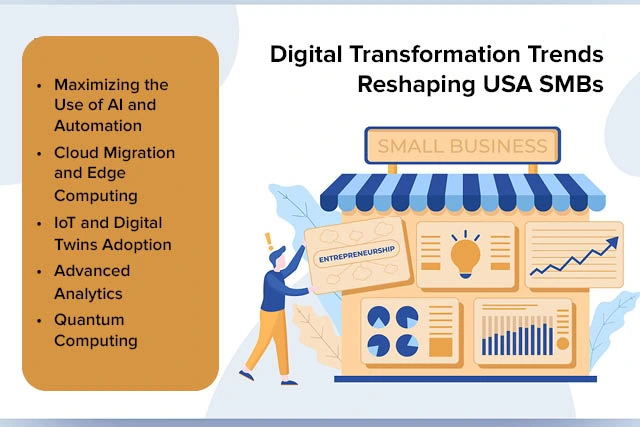
Digital tools are transforming how businesses start and operate in the United States. Cloud platforms, no-code development tools, AI assistants, and online marketplaces allow entrepreneurs to launch companies faster and with fewer resources than ever before. This shift is redefining entrepreneurship itself—enabling individuals to test ideas, reach customers globally, and build sustainable companies without the traditional barriers that once limited new founders.
A Quiet Revolution in American Entrepreneurship
Over the past two decades, starting a business in the United States has changed in ways that are both subtle and profound. While headlines often focus on venture capital rounds or high-profile startups, the more significant transformation has been happening quietly through the widespread adoption of digital tools.
These technologies have fundamentally altered the economics of entrepreneurship. Where launching a company once required significant upfront capital, physical infrastructure, and specialized expertise, today many founders can start with a laptop, an internet connection, and a carefully chosen set of software platforms.
According to data from the U.S. Census Bureau’s Business Formation Statistics, applications for new businesses increased significantly after 2020, reflecting both economic shifts and the growing accessibility of entrepreneurship. Digital tools played a major role in enabling this surge.
The result is a more decentralized, accessible, and flexible entrepreneurial landscape.
Lower Barriers to Entry for New Founders
One of the most important changes digital tools have introduced is the dramatic reduction in barriers to entry.
In the past, entrepreneurs faced several significant obstacles before launching a company:
- High technology infrastructure costs
- Limited access to marketing channels
- Complex payment systems
- Difficulty hiring specialized talent
Today, many of these barriers have been removed or significantly reduced.
Cloud computing platforms allow businesses to operate without owning servers. Online payment systems enable instant transactions with customers worldwide. Digital marketing platforms allow startups to reach audiences with modest budgets.
As a result, founders can move from idea to launch in weeks rather than months.
For example, a small online retail brand can now launch using tools such as:
- e-commerce platforms
- digital advertising networks
- fulfillment services
- automated customer support software
This digital infrastructure allows even small teams to compete with established companies.
The Rise of the Solo Entrepreneur
Digital tools have also enabled a growing number of solo entrepreneurs—individuals who build and operate businesses without large teams.
A decade ago, running a company often required multiple employees across operations, marketing, customer service, and technical development. Today, automation tools can handle many of these tasks.
Common capabilities now available to solo founders include:
- Automated email marketing campaigns
- AI-generated content and research assistance
- website builders requiring no coding experience
- customer support chatbots
- integrated financial management tools
Because of this technology stack, a single founder can operate a business that previously required an entire team.
This model has led to the rise of what many analysts call “one-person startups,” particularly in industries such as software development, digital education, consulting, and online media.
No-Code and Low-Code Platforms Are Expanding Possibilities
Another major shift in entrepreneurship comes from the growth of no-code and low-code development platforms.
Historically, building a software product required advanced programming expertise. Today, many platforms allow founders to build functional applications through visual interfaces and drag-and-drop components.
This means entrepreneurs can focus more on solving problems rather than writing code.
Common uses for no-code platforms include:
- Building internal workflow tools
- Creating marketplaces or membership sites
- launching SaaS prototypes
- developing automated customer onboarding systems
These platforms dramatically shorten the time required to test a business idea.
A founder who once needed months of development work can now build a prototype within days and begin gathering feedback from real customers.
Digital Marketplaces Provide Immediate Access to Customers
Another defining feature of modern entrepreneurship is access to digital marketplaces.
In the past, reaching customers required physical distribution networks or significant advertising budgets. Today, online marketplaces allow new businesses to connect directly with buyers.
Examples include platforms that support:
- digital product sales
- freelance services
- online courses
- handmade goods
- software subscriptions
These platforms offer built-in audiences, payment processing, and marketing tools.
For many entrepreneurs, they serve as the first stage of business development. Founders can validate demand on these platforms before building independent brands or websites.
Artificial Intelligence Is Accelerating Business Operations
Artificial intelligence tools are quickly becoming a central part of the modern entrepreneurial toolkit.
While AI does not replace strategic decision-making, it can significantly accelerate many routine tasks that once required large teams.
Entrepreneurs are increasingly using AI tools for:
- market research and competitive analysis
- drafting marketing content
- customer service automation
- data analysis and reporting
- product design assistance
These tools allow founders to move faster while maintaining operational efficiency.
For example, a small digital marketing agency can now generate campaign drafts, analyze advertising performance, and produce reports with the help of AI software—tasks that previously required multiple specialists.
This shift allows entrepreneurs to focus on strategy, customer relationships, and product innovation.
Remote Work Has Expanded Entrepreneurial Talent Pools
Digital collaboration tools have also reshaped how entrepreneurs build teams.
Before widespread remote work technology, startups typically hired employees within commuting distance of their offices. Today, founders can recruit talent from across the country—or around the world.
Tools enabling this shift include:
- video conferencing platforms
- project management software
- cloud document collaboration systems
- digital time-tracking tools
These technologies allow distributed teams to work effectively without centralized offices.
For entrepreneurs, this change has several advantages:
- access to broader talent pools
- reduced office overhead costs
- greater workforce flexibility
As a result, many modern startups operate entirely remotely from their earliest stages.
Financial Technology Is Simplifying Business Operations
Fintech innovations have also simplified the administrative side of entrepreneurship.
Starting and managing a business once involved complex banking processes, accounting systems, and invoicing procedures.
Today, entrepreneurs have access to integrated financial platforms that combine multiple functions:
- digital business banking
- automated bookkeeping
- tax tracking tools
- invoicing software
- expense management systems
These platforms allow founders to manage finances more efficiently and maintain accurate records from the start.
For small businesses especially, these tools reduce the need for extensive administrative support.
Data-Driven Decision Making Is Now Accessible to Everyone
Another important transformation involves data.
Large corporations have long relied on data analytics to guide strategic decisions. Today, digital analytics tools make similar capabilities available to small businesses.
Entrepreneurs can track metrics such as:
- website traffic patterns
- customer acquisition costs
- product conversion rates
- email marketing performance
- customer retention rates
These insights allow founders to make informed decisions about marketing strategies, product development, and pricing models.
Instead of relying on assumptions, modern entrepreneurs can analyze real customer behavior and adjust their strategies accordingly.
Challenges Still Exist for Digital Entrepreneurs
Despite these technological advantages, starting a business remains challenging.
Digital tools reduce operational barriers, but they do not eliminate the fundamental requirements of entrepreneurship:
- identifying real customer problems
- delivering consistent value
- managing financial risk
- adapting to market changes
In fact, the ease of launching businesses has increased competition in many industries. This means entrepreneurs must differentiate themselves through strong products, reliable service, and thoughtful branding.
Digital tools enable entrepreneurship—but they do not replace the need for sound business judgment.
Frequently Asked Questions
How are digital tools changing entrepreneurship in the United States?
Digital tools reduce startup costs, automate routine tasks, and allow entrepreneurs to reach customers globally. These capabilities make it easier for individuals to launch and manage businesses.
Can someone start a business with just a laptop today?
In many industries—such as consulting, digital media, education, and software—the answer is yes. Cloud tools and online platforms allow entrepreneurs to operate fully online.
What are the most important digital tools for new entrepreneurs?
Common tools include cloud hosting platforms, website builders, email marketing software, accounting tools, payment processors, and project management systems.
Do entrepreneurs still need technical skills?
Technical skills can be helpful, but many platforms now allow founders to build websites, apps, and digital products without coding experience.
How do digital marketplaces help startups?
Marketplaces provide built-in audiences and simplified payment systems, allowing entrepreneurs to validate demand quickly.
Are one-person businesses becoming more common?
Yes. Automation and digital tools have made it possible for individuals to run businesses that previously required larger teams.
Is remote work important for modern startups?
Remote work allows entrepreneurs to hire talent from broader geographic areas and reduce operating costs.
Do digital tools reduce the risk of starting a business?
They can reduce financial risk by lowering startup costs and enabling faster experimentation, but entrepreneurship still involves uncertainty.
What industries benefit most from digital entrepreneurship?
Technology services, online education, consulting, digital products, and e-commerce businesses often benefit the most.
Can digital tools replace traditional business skills?
No. Tools improve efficiency, but success still depends on leadership, strategy, customer understanding, and financial discipline.
The Emerging Shape of the Digital-First Entrepreneur
Entrepreneurship in the United States is entering a new phase—one defined less by physical infrastructure and more by digital capability.
The modern founder operates within an ecosystem of platforms, automation systems, and global networks that dramatically expand what a small team—or even a single individual—can accomplish.
This transformation does not change the core principles of entrepreneurship. Businesses still succeed by solving meaningful problems and delivering value to customers.
What digital tools change is the scale and speed at which those ideas can become reality.
For many Americans considering entrepreneurship, the opportunity today is not simply to start a business—it is to build one with resources and reach that were unimaginable just a generation ago.
Essential Insights From the Digital Entrepreneurship Shift
- Digital infrastructure has dramatically reduced startup costs
- Solo entrepreneurs can now operate sophisticated businesses
- No-code tools allow founders to build products without programming
- Online marketplaces provide instant access to customers
- AI tools accelerate marketing, research, and customer support
- Remote work enables global talent recruitment
- Fintech platforms simplify business administration
- Data analytics allow founders to make smarter decisions
 Julia
Julia