

Summary
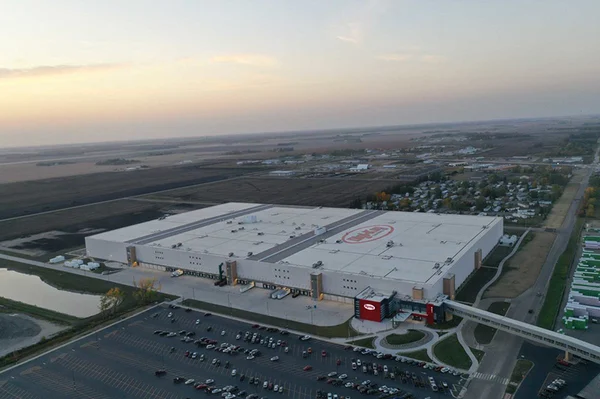
The rapid growth of e-commerce has reshaped how warehouses are designed, located, and operated across the United States. Retailers and logistics providers now require larger, technology-enabled distribution centers positioned closer to consumers. From automation and last-mile delivery hubs to cold storage facilities and micro-fulfillment centers, warehouse development is evolving quickly to support faster shipping and growing online demand.
The E-Commerce Surge and Its Impact on Industrial Real Estate
Over the past decade, e-commerce has moved from a growing retail segment to a central part of the American economy. According to the U.S. Census Bureau, online retail accounted for roughly 15–16% of total retail sales in 2024, a share that continues to increase as consumers rely more on digital shopping platforms.
This shift has fundamentally changed logistics infrastructure. Retailers once depended primarily on regional distribution centers supplying brick-and-mortar stores. Today, online orders must move quickly from warehouses to individual households, often within one or two days.
As a result, warehouse development has accelerated dramatically. Industrial real estate—particularly logistics and distribution facilities—has become one of the most active segments in the U.S. property market.
Developers, investors, and logistics operators are responding to new requirements:
- Faster order fulfillment
- Greater inventory storage capacity
- Technology-enabled operations
- Strategic proximity to urban populations
These changes are not incremental. They represent a structural shift in how warehouses are planned, built, and operated.
From Storage Facilities to Fulfillment Engines
Traditional warehouses were designed primarily for storage. Pallets were stacked, inventory remained stationary for long periods, and trucks moved goods between regional hubs.
E-commerce warehouses serve a very different purpose: rapid order fulfillment.
Instead of shipping large volumes to stores, warehouses now process thousands—or even millions—of individual orders daily. This operational shift influences nearly every aspect of warehouse design.
Key differences in modern fulfillment centers
- Higher throughput: Facilities process a constant flow of small orders rather than bulk shipments.
- Advanced sorting systems: Conveyor networks and automated picking technologies speed up packaging.
- Flexible layouts: Warehouses must accommodate frequent inventory changes.
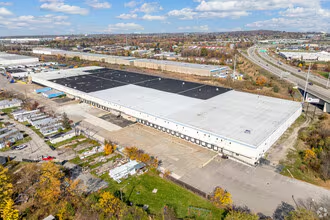
- Large footprints: Modern fulfillment centers often exceed 500,000 square feet.
A major online retailer, for example, may operate multiple fulfillment centers in a single metropolitan region to reduce delivery times. These facilities combine robotics, automated inventory systems, and high-density storage to handle large order volumes efficiently.
The warehouse is no longer simply a storage building—it has become a core operational engine in the e-commerce supply chain.
Location Strategy: Warehouses Moving Closer to Cities
One of the most noticeable trends in warehouse development is geographic repositioning.
Historically, warehouses were built in remote industrial zones where land was inexpensive. But the economics of e-commerce have changed the equation.
Consumers now expect fast delivery. Two-day shipping has become standard, and same-day delivery is increasingly common in major cities.
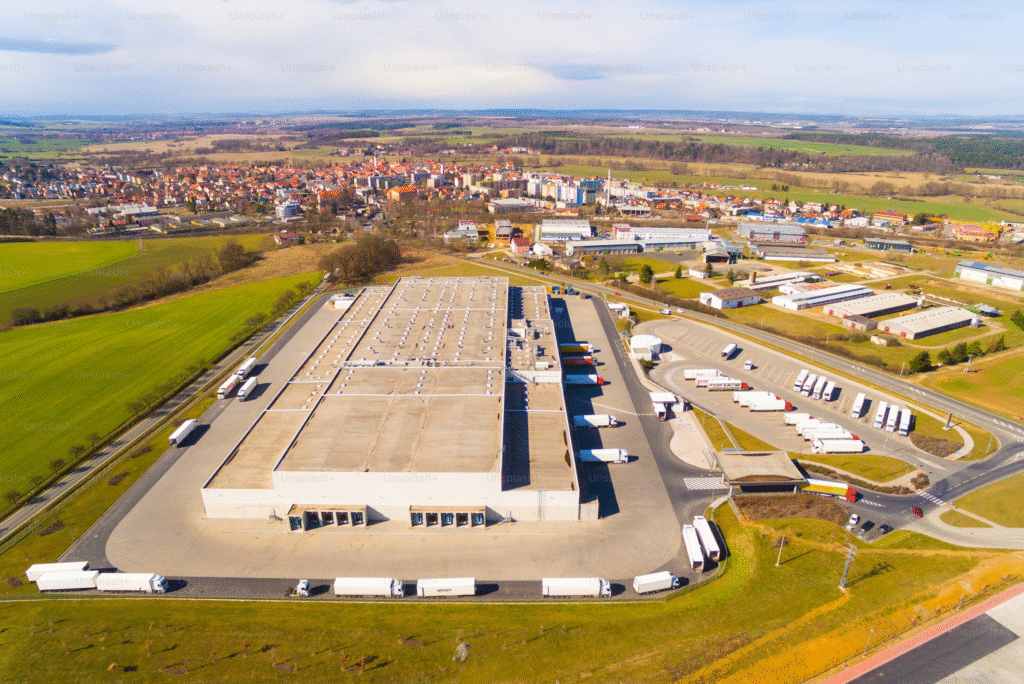
To meet these expectations, logistics providers are establishing distribution hubs closer to large population centers.
Key location factors developers consider
- Access to major highways and interstates
- Proximity to large consumer populations
- Availability of labor for warehouse operations
- Access to ports, rail yards, or airports
Cities such as Dallas, Atlanta, Chicago, and Inland Empire (California) have become major logistics hubs because they combine transportation access with strong population bases.
In dense metropolitan areas where land is limited, developers are experimenting with multi-story warehouses and smaller urban fulfillment centers designed specifically for last-mile delivery.
The Rise of Last-Mile Logistics Facilities
“Last-mile delivery” refers to the final step in the supply chain—moving packages from distribution centers to customers’ homes.
This segment of logistics has become one of the most important drivers of warehouse development.
A large regional fulfillment center may process orders for multiple states, but last-mile facilities operate at the neighborhood level, enabling faster deliveries.
Characteristics of last-mile warehouses
- Smaller footprint (often 50,000–150,000 square feet)
- Located close to urban neighborhoods
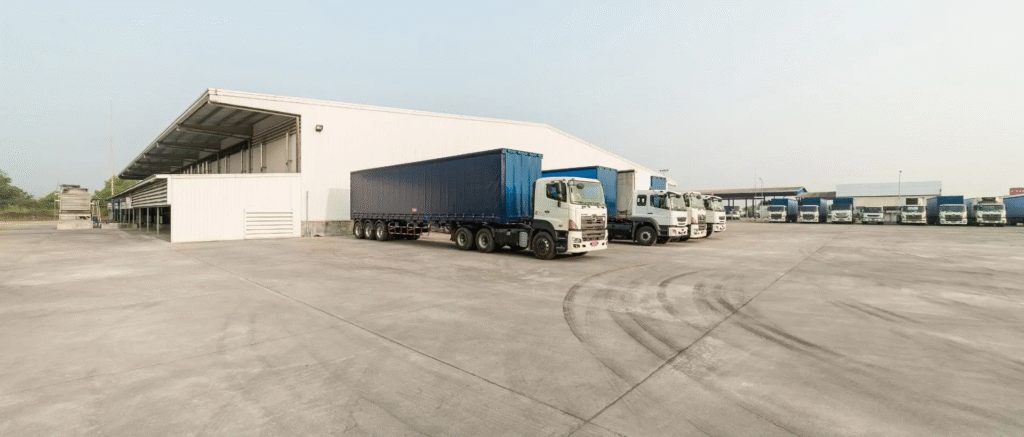
- High vehicle turnover for delivery vans
- Focused on rapid sorting and dispatch
Retailers and logistics companies increasingly rely on networks of these facilities. Instead of a single large warehouse serving an entire region, multiple smaller hubs distribute packages within hours of order placement.
This network model allows companies to balance speed, cost, and efficiency.
Technology Is Redefining Warehouse Design
Technology has become central to modern warehouse development.
Automation, robotics, and data analytics help logistics operators manage enormous volumes of online orders. These systems require buildings designed specifically to support advanced equipment.
Common technologies in modern warehouses
- Automated storage and retrieval systems (AS/RS)
- Robotic picking and packing stations
- AI-powered inventory management
- Real-time shipment tracking
For example, robotic systems can move inventory shelves directly to workers, reducing the time required to locate products. This improves efficiency and lowers labor costs.
Warehouse buildings must accommodate these systems with:
- higher ceiling heights
- stronger floor loads
- extensive electrical capacity
- advanced network connectivity
Developers increasingly design warehouses with 40-foot clear heights, allowing vertical storage that maximizes space utilization.
Cold Storage Warehouses Are Expanding
E-commerce is not limited to electronics or clothing. Online grocery shopping has grown rapidly in recent years, especially following the pandemic.
This growth has increased demand for cold storage warehouses—facilities designed to store perishable products such as food, pharmaceuticals, and agricultural goods.
Cold storage buildings require specialized construction:
- temperature-controlled zones
- energy-efficient insulation
- advanced refrigeration systems
- strict food safety compliance
According to industry reports from CBRE and JLL, cold storage supply remains tight in many U.S. markets because these facilities are significantly more expensive to build than standard warehouses.
However, the demand for online grocery delivery and meal-kit services continues to drive new development.
Warehouse Size Is Increasing Dramatically
E-commerce companies handle a wider range of products than traditional retailers. As a result, warehouses must store more inventory to maintain fast shipping speeds.
Modern fulfillment centers often exceed 1 million square feet, particularly in major logistics hubs.
Larger facilities provide several operational advantages:
- greater inventory availability
- centralized order processing
- economies of scale in automation
But these projects also present challenges.
Developers must secure large land parcels, coordinate transportation infrastructure, and ensure adequate labor availability. In some regions, local governments carefully evaluate warehouse proposals because of potential traffic and environmental impacts.
Environmental and Community Considerations
Warehouse development has also sparked discussion about sustainability and community impact.
Large logistics facilities generate truck traffic, energy consumption, and land use concerns. As a result, developers increasingly incorporate environmental design strategies.
Common sustainability features
- rooftop solar panels
- energy-efficient lighting systems
- electric vehicle charging infrastructure
- improved stormwater management
Some states and municipalities also require environmental assessments before approving large logistics projects.
At the same time, warehouses provide economic benefits such as job creation and regional supply chain infrastructure. Many communities balance these factors when considering new development proposals.
Why Investors Are Paying Attention to Industrial Real Estate
Industrial real estate has become one of the most attractive investment sectors in the property market.
Institutional investors—including pension funds, insurance companies, and real estate investment trusts—have increased their exposure to warehouse properties.
The reasons are largely tied to the stability of e-commerce demand.
Warehouses typically offer:
- long-term leases
- steady tenant demand
- relatively predictable operating costs
- strong occupancy rates in major markets
According to industry data from CBRE, industrial vacancy rates in many U.S. markets remained historically low through recent years despite significant new construction.
For investors, this combination of demand growth and operational stability makes logistics real estate a compelling asset class.
Frequently Asked Questions
1. Why has e-commerce increased demand for warehouses?
Online shopping requires retailers to store and ship products directly to consumers. This creates the need for large distribution centers and local delivery hubs capable of processing thousands of individual orders daily.
2. What is a fulfillment center?
A fulfillment center is a specialized warehouse where online orders are picked, packed, and shipped directly to customers rather than to retail stores.
3. How large are modern e-commerce warehouses?
Many fulfillment centers range between 300,000 and 1 million square feet, depending on the retailer’s inventory and delivery network.
4. What is last-mile delivery in logistics?
Last-mile delivery refers to the final step of transporting a package from a distribution center to the customer’s home or business.
5. Why are warehouses being built closer to cities?
Proximity to urban populations reduces delivery time and transportation costs, helping retailers meet fast shipping expectations.
6. What technologies are used in modern warehouses?
Automation systems, robotics, AI inventory management tools, conveyor sorting systems, and real-time logistics software are commonly used.
7. Why are cold storage warehouses important for e-commerce?
Online grocery and pharmaceutical deliveries require temperature-controlled storage facilities to maintain product safety and quality.
8. Are warehouses becoming larger over time?
Yes. Many companies are building larger fulfillment centers to store more inventory and support automated systems.
9. What role does automation play in warehouse operations?
Automation increases efficiency, reduces order processing time, and allows warehouses to handle higher volumes of online orders.
10. Is warehouse development expected to continue growing?
Most analysts expect steady demand as e-commerce continues expanding and supply chains adapt to faster delivery expectations.
The Logistics Infrastructure Behind Online Shopping
E-commerce has reshaped the industrial real estate landscape in ways few predicted two decades ago. Warehouses are no longer passive storage facilities but dynamic logistics centers built to move goods quickly and efficiently.
Developers, retailers, and investors are adapting to this new reality by designing facilities that prioritize speed, technology, and proximity to consumers.
As online shopping continues to evolve, warehouse development will remain a critical piece of the infrastructure that supports modern commerce.
Key Insights at a Glance
- E-commerce growth has significantly increased demand for warehouse space.
- Modern warehouses function as fulfillment centers rather than simple storage facilities.
- Logistics facilities are moving closer to urban populations to support fast delivery.
- Automation and robotics are shaping new warehouse designs.
- Cold storage development is expanding due to online grocery demand.
- Industrial real estate has become a major focus for investors.
- Sustainability considerations are influencing new warehouse projects.