

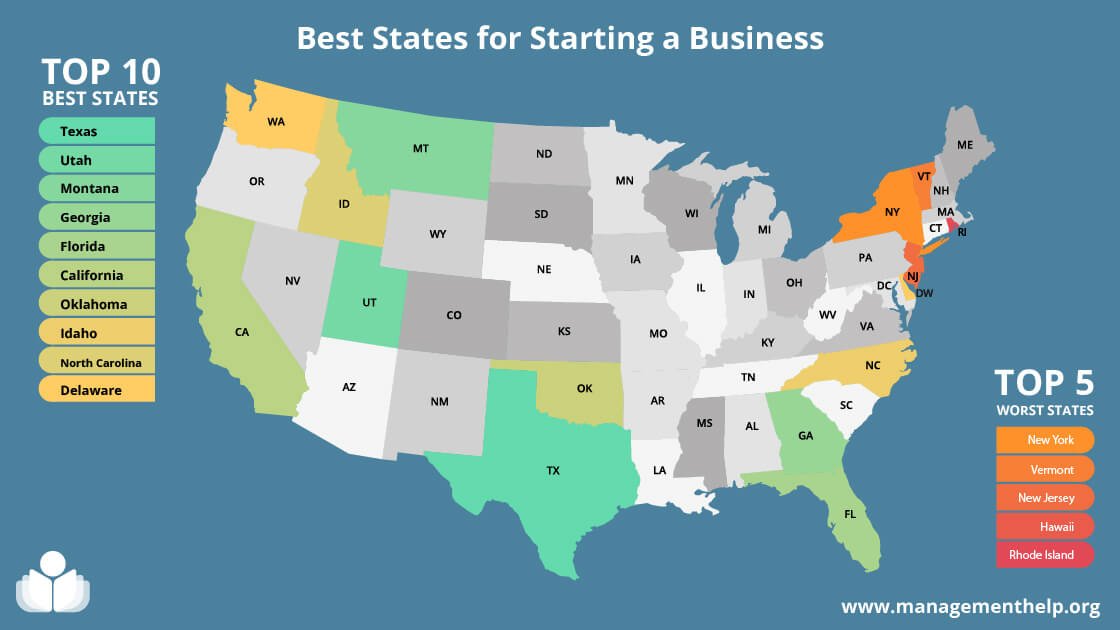
In 2025, the United States remains one of the most attractive destinations to launch a business. With unmatched access to venture capital, a large consumer base, and world-class innovation hubs, it continues to dominate the global startup ecosystem. Yet rising costs, complex regulations, and fierce competition are reshaping the landscape. This in-depth guide explores whether the U.S. truly is the best place to start a business today.
For decades, entrepreneurs worldwide have looked to the United States as the ultimate launchpad for their dreams. Silicon Valley has symbolized innovation, Wall Street has represented access to capital, and American consumer culture has provided a massive market for goods and services.
But as we move through 2025, new realities are shaping the business landscape. Inflationary pressures, shifting trade policies, the global rise of digital nomadism, and competitor nations streamlining their startup ecosystems all force founders to ask a critical question:
Is the U.S. still the best place to start a business in 2025—or are there better options elsewhere?
This comprehensive article dives into the advantages, disadvantages, comparisons, and practical considerations every entrepreneur should evaluate before making that choice.
Why the U.S. Is Still Highly Attractive for Entrepreneurs
Despite the challenges, there are enduring reasons why the U.S. continues to sit at the top of global entrepreneurship rankings.
1. A Massive Consumer Market
The United States has over 330 million people, most with high purchasing power. According to the World Bank, U.S. GDP per capita in 2024 remained above $76,000, making it one of the richest large economies. For businesses targeting consumer markets—whether retail, software subscriptions, or services—the U.S. provides scale that few other countries can match.
2. Access to Venture Capital and Private Funding
The U.S. is home to the largest venture capital industry in the world. In 2024, American VCs invested over $270 billion into startups, dwarfing most other nations. Legendary firms like Sequoia Capital, Andreessen Horowitz, and Kleiner Perkins continue to shape global innovation. For founders who dream of scaling fast, this access to capital is a powerful magnet.
3. World-Class Innovation Hubs
Cities like San Francisco, Boston, New York, Austin, and Seattle have become synonymous with cutting-edge industries:
- Silicon Valley → software, AI, and big data
- Boston → biotech and life sciences
- Austin → creative tech and SaaS startups
- New York → fintech and media
The clustering of talent, venture money, and universities in these hubs makes the U.S. unique.
4. Strong Legal & Financial Systems
Entrepreneurs value predictability. U.S. contract law, financial markets, and property rights provide a level of protection that is not always guaranteed in emerging economies. Intellectual property (IP) protections, while imperfect, are still stronger than in many parts of Asia or Africa.
5. Entrepreneurial Culture
Perhaps more than anything, the U.S. offers a mindset advantage. Failure is not stigmatized—it’s often seen as a badge of learning. This cultural element encourages bold experimentation, pivots, and second chances that fuel innovation.
The Challenges of Starting a Business in the U.S. in 2025
Yet, the U.S. is no longer an uncontested paradise for entrepreneurs. Costs are high, competition is fierce, and regulatory uncertainty is a constant concern.
1. Rising Costs: Inflation and Wages
According to NFIB surveys, inflation and cost of labor were the top concerns of U.S. small businesses in 2025. Commercial rent in major cities remains prohibitive, and health insurance for employees adds significant burden.
Example: A restaurant opening in Manhattan can expect lease costs exceeding $150 per square foot annually, far higher than in European or Asian counterparts.
2. Taxation Complexity
Unlike countries with streamlined taxation systems, the U.S. burdens businesses with federal, state, and local taxes. For instance, corporate taxes are federally set at 21%, but state taxes range from 0% (Nevada, Wyoming) to over 12% (California). This layered complexity adds administrative overhead and costs.
3. Unequal Access to Capital
While unicorns attract billions, small businesses often struggle. Goldman Sachs’ 10,000 Small Businesses survey in 2025 revealed that nearly 70% of owners face difficulty accessing affordable loans or credit due to high interest rates.
4. Regulatory Burden
Regulations vary dramatically by state and sector. A healthcare startup may face FDA approvals, HIPAA compliance, and state licensing. A food business must navigate USDA, FDA, and local health inspections. These layers can overwhelm first-time founders.
5. Competition Saturation
With so many businesses launching daily, standing out is tough. Whether it’s direct-to-consumer brands or SaaS startups, many niches are already crowded. Marketing spend and brand differentiation become survival necessities.
How the U.S. Compares to Other Countries
Is the U.S. truly the “best”—or just one of several strong contenders? Let’s compare.
| Country | Pros | Cons |
|---|---|---|
| Singapore | Streamlined incorporation, 17% corporate tax, access to Asia, strong IP protection | Small domestic market, high living costs |
| Estonia | E-Residency program, 0% tax on retained earnings, digital infrastructure | Very small domestic market, limited VC |
| Canada | Political stability, supportive immigration policies, access to U.S. market | Higher personal taxes, smaller VC ecosystem |
| UAE | Tax incentives, strategic global location, startup zones | Different business culture, dependency on foreign labor |
| New Zealand | Simple regulation, strong ease of doing business ranking | Far geographic isolation, smaller consumer market |
StartupBlink’s 2025 Ecosystem Index still ranks the U.S. #1 globally in startup ecosystems, but countries like Singapore and Estonia are catching up in specific niches.
Real-Life Examples: Successes and Struggles
- Success Story – DoorDash
Launched in California, DoorDash grew by leveraging America’s urban density, consumer demand, and VC funding. Its IPO in 2020 showed how U.S. ecosystems can rapidly scale a local service into a national phenomenon. - Struggle Story – Small Apparel Brand
A fashion startup expanded too quickly into high-rent states like California and New York, underestimating labor and insurance costs. Within two years, cash flow collapsed, forcing shutdown. - International Expansion – Shopify
Originally Canadian, Shopify’s rise depended on penetrating the U.S. market early, tapping American merchants, and securing U.S. investors. This underscores the magnetic pull of the American market.
When the U.S. Is the Right Choice
The U.S. is likely your best choice if:
- You need fast access to capital for scaling.
- Your business relies on consumer scale (retail, SaaS, apps).
- You want access to top universities, talent, and R&D.
- You’re in high-growth industries like AI, biotech, or green tech.
When It Might Not Be the Best Choice
Consider alternatives if:
- Your business is location-independent (SaaS, consulting, e-commerce).
- You cannot afford high initial costs.
- Your customers are primarily in Asia, Africa, or Europe.
- You prefer simpler taxation and regulations.
Practical Tips for Launching a U.S. Business in 2025
- Choose your state wisely – Delaware for incorporation, Texas/Florida for tax benefits, California for access to VC but high costs.
- Plan for runway – High fixed costs mean you need solid financial buffers.
- Invest in legal & accounting early – Avoid costly compliance mistakes.
- Leverage government support – SBA loans, grants, and state incentives.
- Build lean – Remote teams, automation, and cloud tools cut costs.
10 Frequently Asked Questions
1. Is starting a business in the U.S. too expensive in 2025?
Yes, major cities are costly, but location matters. Midwest states and digital models reduce costs significantly.
2. How do U.S. taxes compare to Singapore or Estonia?
U.S. taxes are layered and higher. Estonia and Singapore are more tax-efficient, but lack the U.S. consumer scale.
3. What industries thrive in the U.S.?
Tech, biotech, fintech, green energy, and consumer platforms.
4. Can foreigners start a U.S. company?
Yes—LLCs and corporations are open to non-citizens. Visa and tax complexities apply.
5. Do state laws matter?
Absolutely. Taxes, labor laws, and incentives vary widely between states.
6. Is VC still available?
Yes, especially in AI, biotech, and climate tech, though competition is fierce.
7. What are the main regulatory risks?
Taxes, labor laws, data privacy, IP litigation, FDA/sector compliance.
8. How hard is it to hire talent?
High-quality talent is available, but costs are high. Remote hiring helps.
9. Will conditions improve?
Mixed outlook—opportunities in tech and green sectors, but cost pressures persist.
10. How do small businesses survive?
By staying lean, focusing on niches, leveraging SBA programs, and building strong digital presences.
Key Takeaways
- The U.S. remains a top global startup hub, but not always the best for everyone.
- Costs and competition are rising, so state selection and financial planning are critical.
- Tech, biotech, and consumer businesses thrive most in the U.S.
- Alternatives like Singapore or Estonia may be better for lean, digital-first companies.
- SEO, branding, and digital strategies are essential for U.S. market entry.