

Summary
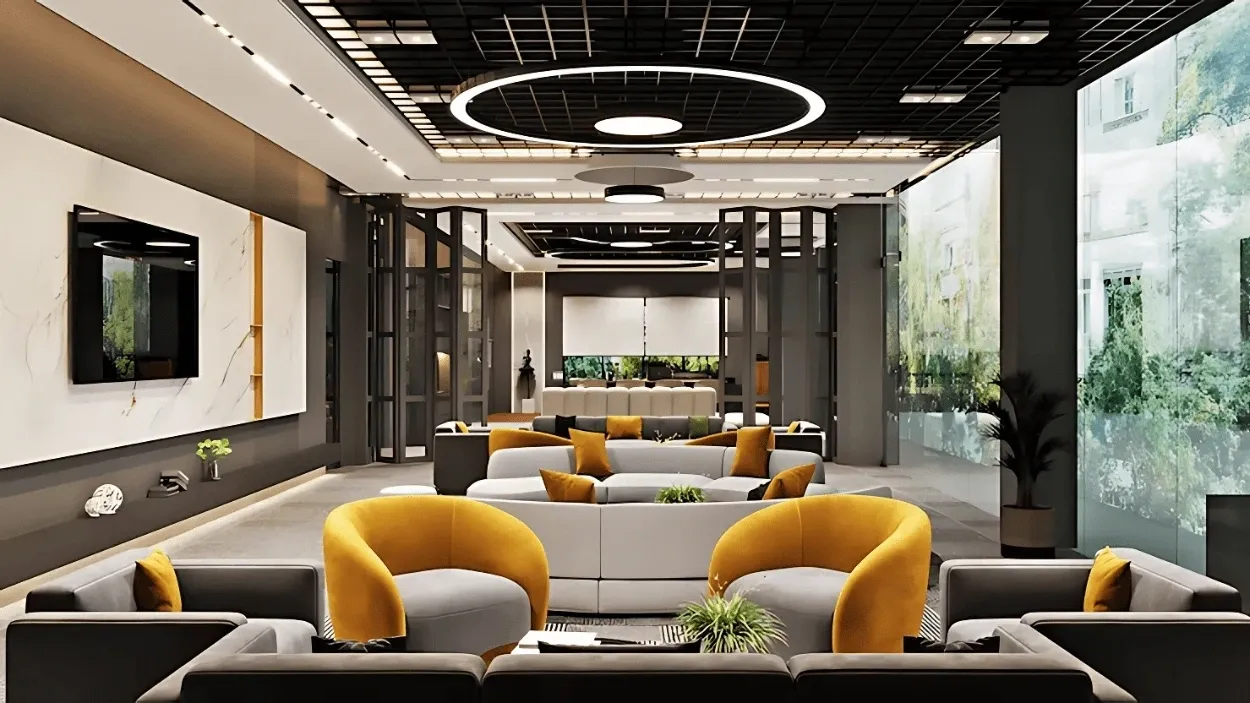
The rise of remote and hybrid work has fundamentally changed how companies think about office space. Instead of rows of desks designed for daily attendance, modern workplaces now prioritize collaboration, flexibility, and employee experience. This article explores how organizations are redesigning offices, reducing footprints, investing in hybrid infrastructure, and creating environments that support both productivity and connection.
The Post-Remote Work Reality
For decades, office design followed a simple formula: assign desks, create meeting rooms, and expect employees to be present five days a week. The shift to remote work during the COVID-19 pandemic disrupted that model almost overnight. Even as offices reopened, many organizations discovered that their employees—and their business operations—no longer required the same physical environment.
Surveys from Gallup and McKinsey consistently show that a majority of U.S. knowledge workers now prefer hybrid work arrangements. Gallup’s 2023 workplace report found that roughly 52% of remote-capable employees work in hybrid schedules, while 29% work fully remotely. As a result, office attendance is no longer predictable, and companies are rethinking how physical workplaces function.
Instead of designing offices around where people sit, organizations are designing them around why people come in.
This shift is transforming everything from floor plans to real estate strategy.
Why the Traditional Office Layout No Longer Works
Pre-pandemic offices were optimized for presence, not purpose. Rows of assigned desks made sense when employees spent most of their time in the building. But when employees only come in two or three days per week, large sections of offices often sit unused.
Companies quickly realized that traditional layouts created several problems in hybrid environments:
- Low utilization rates for assigned desks
- High real estate costs for space that sits empty
- Limited collaboration areas despite collaboration being the main reason employees come in
- Poor support for hybrid meetings
Research from global workplace analytics firm Kastle Systems found that office occupancy in major U.S. cities has stabilized at roughly 50–60% of pre-pandemic levels.
For many organizations, maintaining large offices built for full capacity simply no longer makes financial or operational sense.
The Shift Toward Purpose-Driven Workspaces
Modern workplace design begins with a different question: What activities actually require the office?
When companies analyze how employees use office space, a pattern emerges. Most people come in primarily for:
- Team collaboration
- Brainstorming sessions
- Social connection
- Mentorship and training
- Cross-department meetings
Tasks like focused writing, coding, or individual analysis are often easier to perform at home.
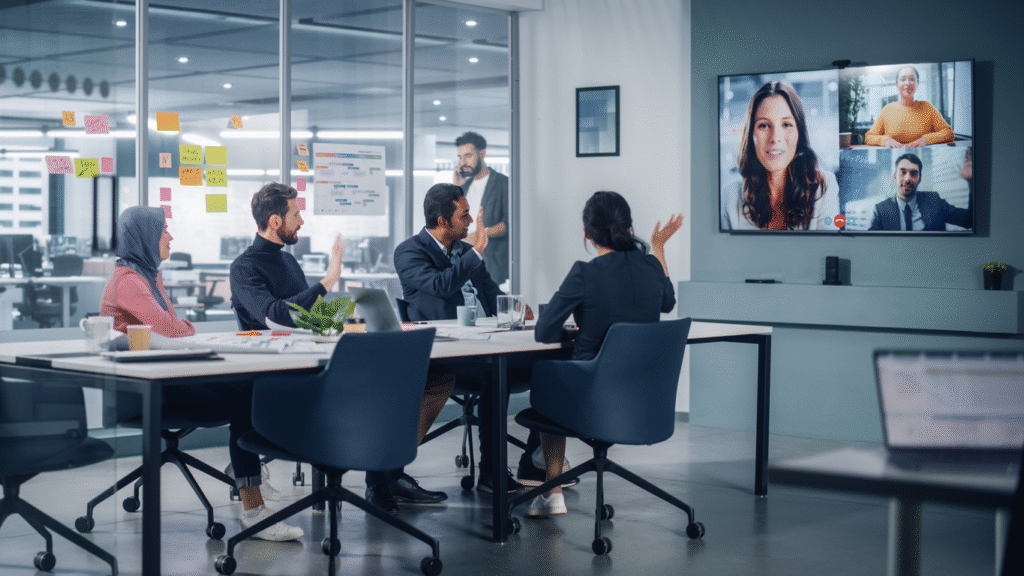
As a result, office design is shifting toward activity-based workspaces, where different areas support different types of work rather than assigning everyone a fixed desk.
Typical zones in modern offices now include:
- Collaboration areas with flexible seating and whiteboards
- Quiet rooms for focused work or video calls
- Project rooms where teams can leave materials in place
- Casual lounges for informal conversations
- Technology-enabled meeting rooms built for hybrid meetings
The goal is not to replicate home offices but to provide something employees cannot get remotely.
Hot Desking and Desk Sharing
One of the most visible changes in workplace design is the decline of permanently assigned desks.
Instead, many organizations have adopted hot desking or desk reservation systems, allowing employees to book workstations when they plan to be in the office.
This approach reflects the reality that many employees are not present every day.
Benefits of desk sharing include:
- Reduced real estate costs
- More efficient space utilization
- Greater flexibility for teams
- Easier scaling as headcount changes
However, successful implementation requires thoughtful planning. Employees still need predictable access to workspace and storage.
Companies often address this by providing:
- Personal lockers
- Desk booking apps
- Neighborhood seating for specific teams
- Adjustable desks that accommodate different users
Without these considerations, hot desking can feel chaotic rather than empowering.
Designing for Hybrid Meetings
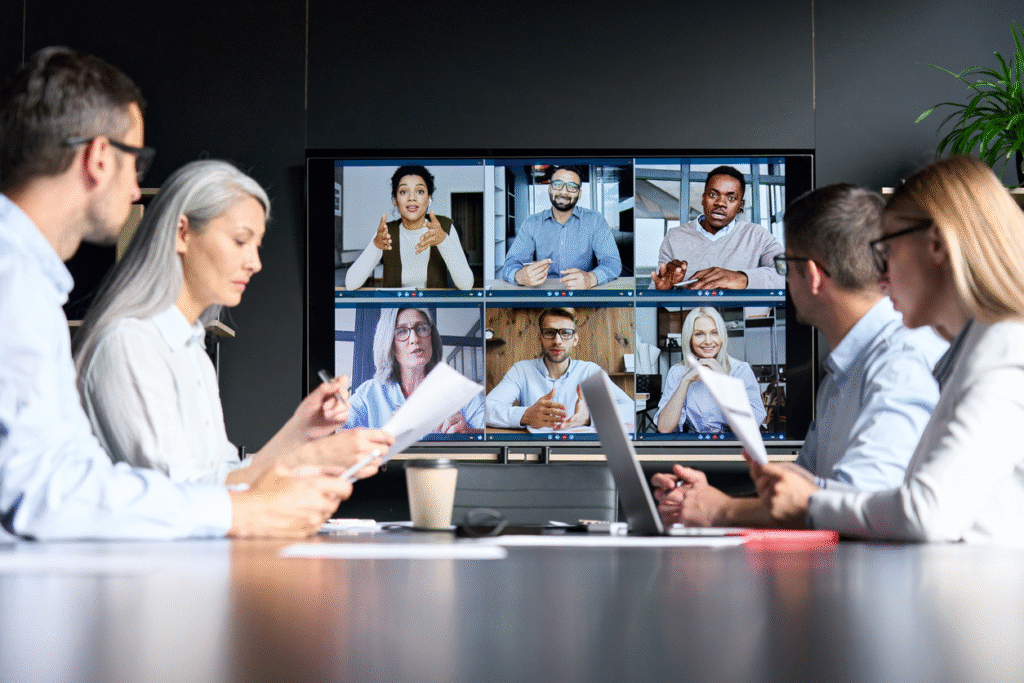
Hybrid work introduced a new challenge: meetings where some participants are in the room while others join remotely.
Poorly designed meeting spaces often create unequal participation. Remote employees struggle to hear conversations or see whiteboards, while in-person participants forget to engage virtual attendees.
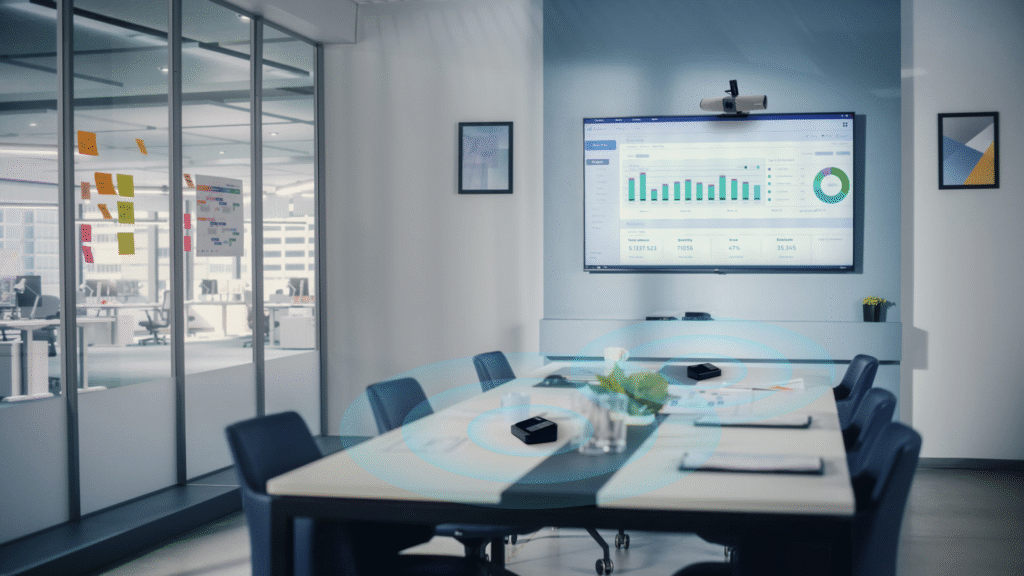
Modern offices now prioritize technology-enabled meeting rooms designed specifically for hybrid collaboration.
These rooms typically include:
- Wide-angle cameras that capture the entire room
- Smart microphones that track speakers
- Large screens for remote participants
- Digital whiteboards accessible online
- Simplified plug-and-play conferencing systems
Companies like Microsoft and Zoom have also developed integrated room systems to make hybrid meetings smoother.
In many redesigned offices, these rooms are among the most heavily used spaces.
Smaller Offices, Better Experiences
Another major trend is reducing overall office size while upgrading the quality of the space.
Many organizations are downsizing their real estate footprint because fewer employees are onsite at once. Instead of maintaining large offices with unused desks, companies invest in smaller but more dynamic environments.
This often includes:
- Better lighting and natural materials
- Café-style gathering spaces
- Wellness rooms and quiet areas
- Outdoor workspaces
- High-quality video conferencing infrastructure
In effect, the office becomes more like a collaboration hub rather than a daily workspace.
Commercial real estate analysts report that companies are increasingly prioritizing experience over square footage.
Neighborhood Layouts Instead of Departments
Traditional offices grouped employees strictly by department. Marketing sat in one section, finance in another, engineering somewhere else.
Hybrid workplaces are shifting toward neighborhood layouts, where teams have flexible areas that can expand or contract depending on attendance.
A neighborhood might include:
- Shared desks
- A team collaboration table
- Small meeting rooms
- Storage for ongoing projects
This approach allows teams to maintain a sense of identity while still supporting flexible schedules.
It also helps companies avoid situations where large areas of the office remain empty when specific departments work remotely.
The Rise of Office “Magnetism”
Because employees are no longer required to come in every day, companies must think about what motivates people to use the office at all.
Workplace strategists often refer to this concept as office magnetism.
A magnetic workplace offers something valuable that remote environments cannot replicate.
Common features include:
- Comfortable social areas
- Informal collaboration spaces
- Events and team gatherings
- Professional development sessions
- Leadership accessibility
Some companies even schedule team anchor days, where employees come in on the same day to maximize collaboration.
The physical office becomes a place for connection and culture, not simply a place to work.
How Data Is Driving Workplace Decisions
One of the most important changes in workplace strategy is the use of occupancy data to guide design decisions.
Companies now track how employees actually use office space through:
- Desk booking analytics
- Badge swipe data
- Meeting room usage reports
- Workplace sensors
These insights help organizations understand which spaces are valuable and which are underutilized.
For example, many companies discovered that large conference rooms were rarely used, while small meeting rooms were constantly booked.
As a result, redesigns often include more small collaboration rooms and fewer large boardrooms.
Data-driven design allows offices to evolve continuously rather than remaining static for decades.
The Human Factor: Employee Experience
Workplace redesign is not just about efficiency. Employee experience has become a central consideration.
A poorly designed office can discourage employees from coming in, undermining hybrid strategies.
Modern workplace design focuses on:
- Comfort
- Flexibility
- Inclusivity
- Accessibility
- Well-being
Elements like natural light, quiet zones, ergonomic furniture, and thoughtful acoustics contribute significantly to workplace satisfaction.
According to Leesman workplace experience research, employees are far more likely to value office time when it supports collaboration and social interaction rather than repetitive individual tasks.
Companies that understand this principle design offices that feel purposeful rather than obligatory.
What This Means for the Future of Offices
The office is not disappearing—but its role is changing.
Instead of serving as the default location for all work, the workplace is evolving into a strategic tool for collaboration, culture, and innovation.
Over the next decade, several trends are likely to shape office design further:
- Continued growth of hybrid schedules
- Smaller but higher-quality offices
- Greater reliance on workplace analytics
- Offices designed for specific activities rather than assigned seating
- Integration of digital and physical collaboration tools
Organizations that adapt successfully will treat workplace design as an ongoing process, not a one-time renovation.
Frequently Asked Questions
Why are companies redesigning offices after remote work?
Because hybrid work has reduced daily office attendance. Companies are redesigning spaces to support collaboration, flexible schedules, and better technology rather than rows of unused desks.
What is activity-based workplace design?
Activity-based design creates different spaces for different tasks—such as quiet work, meetings, brainstorming, or social interaction—rather than assigning every employee a permanent desk.
What is hot desking?
Hot desking allows employees to use any available workstation instead of having assigned desks. Employees typically reserve desks through booking systems when they plan to work in the office.
Are companies shrinking their office space?
Many are. With fewer employees present daily, organizations often reduce square footage while investing more in collaboration areas and employee amenities.
What is a hybrid office?
A hybrid office supports employees who split their time between working remotely and working onsite. It includes technology and layouts designed for both in-person and remote collaboration.
Why are hybrid meetings challenging?
Because remote participants can struggle to hear conversations or see visual materials. Modern meeting rooms now include better microphones, cameras, and digital collaboration tools.
What are workplace neighborhoods?
Neighborhood layouts group flexible workspaces for specific teams, allowing employees to sit near colleagues when in the office while maintaining flexible seating.
How do companies measure office usage?
Through tools like badge swipe data, desk booking analytics, room reservation systems, and workplace sensors that track occupancy patterns.
Do employees still want offices?
Most employees prefer hybrid arrangements. Many value offices for collaboration, social interaction, and mentorship but prefer remote work for focused tasks.
Will offices disappear in the future?
Unlikely. Instead, offices are evolving into collaboration hubs that support teamwork, culture, and innovation rather than serving as mandatory daily work locations.
Reimagining the Workplace for the Hybrid Era
The transformation of office design reflects a broader shift in how work itself is organized. Remote work proved that productivity is not tied to a single location, but organizations still need spaces where ideas develop, relationships grow, and teams collaborate.
The offices that succeed in the coming years will not try to recreate the past. Instead, they will embrace flexibility, technology, and human-centered design to support the evolving nature of work.
For employees, this means workplaces that are more purposeful and engaging. For organizations, it means treating the office as a strategic asset rather than simply a physical necessity.
Key Insights at a Glance
- Hybrid work has permanently changed how offices are used
- Companies are shifting from assigned desks to flexible workspaces
- Collaboration areas are replacing rows of individual desks
- Offices are becoming smaller but more experience-focused
- Hybrid meeting technology is now a critical infrastructure investment
- Workplace analytics help companies design more effective spaces
- Employee experience plays a central role in workplace strategy