

Summary
Poultry farming remains one of the most active sectors in U.S. agriculture, supported by steady demand for chicken and eggs. Successful operations depend on suitable land, well-designed infrastructure, reliable supply chains, and careful financial planning. This article explains how poultry farms are structured, what investors and farmers should consider, and how industry trends—from automation to sustainability—are shaping the future of poultry agriculture.
Understanding the Role of Poultry Farms in U.S. Agriculture
Poultry farming plays a central role in American agriculture. Chicken is the most widely consumed meat in the United States, and eggs remain a staple food across households and restaurants. According to the U.S. Department of Agriculture (USDA), Americans consume more than 100 pounds of chicken per person annually, making poultry the country’s most popular protein.
The scale of the industry is significant. Data from the National Chicken Council indicates that the U.S. poultry sector produces over 9 billion broiler chickens each year, supporting thousands of farms across states such as Georgia, Arkansas, Alabama, and North Carolina.
Despite this large-scale production, poultry farming remains accessible to a range of agricultural investors. Many operations are family-owned farms working under contract with major poultry companies. Others are independent producers supplying local markets or specialty egg producers focusing on organic or pasture-raised systems.
From a real estate and agricultural investment perspective, poultry farms combine land ownership, specialized infrastructure, and operational management, making them a unique asset class within the agricultural sector.

Land Requirements for Poultry Farms
The first consideration in developing a poultry farm is land suitability. While poultry operations require less acreage than many other livestock industries, land still plays a critical role in regulatory compliance, environmental management, and long-term expansion.
Most commercial poultry farms operate on 10 to 50 acres, though the footprint varies depending on the scale of the operation and the number of poultry houses.
Several land characteristics influence whether a property is suitable for poultry farming:
Key factors investors and farmers evaluate include:
- Adequate distance from residential areas due to zoning and odor concerns
- Access to reliable water sources for livestock and sanitation
- Soil and drainage conditions that prevent runoff issues
- Proximity to feed mills and poultry processing plants
- Availability of road access for feed delivery and livestock transport
Local zoning regulations also play an important role. Counties often regulate livestock density, building setbacks, and waste management requirements. Farmers typically work closely with local agricultural extension offices to ensure compliance.
Land values vary widely across the country. In the Southeast—where poultry production is concentrated—farmland suitable for poultry operations may range from $4,000 to $10,000 per acre, depending on infrastructure and proximity to processing facilities.
Poultry Farm Infrastructure: What Makes an Operation Functional
Unlike many types of farming, poultry production relies heavily on specialized buildings and equipment. Infrastructure represents a substantial portion of the investment required to establish a new operation.
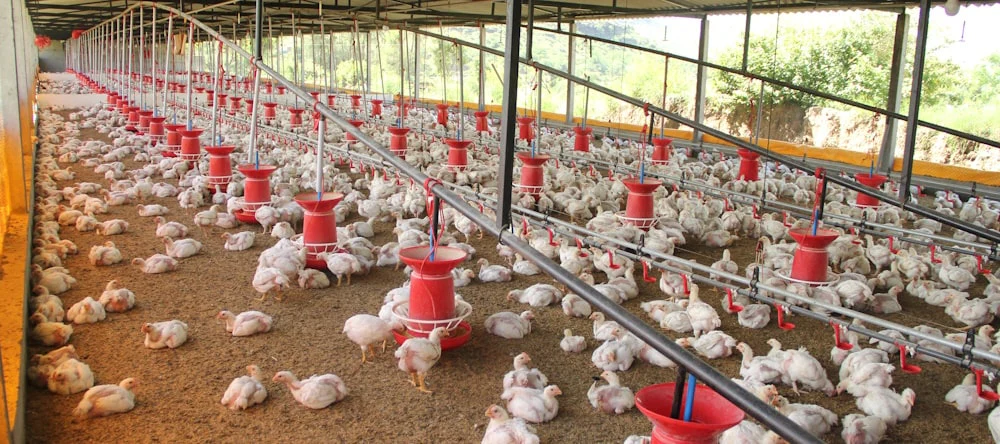
Modern poultry farms typically consist of multiple poultry houses designed for controlled environments.
Core infrastructure elements include:
- Poultry houses (often 40,000–60,000 square feet each)
- Automated feeding systems
- Climate control systems (ventilation, heating, cooling)
- Lighting programs to regulate bird growth cycles
- Water distribution systems
- Litter management areas
- Feed storage bins
- Waste management systems
A standard broiler farm may include four to eight poultry houses, each capable of housing 20,000 to 30,000 birds depending on the production model.
Ventilation and temperature management are particularly important. Chickens are sensitive to environmental conditions, and modern poultry houses use automated sensors to maintain optimal temperature, humidity, and airflow.
Investment in infrastructure can be significant. A single poultry house may cost $350,000 to $500,000 to construct, depending on size and automation level. However, these buildings are designed for decades of operation when properly maintained.
Contract Farming and Industry Partnerships
Many U.S. poultry farms operate under contract farming arrangements with major poultry processors. These companies supply chicks, feed, veterinary services, and technical guidance, while farmers provide land, housing, and labor.
This model reduces market risk for farmers while allowing processors to maintain consistent production levels.
Under typical contracts:
- Farmers raise chickens owned by the processor
- Payment is based on performance metrics such as feed efficiency
- The processor handles processing, marketing, and distribution
This structure has helped stabilize the poultry sector and allows farmers to focus primarily on animal care and facility management.
However, it also means poultry farm investments often depend on maintaining relationships with processing companies operating in the region.
Agricultural Investment Potential in Poultry Farming
Poultry farms attract agricultural investors for several reasons. Compared with other livestock operations, poultry farms can offer relatively predictable production cycles and stable demand.
Several characteristics contribute to poultry farming’s appeal as an investment:
- Short production cycles (typically six to eight weeks for broilers)
- Consistent national demand for poultry products
- Integration with large food supply chains
- Opportunities for contract-based revenue
Additionally, poultry farms often generate income through multiple revenue streams, including:
- Chicken production contracts
- Egg production operations
- Sale of poultry litter as fertilizer
- Potential solar installations on unused land
Agricultural lenders frequently finance poultry farm development due to the sector’s established production models and strong consumer demand.
How Technology Is Changing Poultry Farming
Technology is rapidly reshaping how poultry farms operate. Automation and data monitoring tools are improving efficiency while helping farmers maintain consistent production conditions.
Modern poultry houses often include digital systems that track environmental conditions and livestock health in real time.
Examples of technological innovation include:
- Climate sensors that adjust ventilation automatically
- Smart feeding systems that monitor feed consumption
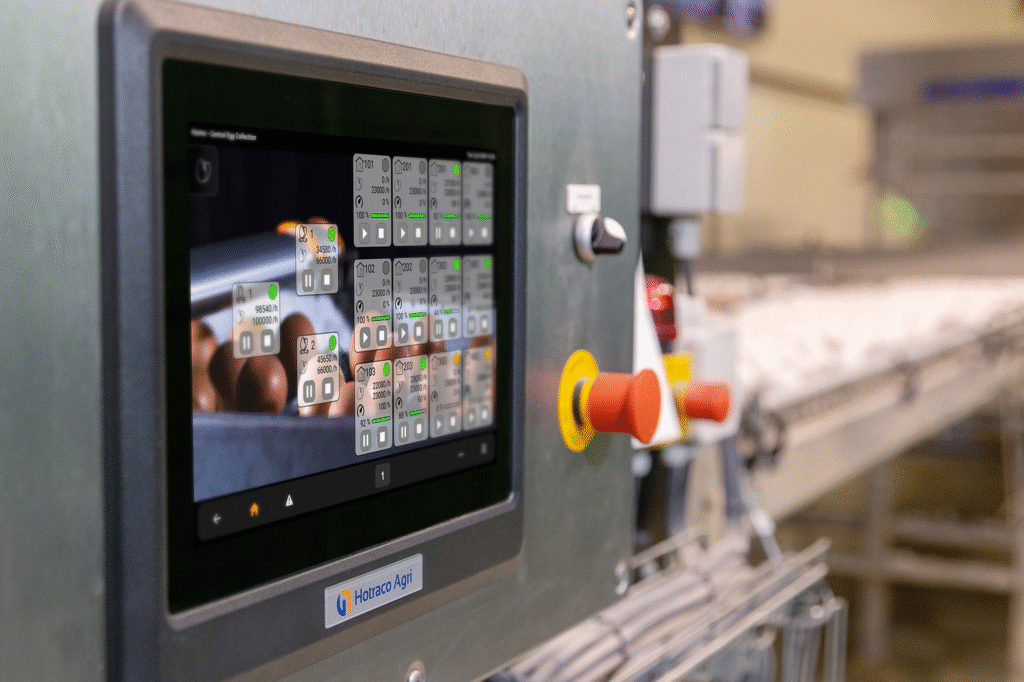
- Automated egg collection systems in layer farms
- Remote monitoring through mobile apps
- Data analytics used to improve flock performance
These technologies reduce labor requirements and help farmers detect potential problems earlier, improving both animal welfare and productivity.
Sustainability and Environmental Considerations
Environmental stewardship has become increasingly important in poultry farming. Waste management, water quality, and energy efficiency are major priorities for both regulators and producers.
Poultry litter—made up of bedding material and manure—is often recycled as agricultural fertilizer. When managed properly, it can provide valuable nutrients for crop production.
Farmers also implement practices such as:
- Nutrient management plans to control runoff
- Buffer zones around waterways
- Proper storage for litter and manure
- Energy-efficient lighting and ventilation systems
Many farms are also exploring renewable energy. Solar panels installed on poultry farm properties can offset electricity costs, which are a significant operational expense.
Regional Trends in U.S. Poultry Production
The geography of poultry farming in the United States is influenced by climate, infrastructure, and supply chain networks.
The Southeast remains the dominant production region due to its proximity to processing plants and established agricultural infrastructure.
Key production states include:
- Georgia
- Arkansas
- Alabama
- Mississippi
- North Carolina
However, interest in smaller poultry operations is also growing in other regions, especially among farmers producing organic, pasture-raised, or specialty poultry products.
Local food movements and farmers markets have helped support these smaller-scale operations.
Common Questions Investors Ask Before Starting a Poultry Farm
Before entering the poultry farming sector, investors typically evaluate several practical considerations.
Questions often include:
- Is there a processing plant within a practical distance?
- What contracts are available from poultry companies?
- What local zoning rules affect livestock farming?
- What infrastructure already exists on the property?
- What financing options are available through agricultural lenders?
Answering these questions early helps prevent costly mistakes and improves long-term viability.
FAQ: Poultry Farming and Agricultural Investment
How much land is needed to start a poultry farm?
Most commercial operations require 10–50 acres, depending on the number of poultry houses and environmental setback requirements.
How profitable are poultry farms?
Profitability varies based on contracts, efficiency, and financing costs. Many contract growers earn consistent income but must manage infrastructure loans and operational expenses.
What is the biggest expense in poultry farming?
Infrastructure—especially poultry houses and equipment—is typically the largest upfront investment.
Do poultry farmers need special permits?
Yes. Local zoning, environmental permits, and livestock regulations usually apply to poultry operations.
How long does it take to raise broiler chickens?
Broiler chickens typically reach market weight in six to eight weeks.
What happens to poultry waste?
Poultry litter is commonly used as fertilizer for crops when properly managed.
Can small farms succeed in poultry production?
Yes. Many smaller farms focus on niche markets such as pasture-raised or organic poultry products.
Is poultry farming labor-intensive?
Modern automation has reduced labor needs, but daily monitoring and flock management remain essential.
How do farmers finance poultry farm construction?
Many farms use loans from agricultural lenders or government-backed farm credit programs.
Are poultry farms considered good agricultural investments?
They can be stable long-term investments when supported by strong contracts, good management, and proper infrastructure.
Looking Ahead: The Next Phase of Poultry Farm Development
Poultry farming continues to evolve alongside shifts in consumer demand, agricultural technology, and food supply systems. As global protein consumption grows, poultry remains one of the most efficient sources of animal protein.
Future poultry farms are likely to emphasize automation, sustainability, and supply chain integration. Investors and farmers who prioritize efficient infrastructure, strong partnerships, and responsible environmental management will be best positioned to succeed in this changing landscape.
Key Points to Remember
- Poultry farming is one of the largest sectors of U.S. agriculture
- Successful farms rely on well-planned land and specialized infrastructure
- Contract farming is common and reduces market risk
- Technology is improving efficiency and animal care
- Sustainability and environmental management are increasingly important
- Poultry farms can provide steady agricultural investment opportunities