

Summary
Secondary U.S. housing markets are undergoing a gradual but meaningful transformation driven by affordability pressures, remote work, demographic shifts, and local investment. While often overshadowed by major metros, these markets are attracting buyers, renters, and employers seeking value, stability, and quality of life—reshaping how Americans think about opportunity, housing demand, and long-term growth.
Understanding What “Secondary Housing Markets” Really Means
In real estate, secondary housing markets are metropolitan areas that sit just outside the nation’s largest and most expensive cities. They typically have smaller populations, lower median home prices, and less global exposure than primary markets like New York, Los Angeles, or San Francisco. Examples include places such as Columbus, Ohio; Greenville, South Carolina; Des Moines, Iowa; and Tucson, Arizona.
Historically, these markets were viewed as slower-moving, local economies with limited upside. That perception is changing—not suddenly, but steadily. Today, secondary markets are absorbing population growth, attracting new employers, and experiencing a rebalancing of housing demand that reflects broader economic and social shifts.
Why Secondary Markets Are Gaining Quiet Momentum
The transformation underway is not driven by hype or speculative booms. Instead, it reflects structural changes in how Americans live and work.
Housing affordability remains the clearest factor. According to data from national housing research firms, median home prices in many secondary markets remain 30%–50% lower than comparable homes in major coastal metros. Even as prices rose nationwide between 2020 and 2023, these markets generally maintained more attainable price-to-income ratios.
Remote and hybrid work has also expanded geographic flexibility. While not everyone works fully remotely, many employers now allow partial location independence. This has enabled workers to prioritize space, cost of living, and community over proximity to a downtown office core.
Equally important, secondary markets often offer:
- Shorter commutes and less congestion
- Lower property taxes and insurance costs in some regions
- Access to growing healthcare, education, and logistics job centers
The result is steady, sustainable demand rather than rapid surges.
Migration Patterns Are Subtle—but Consistent
Unlike headline-grabbing population shifts, migration into secondary markets tends to be incremental. U.S. Census Bureau data shows that many mid-sized metros have posted consistent net domestic migration gains over multiple years, even when national population growth slowed.
These moves are often driven by life-stage decisions rather than speculation. Young families seeking affordable homeownership, retirees downsizing from high-cost regions, and mid-career professionals relocating for stability are common profiles.
Importantly, these newcomers are not simply buying homes—they are enrolling children in schools, opening small businesses, and participating in civic life. This type of migration strengthens local housing fundamentals and reduces volatility.

How Housing Demand Is Evolving Inside These Markets
Secondary markets are not experiencing uniform growth across all property types. Demand patterns reveal how buyer and renter priorities are shifting.
Single-family homes remain the most sought-after asset, particularly those offering flexible layouts suitable for remote work. Modest homes with extra bedrooms or finished basements are often preferred over larger luxury properties.
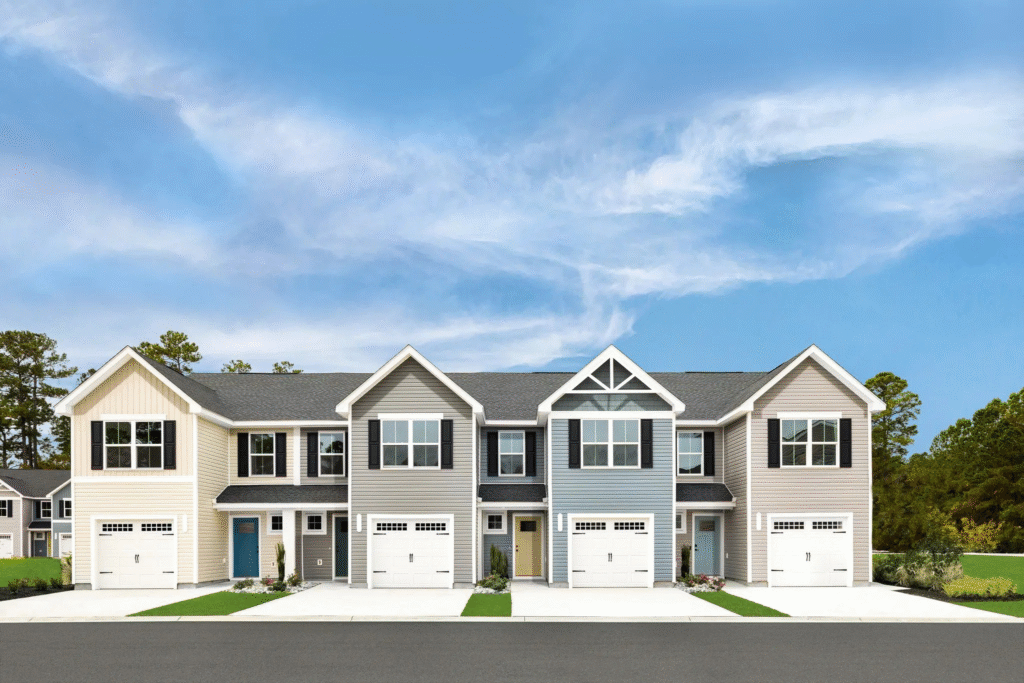
At the same time, rental demand has increased, especially in markets with growing medical, manufacturing, or university employment bases. Smaller multifamily developments—duplexes, townhomes, and low-rise apartments—are expanding more rapidly than large high-rise projects.
In many secondary cities, buyers are increasingly valuing:
- Neighborhood walkability rather than downtown density
- Proximity to regional employers over central business districts
- Practical layouts over high-end finishes
These preferences are reshaping new construction and renovation strategies.
Builders and Developers Are Adjusting—Carefully
Unlike boom cycles in primary markets, builders in secondary metros tend to act cautiously. Rising material costs and labor shortages have limited speculative overbuilding, which has helped maintain balanced inventory levels.
Many developers are focusing on smaller, phased projects rather than large master-planned communities. This approach allows them to respond to demand without overextending supply.
Local governments also play a role. Some municipalities have updated zoning rules to allow accessory dwelling units, townhomes, or mixed-use corridors—incremental changes that increase housing options without dramatically altering neighborhood character.
These adjustments are slow, but they contribute to long-term market resilience.
Investment Activity Is Becoming More Disciplined
Secondary housing markets have attracted increased investor interest, but the profile of investors has shifted. Institutional buyers now account for a smaller share of transactions in many regions compared to peak years, while individual investors and regional firms remain active.
Successful investors in these markets often emphasize fundamentals over appreciation alone. Rental yields, tenant stability, and local employment growth tend to matter more than short-term price acceleration.
Experience shows that the most durable investment strategies focus on:
- Properties near hospitals, universities, or logistics hubs
- Neighborhoods with gradual infrastructure improvements
- Markets with diversified employment rather than single-industry dependence
This disciplined approach has helped reduce volatility and speculative risk.
The Role of Infrastructure and Public Investment
Infrastructure spending quietly supports housing demand in secondary markets. Federal and state investments in highways, broadband, utilities, and public transportation often have outsized impacts in smaller metros.
For example, expanded broadband access has made remote work viable in areas that previously lacked connectivity. Road improvements reduce commute times across metro regions, making outlying neighborhoods more attractive.
While infrastructure rarely makes headlines in housing coverage, its influence on long-term demand is substantial—and often underestimated.
Risks and Constraints Still Matter
Despite positive trends, secondary housing markets are not immune to challenges. Limited housing supply can still push prices beyond local wage growth. Some regions face aging housing stock that requires costly upgrades. Others struggle with constrained tax bases that limit public services.
Climate exposure is another consideration. Markets in flood-prone or heat-stressed regions may face rising insurance costs and stricter building standards over time.
Buyers and investors who succeed in secondary markets tend to evaluate these risks carefully rather than assuming uniform growth.
What This Shift Means for Buyers, Renters, and Communities
For homebuyers, secondary markets often provide a clearer path to ownership, especially for first-time buyers priced out of major metros. For renters, these markets can offer more space and stability, though rent growth has accelerated in some areas.
Communities benefit when growth remains measured. Gradual demand allows schools, healthcare systems, and local governments to adapt without overwhelming infrastructure.
The transformation underway is less about rapid expansion and more about recalibration—aligning housing supply, employment, and lifestyle preferences in a changing economy.
Frequently Asked Questions
Are secondary housing markets safer than major metros?
They often experience less volatility, but outcomes vary by region and local economic conditions.
Do home prices still rise in secondary markets?
Yes, but typically at a steadier pace compared to primary markets.
Are these markets only attractive to remote workers?
No. Many are supported by healthcare, education, logistics, and manufacturing jobs.
Is inventory still tight in secondary cities?
In many cases, yes—though shortages are often less severe than in major metros.
Do secondary markets offer good rental opportunities?
They can, especially near stable employment centers and universities.
Are property taxes lower in secondary markets?
Often, but this varies widely by state and municipality.
Will these markets continue to grow?
Growth is likely to continue gradually, driven by affordability and demographic trends.
Are new homes being built fast enough?
Construction is increasing, but labor and cost constraints limit rapid expansion.
Do these markets appeal to retirees?
Yes, particularly those offering healthcare access and lower living costs.
The Slow Rewriting of the Housing Map
Secondary housing markets are not replacing major cities, nor are they immune to economic cycles. What they are doing is redefining where opportunity lives in the American housing landscape. Their strength lies in balance—moderate growth, practical housing, and communities shaped by residents rather than speculation. For many Americans, that balance is becoming increasingly attractive.
Key Signals Worth Watching
- Consistent population inflows rather than short-term spikes
- Local job growth tied to essential industries
- Incremental zoning and infrastructure improvements
- Housing supply that expands without overshooting demand