

Summary
Experienced property investors treat tax season as a strategic checkpoint rather than a last-minute filing task. They organize records year-round, track deductible expenses carefully, and plan ahead for depreciation, capital gains, and 1031 exchanges. By coordinating with tax professionals and understanding IRS rules that affect real estate income, seasoned investors often manage their tax obligations more efficiently and protect long-term returns.
Why Tax Time Matters More for Property Investors
For many Americans, tax season is simply about reporting income and claiming standard deductions. For real estate investors, however, taxes are directly connected to investment performance.
Rental income, operating expenses, depreciation schedules, financing costs, and potential capital gains all affect how profitable a property really is. According to the U.S. Census Bureau, rental housing represents a significant portion of U.S. housing supply, and millions of Americans receive income from rental properties each year. With that income comes a complex set of tax rules.
Experienced investors approach tax time differently. They use it as an opportunity to evaluate their portfolio, review deductions, and ensure their long-term strategy aligns with current tax laws.
Rather than scrambling in April, they spend the entire year preparing for it.
They Track Every Deductible Expense Throughout the Year
One of the biggest differences between experienced investors and new landlords is record-keeping.
Rental properties involve dozens of small expenses that are fully deductible under IRS rules if properly documented. Seasoned investors rarely rely on memory or year-end bank statements.
Instead, they maintain organized records for:
- Property repairs and maintenance
- Property management fees
- Insurance premiums
- Mortgage interest
- Property taxes
- Utilities paid by the landlord
- Travel related to property management
- Legal or accounting services
For example, imagine a landlord who owns two rental properties and spends small amounts throughout the year on plumbing repairs, landscaping, appliance replacements, and HOA fees. Individually, those costs may seem minor. But collectively they could represent thousands of dollars in deductible expenses.
Experienced investors capture every legitimate deduction, which directly reduces taxable rental income.
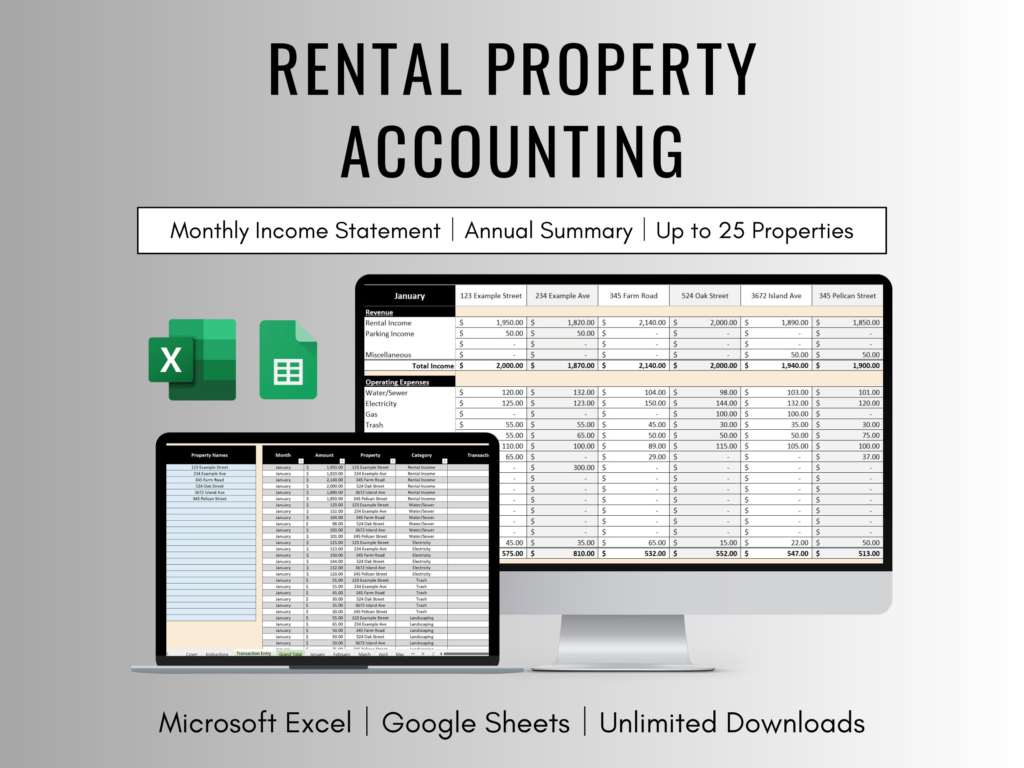
Many use simple accounting tools or property management software to categorize expenses as they occur.
They Understand the Power of Depreciation
Depreciation is one of the most significant tax advantages available to rental property owners.
The IRS allows residential rental properties to be depreciated over 27.5 years, meaning investors can deduct a portion of the building’s value each year—even if the property is increasing in market value.
Experienced investors pay close attention to how depreciation affects their taxes.
Here is a simplified example.
Suppose an investor purchases a rental property for $400,000. If the land value is $80,000, the remaining $320,000 building value can be depreciated over 27.5 years.
That results in an annual depreciation deduction of roughly $11,600 per year.
Even if the property generates positive cash flow, depreciation can significantly reduce the investor’s taxable income.
Experienced investors also consult professionals about cost segregation studies, which can accelerate depreciation on certain property components like appliances, flooring, or fixtures.
While not appropriate for every property, it can meaningfully affect early-year tax deductions.
They Plan Ahead for Capital Gains Taxes
Selling a rental property can trigger substantial capital gains taxes if the investor isn’t prepared.
Experienced investors rarely decide to sell a property without considering the tax consequences first.
Two key issues come into play:
- Capital gains tax on appreciation
- Depreciation recapture
Depreciation recapture requires investors to pay tax on depreciation deductions previously claimed when a property is sold. For long-held properties, that amount can be significant.
To manage this, seasoned investors often evaluate strategies such as:
- Timing sales in lower-income years
- Offsetting gains with losses from other investments
- Structuring sales through installment agreements
- Using 1031 exchanges when appropriate
According to IRS guidelines, a 1031 exchange allows investors to defer capital gains taxes when proceeds are reinvested into another qualifying property.
This strategy is widely used among experienced investors because it allows them to reposition or upgrade their portfolio while postponing tax liability.
They Review Their Portfolio Annually
For experienced investors, tax time is not just about filing returns—it’s also a yearly portfolio review.
They often use this period to evaluate:
- Which properties generated the strongest returns
- Which ones required unexpected expenses
- Whether rent levels align with market conditions
- Opportunities for refinancing or restructuring debt
Taxes provide a complete financial snapshot of each property’s performance.
For instance, a property that generates modest rental income but requires frequent repairs may look less attractive once tax filings reveal the true annual costs.
Some investors use this information to decide whether to sell, renovate, or hold a property long-term.
They Coordinate With Tax Professionals Who Understand Real Estate
Tax software can handle many straightforward returns, but real estate taxation often requires specialized expertise.
Experienced investors frequently work with CPAs or tax professionals who regularly handle real estate clients.
These professionals can help navigate areas such as:
- Passive activity loss rules
- Short-term vs long-term rental classifications
- Depreciation schedules
- Capital gains planning
- Multi-state property taxation
For example, if an investor owns rental properties in two different states, filing requirements may vary significantly.
A knowledgeable tax professional can help ensure compliance while identifying legitimate deductions or planning opportunities.
They Keep Personal and Property Finances Separate
Another habit common among experienced investors is strict financial separation.
They typically maintain:
- Dedicated bank accounts for rental properties
- Separate credit cards for property expenses
- Accounting records tied to each individual property
This approach simplifies tax preparation and provides clear documentation if the IRS ever questions deductions.
It also helps investors understand the true financial performance of each property without mixing personal spending with business expenses.
Many experienced investors treat rental properties as a business operation rather than a side project.
They Pay Attention to Changing Tax Laws
Tax laws affecting real estate evolve regularly.
Recent years have seen important changes related to:
- Qualified Business Income (QBI) deductions
- Bonus depreciation rules
- State-level property tax changes
- Opportunity Zone incentives
Experienced investors stay informed because small policy changes can have meaningful effects on long-term planning.
For example, the Tax Cuts and Jobs Act introduced the 20% Qualified Business Income deduction, which in certain cases may apply to rental real estate businesses.
Understanding whether a rental activity qualifies can influence how properties are managed and reported.
Many investors discuss these developments with advisors before year-end so they can adjust strategy accordingly.
They Prepare Documentation Long Before Filing Season
Experienced property investors rarely wait until March or April to gather paperwork.
Throughout the year, they collect and store documents such as:
- Mortgage interest statements (Form 1098)
- Property tax records
- Insurance payments
- Contractor invoices
- Lease agreements
- Closing statements from property purchases or sales
Organizing these documents ahead of time makes tax filing faster and reduces the likelihood of missing deductions.
It also makes it easier to answer questions from accountants or tax preparers.
In many cases, experienced investors maintain digital folders for each property and update them monthly.
They Think Long Term About Taxes
Perhaps the biggest difference between new and experienced investors is perspective.
New investors often focus on minimizing taxes for the current year. Experienced investors look at taxes across decades.
They consider how today’s decisions affect:
- Retirement income
- Estate planning
- Long-term capital gains exposure
- Portfolio growth strategies
For example, some investors intentionally hold properties for many years because long-term appreciation combined with depreciation deductions can create a favorable tax profile.
Others use exchanges or refinancing strategies to shift equity into new opportunities while managing tax consequences.
Tax planning, for experienced investors, is simply part of responsible portfolio management.
Frequently Asked Questions
Do rental property owners really pay less tax?
Rental property owners can reduce taxable income through deductions such as mortgage interest, repairs, and depreciation. However, actual tax outcomes depend on individual income levels, property performance, and applicable IRS rules.
What expenses can rental property owners deduct?
Common deductions include property taxes, mortgage interest, maintenance costs, insurance, management fees, and depreciation. The IRS provides detailed guidelines in Publication 527: Residential Rental Property.
What is depreciation recapture?
Depreciation recapture occurs when a property is sold and previously claimed depreciation deductions are taxed. The recaptured portion is generally taxed at a maximum rate of 25%.
What is a 1031 exchange?
A 1031 exchange allows investors to defer capital gains taxes when selling a property and reinvesting the proceeds into another qualifying property under specific IRS rules.
Can rental property losses offset other income?
In some cases, yes. However, passive activity loss rules limit how much rental loss can offset other income depending on income level and participation in the rental activity.
Do I need an LLC for rental properties?
Many investors use LLCs for liability protection and organization, but the tax treatment depends on the structure. Some LLCs are taxed as pass-through entities.
How long should I keep tax records for rental properties?
The IRS generally recommends keeping records for at least three years, though many investors retain property records longer due to depreciation and sale considerations.
Are property management fees tax deductible?
Yes. Fees paid to property management companies are typically deductible as operating expenses.
Is rental income taxed as ordinary income?
Yes, rental income is generally taxed as ordinary income after allowable deductions.
Should I hire a CPA for rental property taxes?
Many investors choose to work with CPAs experienced in real estate taxation, particularly when managing multiple properties or complex transactions.
A Strategic Mindset Toward Tax Season
Experienced property investors understand that tax time is not simply an administrative task. It is a moment to assess how effectively their investments are performing and whether their strategy still aligns with their financial goals.
By maintaining organized records, understanding depreciation rules, planning for capital gains, and staying informed about tax law changes, seasoned investors position themselves to manage taxes responsibly while protecting long-term returns.
For anyone building a real estate portfolio, developing these habits early can make tax season far less stressful and far more informative.
Key Habits Seasoned Investors Practice
- Maintain detailed expense records year-round
- Understand and apply depreciation strategically
- Plan property sales with tax implications in mind
- Use 1031 exchanges when appropriate
- Work with tax professionals experienced in real estate
- Separate personal and rental finances
- Stay informed about changing tax laws
- Use tax season to evaluate portfolio performance