


Summary
U.S. real estate investors are closely tracking interest rates, demographic shifts, housing supply constraints, and evolving demand across office, industrial, retail, and multifamily sectors. Understanding where capital is flowing—and why—helps investors identify opportunities while avoiding overheated markets. This guide explains the key trends shaping residential and commercial property investments in today’s uncertain but opportunity-rich real estate landscape.
Understanding Today’s Real Estate Investment Landscape
Real estate investors in the United States are navigating a market defined by changing interest rates, evolving work patterns, and shifting demographics. After the pandemic-driven volatility of 2020–2022 and the interest-rate hikes of 2023–2024, investors now face a more selective environment where careful analysis matters more than ever.
Residential and commercial property segments behave differently during economic cycles, but both are influenced by macroeconomic drivers such as borrowing costs, employment trends, and population migration. According to data from the National Association of Realtors (NAR) and CBRE, investors are increasingly focusing on markets with population growth, strong employment bases, and limited housing supply.
Rather than chasing broad national trends, experienced investors are examining specific property types and micro-markets. For example, the investment thesis for suburban multifamily housing differs significantly from the strategy used in industrial logistics properties or downtown office buildings.
Understanding what investors are watching right now can help both new and experienced buyers make more informed decisions.

Interest Rates and Financing Conditions
Interest rates remain one of the most influential forces in property investment decisions. Mortgage rates above historical norms significantly affect affordability for residential buyers and borrowing costs for commercial investors.
When borrowing costs rise, investors tend to focus on properties that offer strong cash flow rather than speculative appreciation.
Key financing considerations investors are watching include:
- Mortgage rate trends for residential purchases
- Commercial lending availability from regional banks
- Cap rate expansion in commercial properties
- Debt-service coverage ratios (DSCR) required by lenders
For example, a multifamily investor purchasing a 50-unit building must now account for higher interest payments, which reduces leverage compared with previous years. As a result, many investors are negotiating lower purchase prices or contributing larger down payments.
Institutional investors, in particular, are waiting for clearer signals from the Federal Reserve before deploying large amounts of capital.
Residential Real Estate: What Investors Are Tracking
Residential property remains one of the most accessible investment categories, but it is no longer a simple “buy anything and it will appreciate” environment.
Today’s investors are focusing on specific residential niches where demand is resilient.
Housing Supply Constraints
The United States still faces a housing shortage estimated at 3–4 million homes, according to Freddie Mac research. Years of underbuilding after the 2008 financial crisis created structural supply limitations that continue to affect housing markets.
This shortage supports long-term residential investment, particularly in markets experiencing population growth.
Investors are closely watching:
- Local construction pipelines
- Zoning regulations
- Permit approvals
- Infrastructure expansion
Limited new housing supply often leads to higher rents and stronger property values over time.
Migration Patterns
Population migration remains one of the strongest drivers of residential investment opportunities.
Over the past several years, many Americans have relocated from high-cost coastal cities to more affordable metropolitan areas.
Common investor targets include:
- Sun Belt cities such as Austin, Nashville, and Tampa
- Fast-growing suburbs surrounding major job centers
- Secondary cities attracting remote workers
For example, investors purchasing single-family rental homes in rapidly growing suburbs often see both rental demand and long-term appreciation.
Build-to-Rent Communities
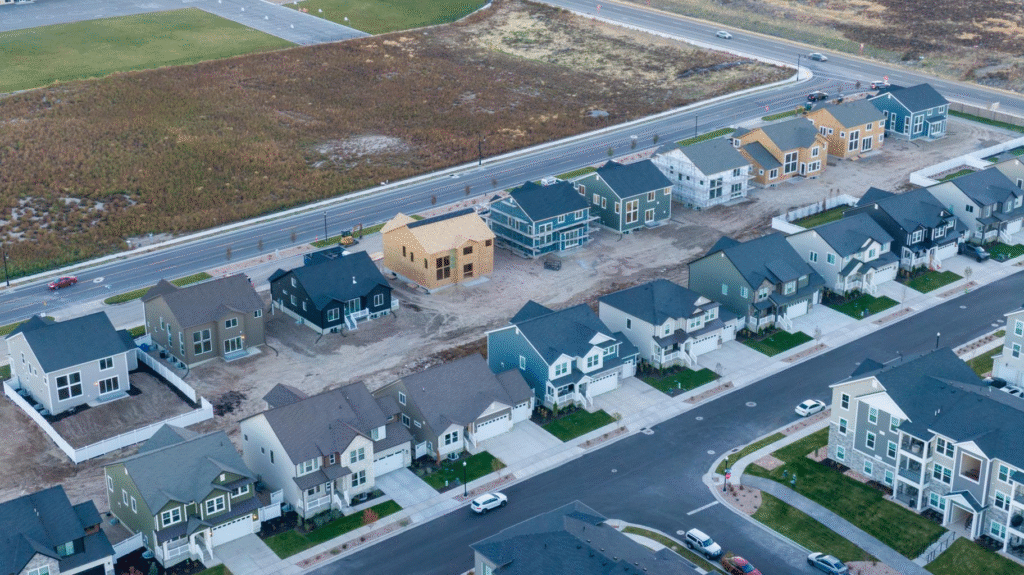
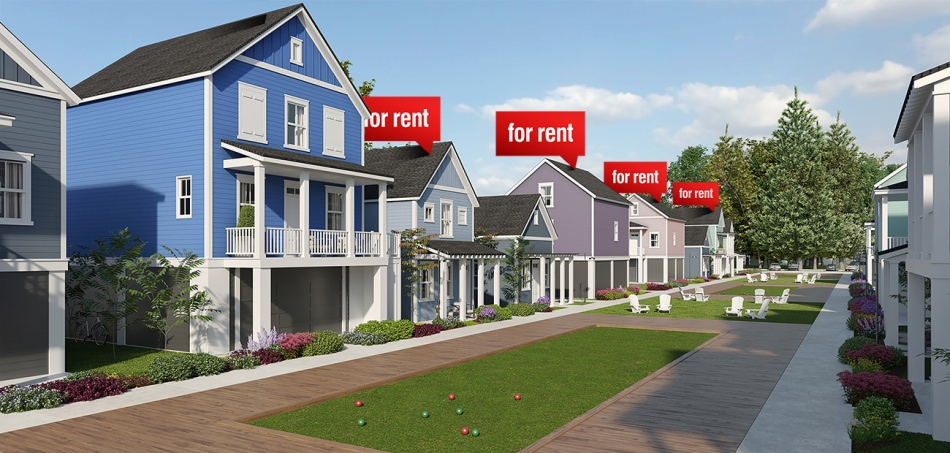
One of the fastest-growing segments in residential real estate is build-to-rent housing.
These communities consist of single-family homes designed specifically for long-term rental rather than ownership.
Institutional investors favor this model because:
- Maintenance costs are predictable
- Tenant retention rates are high
- Demand from families remains strong
In markets where homeownership has become less affordable, these communities fill a critical gap.
Multifamily Housing: A Core Investment Sector
Multifamily housing continues to attract both institutional and private investors.
Apartments offer several advantages:
- Consistent rental income
- Diversified tenant risk
- Professional management structures
However, the sector has experienced short-term pressure in cities where large numbers of new apartment units were recently completed.
For example, some Sun Belt markets saw temporary rent slowdowns as thousands of new units entered the market simultaneously.
Still, long-term fundamentals remain strong because:
- Homeownership affordability remains challenging
- Population growth continues in key metro areas
- Younger generations increasingly rent longer
Investors are therefore analyzing absorption rates—the speed at which new units are leased—to determine where supply and demand remain balanced.
Commercial Real Estate: Shifting Investment Strategies
Commercial real estate is undergoing a structural transformation.
Some sectors are thriving while others are adapting to new economic realities.
Investors are carefully analyzing each asset class rather than treating commercial real estate as a single market.
Industrial and Logistics Properties
Industrial real estate has emerged as one of the most resilient commercial sectors.
The growth of e-commerce and supply chain restructuring has driven demand for warehouses, distribution centers, and logistics hubs.
Large retailers and logistics companies require properties located near major highways, ports, and population centers.
Investors look for:
- Last-mile distribution facilities
- Warehouse space near major metros
- Logistics hubs close to ports or rail infrastructure
According to CBRE market data, industrial vacancy rates in many U.S. markets remain historically low despite significant new construction.
Retail Real Estate: A Selective Recovery
Retail real estate has evolved significantly over the past decade.
The decline of traditional malls forced investors to rethink the sector. However, certain types of retail properties are performing well.
Successful retail investments often include:
- Grocery-anchored shopping centers
- Essential services (pharmacies, medical clinics)
- Mixed-use developments with residential components
Investors now focus heavily on tenant quality and local demographics when evaluating retail assets.
For example, a neighborhood shopping center anchored by a strong grocery chain can generate stable income even during economic downturns.
Office Space: The Sector Under the Most Scrutiny
Office real estate faces the greatest uncertainty due to remote and hybrid work trends.
Many companies are reducing their physical office footprints or relocating to newer, higher-quality buildings.
As a result, investors are focusing on Class A office properties in prime locations while avoiding older buildings that may require significant renovations.
Key factors investors analyze include:
- Occupancy rates
- Lease expiration schedules
- Tenant industry diversification
- Renovation costs
Some investors are exploring office-to-residential conversions, particularly in cities where housing demand remains strong.
Data Centers and Alternative Property Types
Another emerging area attracting investor attention is alternative commercial real estate.
These properties include specialized infrastructure tied to modern economic activity.
Examples include:
- Data centers supporting cloud computing
- Life sciences laboratories near research universities
- Self-storage facilities
- Senior housing communities
Data centers, in particular, have seen significant institutional investment due to the rapid growth of artificial intelligence and cloud services.
Demand for digital infrastructure has created a new category of real estate that behaves differently from traditional office or retail assets.
How Investors Evaluate Property Opportunities Today
Successful investors rarely rely on a single metric when evaluating a property.
Instead, they combine financial analysis with local market research.
Common evaluation methods include:
- Cap rate analysis to estimate potential returns
- Cash-on-cash return calculations
- Local employment growth trends
- Population forecasts
- Infrastructure projects that may increase demand
For example, an investor considering a suburban apartment complex might evaluate nearby job creation, new highway expansions, and school district quality before making a purchase decision.
Real estate remains a highly localized investment, and small differences between neighborhoods can significantly impact performance.
Frequently Asked Questions
What property sectors are attracting the most investment right now?
Industrial logistics, multifamily housing, and data centers are currently among the most attractive sectors due to strong demand and long-term structural trends.
Why are interest rates so important for real estate investors?
Higher interest rates increase borrowing costs, which reduces potential returns and often lowers property values.
Are office buildings still a good investment?
Some office buildings remain attractive, particularly modern properties in prime locations. Older buildings may require costly renovations or conversion projects.
What makes multifamily housing appealing to investors?
Multifamily properties provide steady rental income and diversified tenant risk, making them relatively resilient during economic downturns.
How do population trends affect real estate investment?
Population growth in a region increases housing demand, which can drive higher rents and property values.
What is a cap rate?
A capitalization rate measures the expected annual return on a property based on its income relative to its purchase price.
Why are warehouses so valuable now?
E-commerce growth requires extensive logistics infrastructure, increasing demand for warehouse space near population centers.
What risks should investors watch in today’s market?
Interest rate volatility, oversupply in certain cities, tenant vacancies, and economic slowdowns can all affect property performance.
Are suburban markets still attractive?
Yes. Many suburban areas continue to experience strong demand due to affordability and lifestyle preferences.
How do investors choose the right market?
They analyze employment growth, population migration, housing supply, and infrastructure development.
Market Signals That May Shape the Next Investment Cycle
Real estate investing has always required patience and careful analysis, but today’s market demands an even more disciplined approach. Investors are paying closer attention to fundamentals such as cash flow, tenant stability, and long-term demographic trends.
The property sectors attracting the most attention—industrial logistics, multifamily housing, and digital infrastructure—reflect broader economic changes rather than short-term speculation.
At the same time, challenged sectors such as office real estate may present opportunities for investors willing to reposition assets or adapt buildings for new uses.
In many ways, the next phase of real estate investment will favor investors who combine data-driven analysis with local market insight.
Key Insights for Property Investors
- Interest rates remain the most influential factor affecting investment decisions
- Housing supply shortages continue supporting residential demand
- Multifamily properties remain a core investment asset
- Industrial logistics facilities benefit from e-commerce growth
- Retail success depends heavily on tenant mix and location
- Office real estate is undergoing structural transformation
- Data centers and alternative assets are attracting institutional capital
- Local market fundamentals matter more than national headlines