


Summary
Flexible office spaces are evolving from short-term solutions into a long-term strategy for many American businesses. As hybrid work models expand and companies seek greater agility, organizations are rethinking traditional leases and office footprints. Flexible workspaces offer scalability, cost control, and access to professional environments—helping businesses adapt to economic shifts, workforce expectations, and changing workplace technology.
Over the past decade, flexible office spaces have moved from niche solutions for startups to core infrastructure for businesses of all sizes. What once served freelancers and early-stage companies is now attracting corporations, regional firms, and distributed teams looking for adaptable workplace strategies.
In the United States, workplace expectations have changed dramatically. The rise of hybrid work, increased mobility, and economic uncertainty have encouraged organizations to reconsider long-term commercial leases. Flexible offices—such as coworking spaces, managed offices, and short-term serviced suites—offer a different model: one built around adaptability rather than permanence.
According to data from CBRE, flexible workspace inventory in major U.S. markets has steadily expanded since 2020 as companies seek options that allow them to scale space up or down without committing to lengthy leases. For many organizations, flexible offices are no longer temporary arrangements but integral parts of their long-term workplace strategy.
Understanding why this shift is happening requires looking at how work itself has changed.
The Changing Nature of Work in the United States
The modern workplace is no longer defined by a single headquarters. Employees collaborate across time zones, work from home several days a week, and frequently travel between locations. This shift has forced companies to rethink how and why office space is used.
Traditional offices were designed for daily occupancy by most employees. Today, many companies report that average office attendance is significantly lower than before 2020. Research from Kastle Systems’ Back to Work Barometer shows office occupancy in major U.S. cities often ranges between 45% and 60% on typical weekdays.
Instead of maintaining large spaces that remain partially empty, organizations are experimenting with more flexible workplace models. Offices are increasingly used for collaboration, meetings, training sessions, and client engagement rather than routine desk work.
Flexible office environments support this shift by providing access to professional facilities without requiring companies to maintain unused square footage.
What Exactly Is a Flexible Office Space?
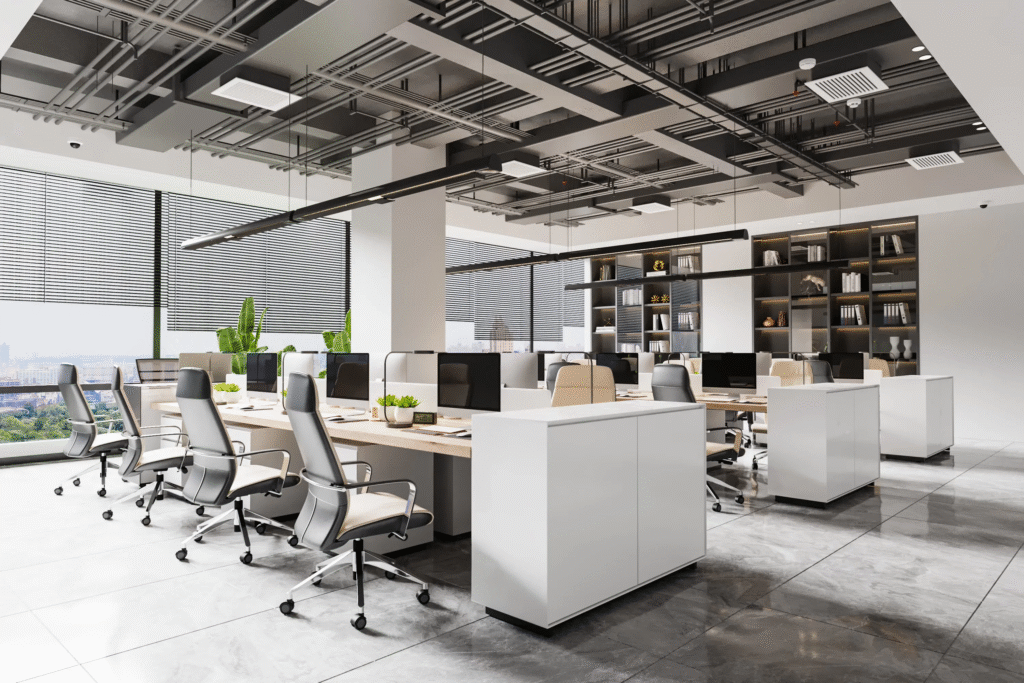
Flexible office spaces refer to work environments that businesses can use without committing to traditional long-term leases. These spaces are typically operated by workspace providers or building owners offering adaptable contracts.
Common types include:
- Coworking spaces with shared work areas and private offices
- Managed offices customized for a single company but run by a workspace provider
- Serviced offices that include furniture, utilities, and administrative support
- On-demand meeting rooms and day offices for temporary workspace needs
In most cases, businesses can adjust their workspace size, location, or contract length as their needs evolve.
For companies navigating uncertain economic conditions or shifting staffing levels, this flexibility can significantly reduce operational risk.
Why Businesses Are Integrating Flexible Offices into Long-Term Plans
Flexible workspace adoption is often driven by practical considerations rather than trends. Many companies find that flexible arrangements solve several challenges associated with traditional real estate commitments.
Key strategic advantages include:
- Scalability – Companies can add or reduce space as teams grow or shrink.
- Cost predictability – Utilities, furniture, and services are typically bundled into a single monthly fee.
- Reduced capital investment – Businesses avoid large upfront costs associated with building out offices.
- Access to prime locations – Flexible offices often exist in central business districts where leases may otherwise be expensive.
- Support for distributed teams – Employees can work from multiple regional locations.
For example, a technology consulting firm headquartered in Chicago may maintain a small central office while providing employees with access to coworking locations in Austin, Denver, and Seattle. This model allows the company to support remote employees without opening full branch offices.
Flexible Offices and the Rise of Hybrid Work
Hybrid work has become one of the most influential drivers of flexible office demand.
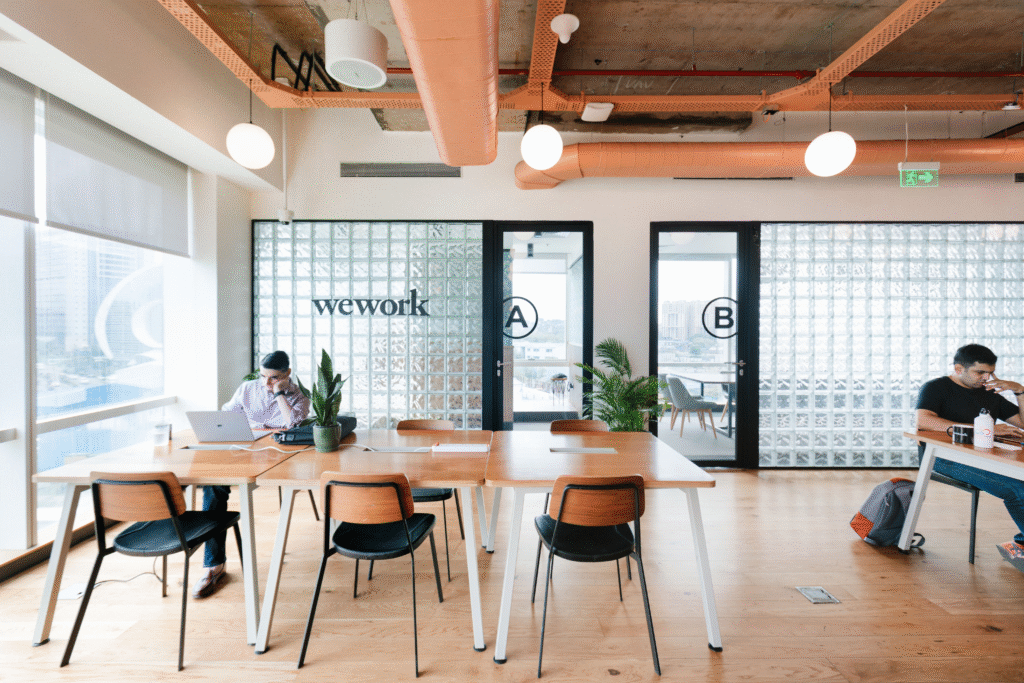
Many companies now operate with employees splitting time between home and office environments. This approach allows organizations to reduce real estate footprints while maintaining spaces for collaboration and team engagement.
Flexible offices are well suited for hybrid models because they allow companies to:
- Maintain smaller headquarters while offering satellite locations
- Provide employees with professional environments closer to home
- Host occasional team gatherings without permanent expansion
- Accommodate temporary project teams or contractors
For example, a marketing agency with 120 employees may only require desks for 50 workers on any given day. Instead of leasing a large office, the firm could combine a small central workspace with several flexible locations accessible to employees.
This approach provides both efficiency and convenience.
The Financial Logic Behind Flexible Workspaces
Commercial real estate represents one of the largest fixed expenses for many organizations. Long-term leases—often lasting 7 to 15 years—can create financial constraints if business conditions change.
Flexible workspace models reduce that risk by shifting office space from a fixed cost to a more variable expense.
Companies may benefit from:
- Lower initial setup costs
- Shorter contractual commitments
- Minimal maintenance responsibilities
- Ability to relocate quickly
According to JLL, organizations adopting flexible workspace strategies often reduce real estate-related capital expenditures while maintaining access to high-quality facilities.
This financial flexibility is particularly valuable for industries with fluctuating staffing levels, such as consulting, technology, and project-based services.
How Flexible Offices Support Employee Experience
Workplace expectations among American employees have changed significantly. Workers increasingly prioritize convenience, comfort, and flexibility in their professional environments.
Flexible office providers often design spaces specifically to improve daily work experiences.
Common amenities include:
- Quiet work areas and focus rooms
- Meeting and conference facilities
- Collaborative lounges
- Professional reception services
- High-speed internet and IT infrastructure
- Wellness areas and social spaces
These features can help companies offer employees a professional environment without managing facilities themselves.
For smaller businesses especially, flexible offices allow access to amenities that might otherwise be too expensive to build independently.
Geographic Flexibility for Distributed Teams
Another major advantage of flexible workspaces is geographic reach.
Many workspace networks operate locations in multiple U.S. cities. This allows employees to access office environments even when traveling or living far from company headquarters.
Companies can use this model to:
- Support remote employees across different regions
- Reduce long commutes for staff members
- Establish temporary project hubs
- Expand into new markets without opening permanent offices
For example, a financial services firm based in New York might allow employees relocating to Florida or Texas to work from coworking locations rather than leaving the company entirely.
This flexibility can improve employee retention while supporting distributed workforce strategies.
Flexible Offices and the Future of Commercial Real Estate
Flexible workspaces are also reshaping how landlords and developers approach office buildings.
In the past, office towers were typically leased to tenants under long-term contracts. Today, many property owners are allocating portions of their buildings to flexible workspace operators or launching their own flexible offerings.
This shift reflects broader market demand for adaptable work environments.
Commercial real estate analysts increasingly view flexible workspace as a permanent segment of the office market rather than a temporary trend. Industry forecasts from CBRE suggest flexible office space could represent a significantly larger share of total office inventory in major U.S. cities by the end of the decade.
Challenges Businesses Should Consider
While flexible office strategies offer many benefits, they also require thoughtful planning.
Potential considerations include:
- Ensuring security for sensitive data
- Managing company culture across distributed locations
- Evaluating long-term cost differences compared with traditional leases
- Ensuring workspace availability during peak demand
Organizations adopting flexible office strategies often combine them with smaller headquarters or regional hubs to maintain stability.
The most successful workplace strategies typically blend flexibility with consistency.
How Companies Are Implementing Flexible Workspace Strategies
Different industries are adopting flexible office solutions in various ways.
Common approaches include:
Hub-and-spoke model
A central headquarters supported by smaller flexible offices across multiple regions.
Project-based workspace
Temporary office space used by teams working on short-term contracts or consulting projects.
Remote employee support
Providing coworking memberships for remote staff who prefer a professional environment.
Expansion testing
Using flexible offices to explore new markets before opening permanent locations.
These approaches allow businesses to experiment with workspace strategies without long-term commitments.
Frequently Asked Questions
1. What is a flexible office space?
A flexible office space is a workplace that businesses can use without signing long-term leases. These spaces typically offer furnished offices, shared facilities, and short-term contracts.
2. Are flexible offices only for startups?
No. While startups were early adopters, many large corporations now use flexible offices to support hybrid teams and regional operations.
3. How much do flexible office spaces cost in the U.S.?
Costs vary by city and amenities but typically range from $200 to $800 per desk per month, depending on location and service level.
4. Do flexible offices replace traditional headquarters?
Not always. Many companies use flexible offices alongside smaller headquarters or regional hubs.
5. Are flexible workspaces secure for businesses?
Most providers offer secure internet, private offices, and controlled access systems, though companies should still evaluate security measures carefully.
6. Why are corporations adopting coworking spaces?
Corporations often use coworking locations to support distributed teams, reduce office costs, and provide employees with convenient workspace options.
7. Can flexible offices support long-term business operations?
Yes. Many companies now integrate flexible spaces into permanent workplace strategies.
8. How do flexible offices support hybrid work?
They allow employees to work in professional environments without requiring large central offices.
9. Are flexible workspaces available outside major cities?
Yes. Many providers now operate in suburban areas and secondary cities across the United States.
10. What industries benefit most from flexible offices?
Technology, consulting, marketing, finance, and startups frequently use flexible workspace solutions.
The Workplace Model Companies Are Building for the Next Decade
Flexible office spaces are becoming foundational to modern workplace strategies because they reflect how organizations actually operate today. Businesses need environments that adapt to shifting workforce patterns, evolving technologies, and uncertain economic conditions.
Rather than replacing traditional offices entirely, flexible workspaces are helping companies design more resilient and responsive real estate strategies—ones that allow teams to collaborate effectively while maintaining the agility required in a rapidly changing economy.
Key Insights at a Glance
- Flexible office spaces reduce long-term real estate commitments
- Hybrid work has significantly increased demand for adaptable work environments
- Companies use flexible offices to support distributed teams
- Businesses can expand into new markets without opening permanent offices
- Flexible workspace networks provide geographic reach across U.S. cities
- Cost predictability and scalability are major advantages
- Many corporations now incorporate flexible offices into long-term workplace planning