

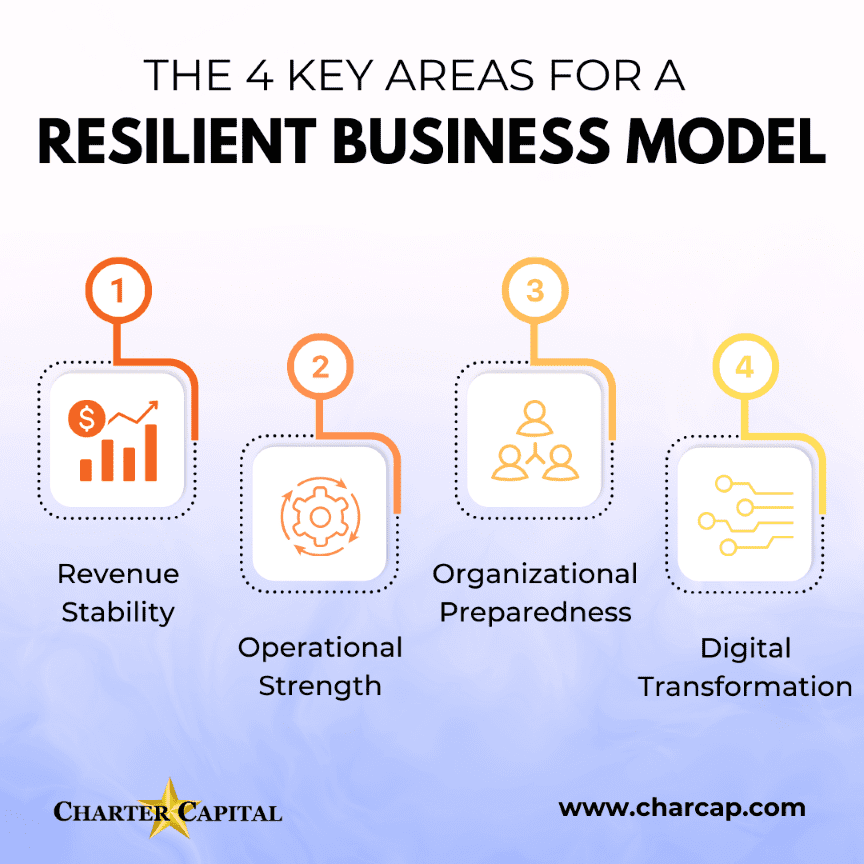
In today’s uncertain economic environment, many companies are shifting away from aggressive “growth at all costs” strategies toward resilient business models built for sustainability. Firms prioritizing profitability, diversified revenue streams, and operational discipline are increasingly outperforming those chasing rapid expansion. Understanding why resilience matters—and how to build it—has become essential for entrepreneurs, investors, and business leaders.
The Changing Definition of Business Success
For much of the past decade, the startup ecosystem celebrated rapid growth above nearly everything else. Venture-backed companies often prioritized user acquisition, market share, and expansion—even when profitability was years away.
That mindset has begun to shift.
Economic volatility, rising interest rates, and investor scrutiny have pushed companies to rethink their strategies. Instead of focusing solely on scaling as quickly as possible, many businesses are now emphasizing resilience: the ability to withstand shocks, adapt to changing conditions, and maintain stable operations.
Research from McKinsey & Company and Harvard Business Review consistently highlights that companies with strong operational fundamentals and diversified revenue streams tend to outperform peers during periods of economic uncertainty. These organizations may grow more gradually, but their stability often leads to stronger long-term outcomes.
The shift is not about abandoning growth. Rather, it’s about building growth on a foundation that can endure.
What Makes a Business Model Resilient?
A resilient business model is designed to withstand market fluctuations, competitive pressure, and operational disruptions.
Instead of relying on a single revenue source or rapid expansion, resilient companies focus on structural durability.
Common characteristics include:
- Multiple revenue streams
- Sustainable profit margins
- Strong customer retention
- Conservative financial management
- Operational flexibility
- Scalable but disciplined growth
These companies often grow more steadily rather than explosively. Over time, that consistency can produce stronger financial performance and greater investor confidence.
Why “Growth at All Costs” Is Losing Favor
During the era of cheap capital and aggressive venture funding, rapid growth strategies were widely rewarded. Startups often prioritized expansion over profitability because investors valued market dominance.
However, several factors have exposed the weaknesses of this approach.
First, capital has become more expensive. As interest rates rise, investors increasingly expect companies to demonstrate clear paths to profitability.
Second, consumer behavior has become less predictable. Economic disruptions—from the pandemic to supply chain instability—have made aggressive expansion riskier.
Third, competition in many digital markets has intensified. Companies that scale too quickly sometimes struggle to maintain service quality or customer loyalty.
As a result, investors and founders are reconsidering the balance between speed and sustainability.
The Operational Advantages of Resilient Models
Resilient companies often outperform because their operations are structured for stability rather than speed.
Instead of building systems around rapid expansion, they prioritize operational strength in several key areas.
Financial discipline
Resilient businesses maintain careful control over cash flow, expenses, and debt levels. This financial discipline gives them flexibility during downturns.
Customer-centric growth
Rather than pursuing rapid user acquisition, resilient companies emphasize customer retention and lifetime value.
Strategic flexibility
These organizations are better positioned to pivot when market conditions change because they are not locked into overly aggressive expansion plans.
Balanced risk exposure
Diversified revenue streams reduce dependence on a single product or customer segment.
Over time, these advantages can create compounding benefits.
Lessons From Companies That Prioritized Durability
Many of today’s most stable businesses achieved success through disciplined growth rather than rapid expansion.
Consider how several well-known companies approached scaling:
- Subscription-based software companies often prioritized customer retention and recurring revenue before expanding aggressively.
- Many profitable mid-sized businesses focused on operational excellence long before attracting investor attention.
- Companies with strong supply chain control proved more resilient during pandemic disruptions.
These examples demonstrate that sustainable growth strategies can outperform high-risk expansion models, particularly in volatile environments.
The Investor Perspective: Why Resilience Attracts Capital
Investors increasingly recognize the value of durable business models.
In venture capital and private equity markets, metrics such as unit economics, customer lifetime value, and gross margins are receiving greater attention.
Rather than funding companies solely based on projected growth rates, investors now ask questions such as:
- How quickly can the company reach profitability?
- Are customer acquisition costs sustainable?
- Does the company have diversified revenue sources?
- Can operations scale without dramatically increasing costs?
This shift reflects a broader recognition that resilient companies often generate more consistent returns.
Building a Resilient Business Model From the Start
Entrepreneurs launching new ventures can incorporate resilience into their strategy from the beginning.
Several practical approaches can help.
Focus on strong unit economics
A business model should work at the individual customer level before scaling aggressively.
Key questions include:
- Does each customer generate sustainable profit over time?
- Are acquisition costs manageable?
- Can the company maintain margins as it grows?
Prioritize recurring revenue
Recurring revenue streams—such as subscriptions or service contracts—create predictable income and financial stability.
Maintain disciplined spending
Companies that scale cautiously often retain more flexibility during downturns.
Diversify revenue sources
Relying on a single product or market segment increases vulnerability.
A balanced portfolio of offerings can reduce risk.
Why Resilience Matters More in Uncertain Economies
Periods of economic uncertainty highlight the weaknesses of fragile business models.
Companies that rely heavily on continuous funding or rapid expansion often face significant challenges when markets tighten.
Resilient organizations, by contrast, are better prepared to handle disruptions such as:
- Supply chain interruptions
- Demand fluctuations
- Rising operational costs
- Competitive pressure
Because these companies are structured for sustainability, they can continue investing in innovation even during downturns.
This long-term perspective often allows them to capture market share while competitors struggle.
Balancing Growth With Sustainability
The debate between rapid growth and resilience should not be framed as a strict choice between two extremes.
Many successful companies combine elements of both strategies.
The most effective approach often involves:
- Building a financially sustainable foundation
- Expanding at a pace that operations can support
- Monitoring customer retention and satisfaction closely
- Investing in innovation while maintaining cost discipline
This balanced strategy allows companies to pursue growth without sacrificing long-term stability.
Frequently Asked Questions
1. What is a resilient business model?
A resilient business model is structured to withstand market disruptions through diversified revenue, strong margins, disciplined financial management, and adaptable operations.
2. Why are resilient companies outperforming rapid-growth startups?
Because they rely less on external funding, maintain stronger cash flow, and can adapt more effectively during economic uncertainty.
3. Does focusing on resilience slow growth?
Not necessarily. It may lead to slower early expansion, but it often supports more stable long-term growth.
4. What industries benefit most from resilient models?
Industries with recurring revenue—such as software, healthcare services, and professional services—often benefit from resilience-focused strategies.
5. How do investors evaluate resilience?
Investors examine metrics such as profitability timelines, customer retention, gross margins, and operational efficiency.
6. Can startups build resilience early?
Yes. Founders can prioritize strong unit economics, careful spending, and diversified revenue streams from the beginning.
7. What role does cash flow play in resilience?
Stable cash flow allows companies to operate independently of external funding and respond more effectively to market disruptions.
8. Are rapid-growth strategies always risky?
Not always, but they often require significant capital and can expose companies to higher operational risk.
9. What are examples of resilient revenue models?
Subscriptions, service contracts, licensing agreements, and diversified product portfolios are common examples.
10. How can companies transition from growth-at-all-costs to resilience?
They often focus on improving margins, reducing unnecessary expenses, strengthening customer retention, and diversifying revenue sources.
A New Era of Sustainable Growth
The modern business landscape is increasingly rewarding companies that combine ambition with discipline.
Rapid growth will always play a role in entrepreneurship. However, businesses that prioritize operational strength, financial stability, and adaptable strategies are proving more capable of navigating uncertainty.
Resilient models allow companies to weather downturns, retain customer trust, and continue investing in innovation. Over time, these qualities often produce stronger and more consistent results than aggressive expansion alone.
For founders and executives, the lesson is clear: growth remains important—but durability is becoming the defining advantage.
Strategic Insights Business Leaders Should Remember
- Sustainable growth often outperforms rapid expansion over time
- Financial discipline strengthens a company’s ability to adapt
- Diversified revenue streams reduce market vulnerability
- Customer retention is often more valuable than rapid acquisition
- Investors increasingly prioritize strong unit economics
- Operational flexibility improves long-term resilience
- Balanced strategies can combine growth and sustainability