

Summary
After several years of uncertainty following the pandemic, office demand in major U.S. cities is showing measurable signs of recovery. Companies are reshaping how they use office space rather than abandoning it entirely. Hybrid work, upgraded buildings, and evolving workplace culture are driving renewed leasing activity in cities like New York, Austin, and Miami.
A Market That Is Adjusting, Not Disappearing
For much of 2020 through 2022, headlines suggested that traditional offices might permanently decline as remote work expanded. While remote and hybrid arrangements remain part of the modern workforce, recent market data suggests that office demand in major U.S. cities is gradually returning—though in a different form than before.
Commercial real estate firms including CBRE and JLL report that leasing activity began stabilizing in 2023 and continued improving through 2024. Many companies are renewing leases, relocating to better buildings, or consolidating multiple offices into higher-quality spaces.
Instead of eliminating offices, organizations are redefining their role. Today’s workplace often serves as a collaboration hub rather than a place employees visit every day.
Why Companies Are Bringing Employees Back
Several factors are contributing to the return of office demand across major urban markets.
Companies increasingly recognize that in-person collaboration can improve productivity, training, and workplace culture. Many leadership teams have found that certain types of work—mentoring, brainstorming, and complex problem-solving—benefit from face-to-face interaction.
At the same time, businesses are investing heavily in offices that employees actually want to use.
Common workplace upgrades include:
- Flexible collaboration areas
- Wellness-focused building amenities
- High-quality air filtration systems
- Smart meeting technology
- Transit-accessible locations
In this environment, the office is evolving from a mandatory workplace to a strategic environment designed to support specific activities.
Major U.S. Cities Seeing Office Demand Return
Office recovery is not uniform across the country. Some cities are seeing faster rebounds due to industry mix, population growth, and local economic conditions.
New York City
New York remains the largest office market in the United States. Financial firms, legal practices, media companies, and technology companies continue to rely on centralized office locations.
Leasing activity in Manhattan increased significantly during 2023 and 2024, according to reports from brokerage firms. Many companies are relocating into newer or recently renovated buildings that offer upgraded amenities.
Austin
Austin’s technology sector and population growth have supported strong office demand. Major tech employers—including both established firms and startups—continue expanding in the city.
Flexible workspace models are particularly common in Austin, where companies combine traditional office suites with shared meeting and collaboration areas.
Miami
Miami has emerged as a destination for financial services, technology firms, and investment companies relocating from other states. The city’s business-friendly environment and growing workforce have contributed to increased office leasing.
New developments in areas like Brickell and Wynwood are attracting tenants seeking modern, amenity-rich buildings.
Dallas–Fort Worth
The Dallas–Fort Worth metro area continues to see corporate relocations and business expansions. Companies moving from higher-cost markets often establish regional headquarters in the region, increasing office demand.
The Shift Toward “Flight to Quality”
One of the most significant trends shaping office demand is known as the flight to quality.
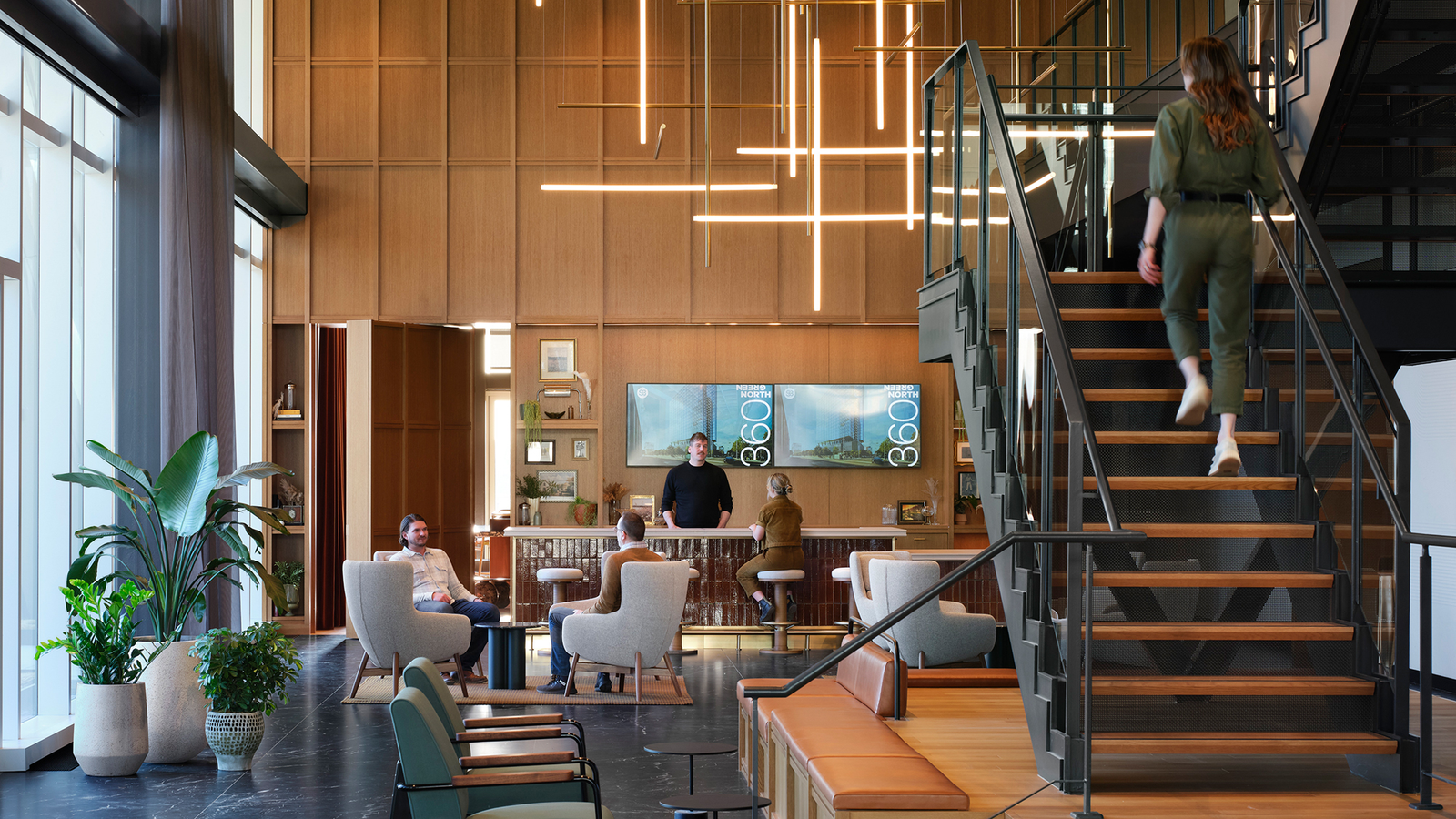
Instead of simply renewing leases in older buildings, many companies are upgrading to newer, higher-performing office properties. These buildings often include:
- Advanced sustainability features
- Flexible floor plans
- Hospitality-style lobbies
- On-site fitness and wellness facilities
- Access to public transportation
As a result, newer Class A buildings are seeing stronger leasing activity, while older office properties may struggle unless they undergo renovations.
This trend has become particularly visible in major urban centers where new construction competes with aging office towers.
How Hybrid Work Is Changing Office Space Needs
Hybrid work remains a defining feature of the modern workplace. According to several workforce studies, many U.S. companies now expect employees to work in the office between two and four days per week.
This shift has changed how companies design their office layouts.
Traditional office environments with rows of individual desks are increasingly being replaced by more flexible layouts that support collaboration.
Common hybrid office features include:
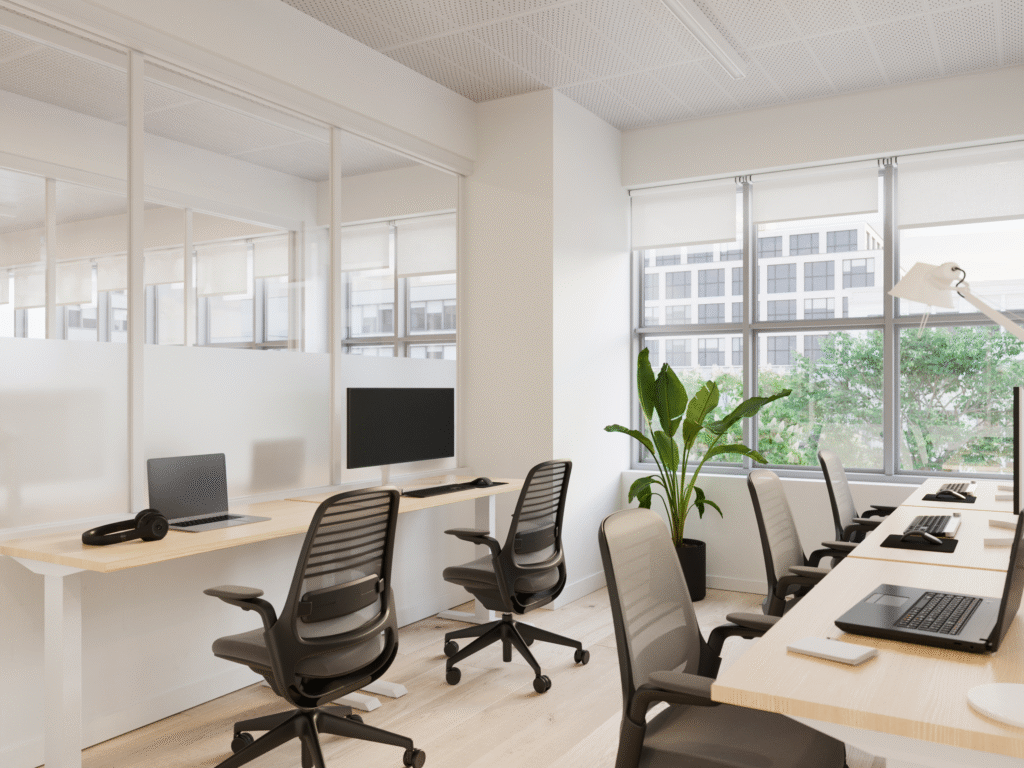
- Shared desks instead of assigned seating
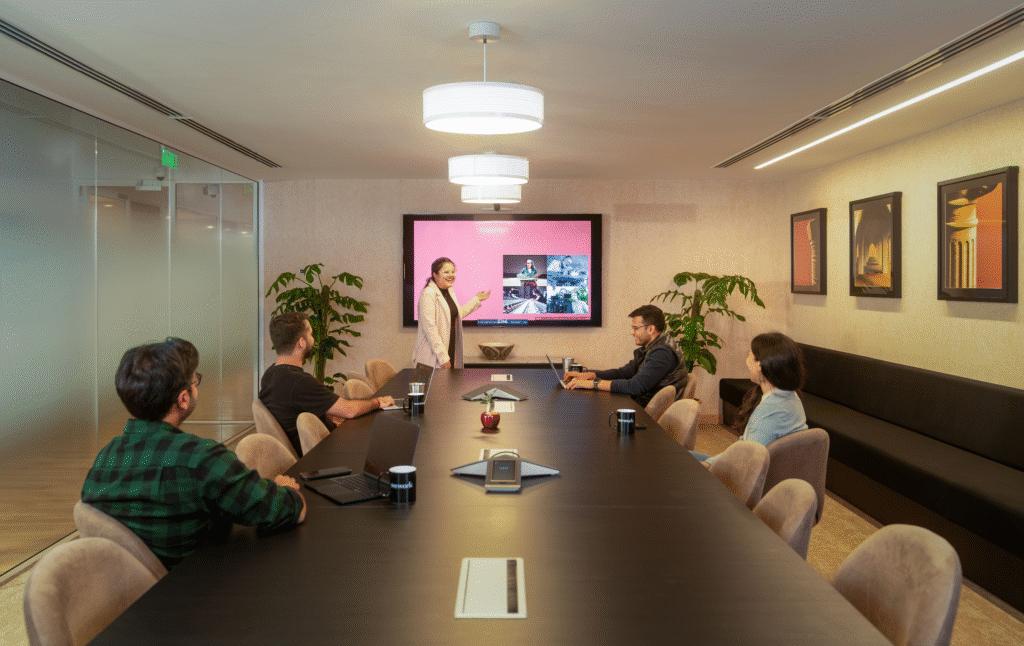
- Larger meeting rooms for team collaboration
- Quiet zones for focused work
- Video-enabled meeting spaces
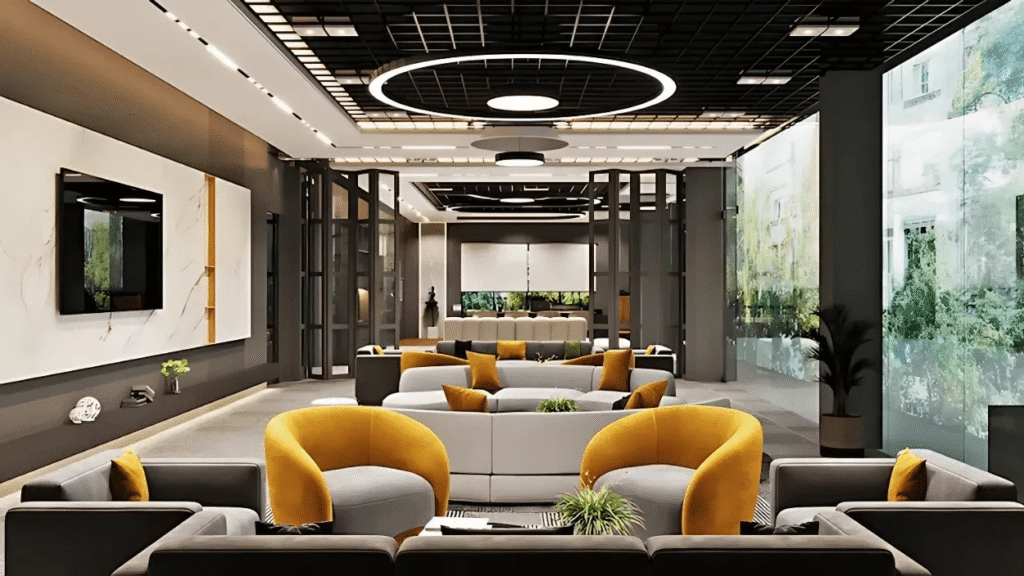
- Informal lounge areas
The result is that companies may lease slightly less total square footage than before, but they invest more heavily in design, technology, and employee experience.
What Tenants Are Looking for in Office Buildings
Modern tenants prioritize features that support both productivity and employee well-being.
Key considerations often include:
- Location and transit access
Buildings close to transit hubs make commuting easier for hybrid workers. - Amenities
On-site cafes, fitness centers, and outdoor spaces are increasingly common. - Technology infrastructure
High-speed connectivity and integrated video conferencing systems are essential. - Sustainability credentials
Energy-efficient buildings with certifications like LEED are becoming more attractive. - Flexible lease structures
Many companies now prefer shorter leases or expansion options.
Developers and landlords that adapt to these expectations are more likely to attract long-term tenants.
The Role of Coworking and Flexible Office Space
Flexible workspace providers have become an important part of the office market’s evolution.
Coworking companies offer businesses short-term office solutions that allow them to scale up or down depending on workforce needs. This model is especially useful for startups, remote-first companies, and firms testing new markets.
Even large corporations are incorporating flexible workspace into their real estate strategies. Some organizations maintain a central headquarters while using coworking offices in other cities for regional teams.
This hybrid real estate strategy provides flexibility without completely abandoning physical office space.
Office Conversions and Adaptive Reuse
Not every office building will remain an office.
Cities across the United States are exploring ways to convert underused office properties into other uses such as residential housing, hotels, or mixed-use developments.
Office-to-residential conversions have gained particular attention in cities facing housing shortages. However, these conversions can be technically complex due to building design constraints.
Still, adaptive reuse is likely to play an increasing role in reshaping downtown areas over the next decade.
What the Data Shows About Office Recovery
Recent data offers insight into how office demand is evolving.
According to industry reports:
- Office vacancy rates remain higher than pre-pandemic levels in many cities.
- Leasing activity has steadily improved since 2023.
- Newer Class A buildings outperform older office stock.
- Companies are prioritizing quality over quantity of space.
While full recovery may take several more years, the data suggests that offices remain an important part of the American workplace ecosystem.
Long-Term Outlook for Urban Office Markets
Looking ahead, most industry analysts expect office demand to stabilize rather than disappear.
Urban centers continue to offer advantages that suburban and remote locations cannot easily replicate. Access to talent, transportation networks, cultural amenities, and business services keeps major cities attractive for corporate headquarters and professional services firms.
Future office demand will likely focus on:
- Collaboration-oriented spaces
- Mixed-use developments
- Sustainable building design
- Walkable, amenity-rich neighborhoods
Cities that invest in vibrant downtown districts are more likely to maintain healthy office markets.
Frequently Asked Questions
Why are companies returning to offices?
Many companies believe that in-person collaboration improves communication, training, and team cohesion, especially for complex projects.
Which U.S. cities are seeing office demand increase?
Cities such as New York, Miami, Austin, Dallas, and Nashville have shown relatively strong office leasing activity compared with other markets.
Is remote work ending?
No. Remote and hybrid work models are expected to remain common, but offices are still used for collaboration and team interaction.
What is the “flight to quality” trend?
It refers to companies moving from older office buildings into newer or recently renovated properties with better amenities and technology.
Are office vacancy rates still high?
Vacancy rates remain elevated in many cities compared with pre-2020 levels, though leasing activity has improved.
What types of offices are most popular today?
Modern Class A buildings with flexible layouts, strong technology infrastructure, and attractive amenities tend to attract the most tenants.
Will office buildings be converted into housing?
Some cities are exploring office-to-residential conversions, particularly in older buildings that are difficult to lease.
Are coworking spaces replacing traditional offices?
Not entirely. Coworking is often used as a supplement rather than a replacement for traditional offices.
What industries are driving office demand?
Financial services, legal firms, consulting companies, and technology businesses remain major office users.
Will offices fully recover to pre-pandemic levels?
Recovery may take time, and the total square footage needed may be smaller, but offices are expected to remain a core part of the workplace.
Charting the Next Phase of the Workplace
The return of office demand in major U.S. cities reflects a broader transition rather than a simple rebound. Companies are reassessing how physical workplaces contribute to productivity, collaboration, and employee experience.
As businesses refine hybrid work strategies, the office is evolving into a destination for teamwork, innovation, and organizational culture. Cities that adapt their office districts with modern buildings, mixed-use development, and strong infrastructure will likely remain central to the American economy.
Key Insights at a Glance
- Office demand in major U.S. cities is stabilizing after several years of uncertainty
- Hybrid work is shaping how companies design and use office space
- Many organizations are relocating to higher-quality buildings
- Cities like New York, Austin, Miami, and Dallas are seeing stronger leasing activity
- Flexible workspaces and coworking are expanding within corporate real estate strategies
- Older office buildings may be repurposed for housing or mixed-use development
- Urban centers remain attractive due to talent access and infrastructure
 Robert Weber