

Summary
Modern showroom design is redefining how retailers use physical space. As e-commerce grows, showrooms are evolving into immersive brand environments focused on experience, technology, and flexibility. Retail real estate developers and brands are rethinking layouts, lighting, digital integration, and sustainability to attract customers and support omnichannel retail. These design trends are influencing leasing strategies, property values, and long-term retail development.
Retail real estate is undergoing one of its most significant transformations in decades. The rise of e-commerce, shifting consumer expectations, and advances in retail technology are forcing retailers and property developers to rethink the role of the physical showroom.
In the past, showrooms were primarily designed to display inventory. Today, they serve a much broader purpose: they are immersive brand environments, product experience centers, fulfillment hubs, and marketing spaces all at once.
According to the International Council of Shopping Centers (ICSC), more than 70% of U.S. retail purchases still involve a physical store interaction, even when the purchase ultimately happens online. That statistic explains why brands—from automotive companies to furniture retailers and direct-to-consumer startups—are investing heavily in showroom design.
For developers, architects, and retail operators, showroom design trends are now directly shaping the future of retail real estate.
Why Showrooms Matter More Than Ever in Retail Real Estate
Despite years of predictions about the “death of retail,” physical spaces continue to play a crucial role in customer decision-making.
Modern consumers want to touch products, test them, interact with brand representatives, and experience a brand environment before committing to a purchase. Showrooms allow retailers to provide those experiences while maintaining smaller inventory footprints.
For retail landlords, this shift has significant implications. Properties that support experiential retail—through high ceilings, flexible layouts, strong digital infrastructure, and attractive storefront visibility—are commanding stronger demand.
Modern showrooms typically serve several strategic functions:
- Product demonstration and testing
- Brand storytelling and marketing
- Customer education
- Pickup and returns for online orders
- Community events and workshops
This hybrid function requires a new approach to design, layout, and real estate planning.
The Shift From Inventory Storage to Experience Design
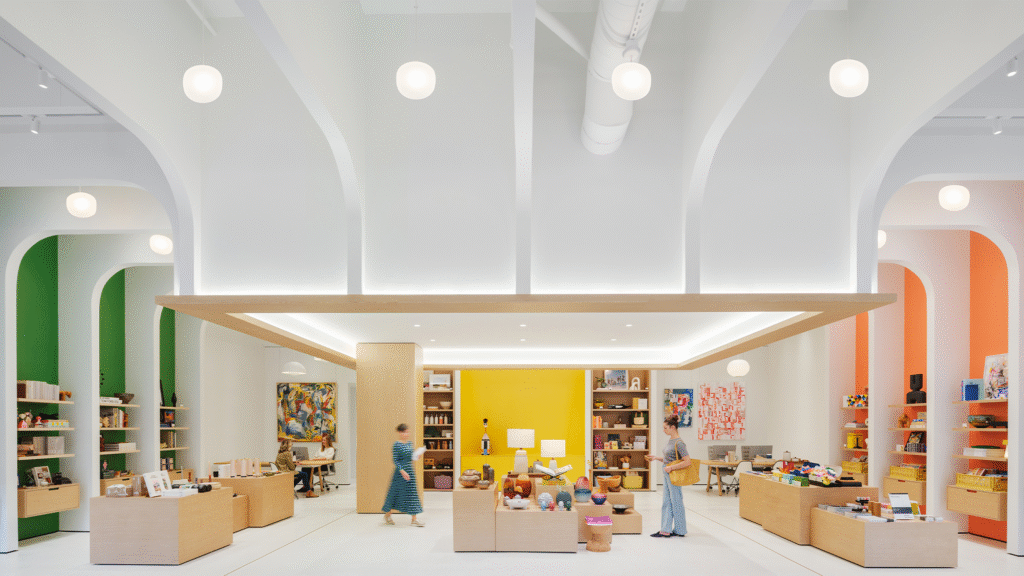
One of the most noticeable trends in showroom design is the move away from traditional merchandise stacking toward curated experiences.
In the past, retailers prioritized maximizing product density. Today, the focus is on allowing customers to interact with products in natural, real-life environments.
Furniture showrooms, for example, often resemble staged apartments. Automotive showrooms increasingly feature lounge areas and digital configurators rather than rows of vehicles.
This experiential layout supports several goals:
- Longer in-store dwell time
- Improved product understanding
- Higher purchase confidence
- Stronger brand perception
Retail real estate developers are responding by prioritizing open floor plans and adaptable interior spaces that can accommodate changing retail formats.
Technology-Integrated Showrooms
Digital technology is rapidly becoming a core design element in modern showrooms.
Retailers are integrating tools that allow customers to explore product options, customize configurations, and access additional product information without relying solely on sales staff.
Common technology integrations include:
- Interactive touchscreens
- Augmented reality product visualization
- QR-code product displays
- Smart mirrors
- Digital inventory kiosks
- Mobile checkout systems
For example, many furniture retailers now allow customers to visualize how a sofa will look in their living room using augmented reality applications.
Retail real estate spaces must therefore support robust connectivity, power access, and digital display infrastructure—requirements that older retail buildings often struggle to accommodate without renovation.
Flexible Modular Layouts
Retail cycles move quickly, and showroom design must adapt just as fast.
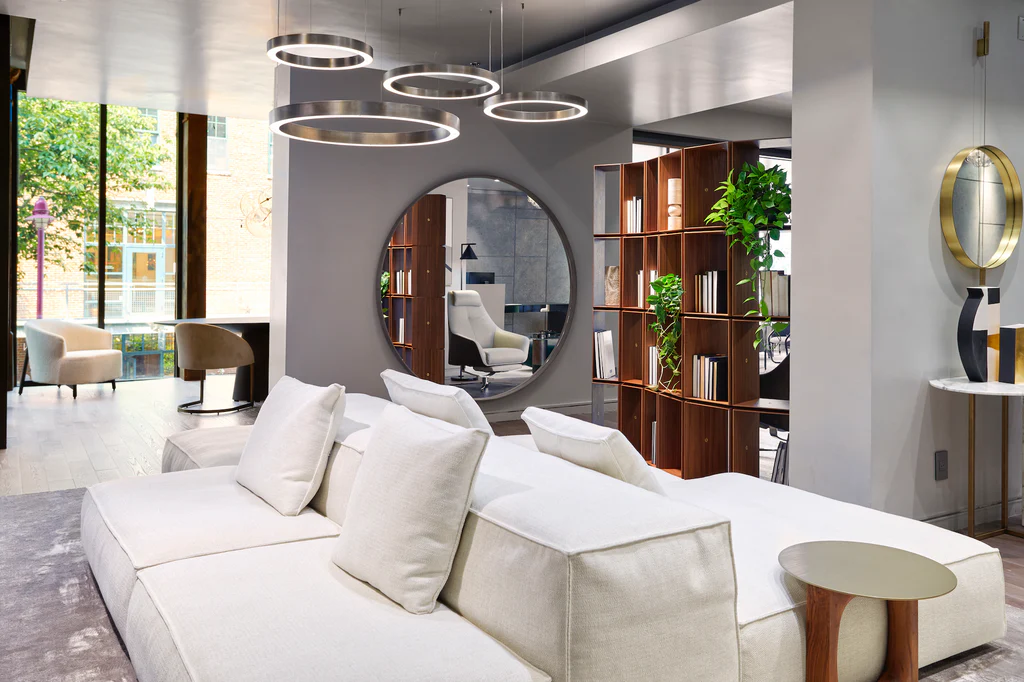
Modular design systems allow retailers to reconfigure displays, layouts, and customer pathways without expensive renovations.
Movable walls, modular display systems, and adjustable lighting tracks are becoming standard features in new showroom developments.
This flexibility provides several benefits:
- Seasonal product updates
- Rapid brand refreshes
- Pop-up collaborations
- Temporary exhibitions
- Event hosting
From a real estate perspective, flexible spaces are more attractive to tenants because they allow experimentation without long-term structural commitments.
Developers are increasingly designing retail units with fewer permanent interior walls and more adaptable utility infrastructure.
Smaller Footprints, Higher Impact
Another significant shift in showroom design is the move toward smaller but more impactful spaces.
Direct-to-consumer brands that previously operated entirely online are opening compact showrooms in urban neighborhoods rather than large suburban stores.
These showrooms often feature:
- Limited curated product selections
- High-quality display environments
- Digital ordering capabilities
- Brand storytelling installations
Because inventory storage is minimal, these spaces prioritize aesthetics and customer interaction.
For retail real estate investors, this trend supports higher tenant density in urban retail corridors, especially in mixed-use developments.
Sustainability and Eco-Conscious Design
Environmental considerations are now a major factor in showroom design.
Consumers increasingly expect brands to demonstrate responsible environmental practices, and retail spaces are reflecting that expectation.
Sustainable showroom design often incorporates:
- Reclaimed wood and recycled materials
- Energy-efficient LED lighting
- Natural daylight optimization
- Low-VOC paints and finishes
- Modular fixtures designed for reuse
According to the U.S. Green Building Council, green commercial buildings can reduce energy use by up to 25%, making sustainability not only a branding decision but also a cost-efficiency strategy.
Retail landlords are also pursuing LEED certifications to attract environmentally conscious tenants.
Showrooms as Community Spaces
Another growing trend is the transformation of showrooms into community hubs.
Rather than purely transactional environments, many showrooms now host events designed to build long-term customer relationships.
These events might include:
- Product workshops
- Designer meet-and-greets
- Educational demonstrations
- Local artist exhibitions
- Product launch events
These experiences increase foot traffic and create social media visibility, both of which are valuable for retail real estate locations.
Developers increasingly incorporate communal spaces, café partnerships, and flexible gathering areas within retail complexes to support this trend.
The Influence of Omnichannel Retail
Omnichannel retail strategies are heavily shaping showroom design decisions.
Customers expect a seamless transition between online and offline shopping experiences. Modern showrooms therefore integrate physical and digital retail systems.
Typical omnichannel showroom features include:
- Buy-online-pick-up-in-store (BOPIS) counters
- Self-service pickup lockers
- Mobile checkout
- Digital product catalogs
- Online order return stations
Retailers are designing spaces that support these logistics while still maintaining an attractive showroom environment.
For retail real estate developers, this trend requires allocating back-of-house areas for fulfillment and logistics—something older retail models rarely considered.
Lighting as a Strategic Design Tool
Lighting is one of the most powerful tools in showroom design.
Modern showrooms use layered lighting systems to guide customer attention and create emotional engagement with products.
Common lighting strategies include:
- Accent lighting for featured products
- Adjustable spotlights
- Natural skylight integration
- Warm ambient lighting for comfort
- Dynamic digital lighting displays
Good lighting improves product visibility and enhances photography opportunities for social media, which many retailers now consider part of the in-store experience.
Retail developers increasingly collaborate with lighting designers early in project planning.
Data-Driven Store Design
Retailers are increasingly using analytics to inform showroom design.
Data sources include:
- Heat-mapping sensors
- Foot-traffic tracking
- dwell-time analytics
- purchase behavior data
These insights help retailers determine which areas of the showroom attract attention and which layouts lead to conversions.
Design teams can then adjust traffic flow, product placement, and display layouts accordingly.
For landlords, data-driven design improves tenant performance and can influence leasing decisions and property upgrades.
Frequently Asked Questions
What is a retail showroom?
A retail showroom is a physical space where products are displayed for customers to experience before purchasing. Unlike traditional stores, showrooms often carry limited inventory and focus on product demonstrations, brand storytelling, and digital ordering.
Why are showrooms becoming popular again?
Showrooms are gaining popularity because consumers still value in-person product interaction. They help bridge the gap between online shopping convenience and physical product experience.
How are showrooms different from traditional retail stores?
Traditional stores prioritize inventory and immediate purchase. Showrooms focus on product exploration, demonstrations, and often rely on online ordering for fulfillment.
What industries use showrooms the most?
Industries commonly using showrooms include:
- Furniture
- Automotive
- Consumer electronics
- home appliances
- fashion brands
- direct-to-consumer startups
How do showrooms support omnichannel retail?
Showrooms integrate digital ordering, pickup services, and return stations, allowing customers to move easily between online and in-store shopping.
What role does technology play in modern showroom design?
Technology allows customers to customize products, access digital information, and visualize items in real-world settings through augmented reality and interactive displays.
Are showrooms smaller than traditional stores?
Yes. Many modern showrooms are smaller because they display curated selections rather than large inventories.
How does showroom design affect retail real estate?
Retail spaces designed for experiential retail attract stronger tenants and can command higher lease rates.
What makes a successful showroom layout?
Successful showrooms prioritize open layouts, interactive displays, clear customer pathways, comfortable lighting, and flexible design elements.
Will showrooms replace traditional retail stores?
Not entirely. Instead, many retailers are adopting hybrid models that combine showroom experiences with traditional retail operations.
Designing Retail Spaces for the Experience Economy
Showroom design is no longer just about displaying products. It is about creating environments where customers can learn, interact, and build emotional connections with brands.
Retail real estate that supports flexibility, technology integration, and experiential design is becoming increasingly valuable. As consumer expectations continue evolving, the physical showroom will remain a critical touchpoint between digital retail and real-world brand engagement.
Developers, architects, and retailers who understand these design trends will be better positioned to build retail spaces that attract tenants, engage customers, and remain relevant in an increasingly digital marketplace.
Key Insights for Retail Developers and Brand Teams
- Showrooms are evolving into experiential brand environments.
- Smaller footprints with curated displays are becoming common.
- Technology integration is essential for modern retail spaces.
- Flexible modular design allows quick layout adjustments.
- Sustainability is becoming a major showroom design priority.
- Omnichannel features are shaping space planning.
- Lighting and atmosphere significantly impact customer engagement.
- Data analytics increasingly guide store layout decision
 Robert Weber