

Summary
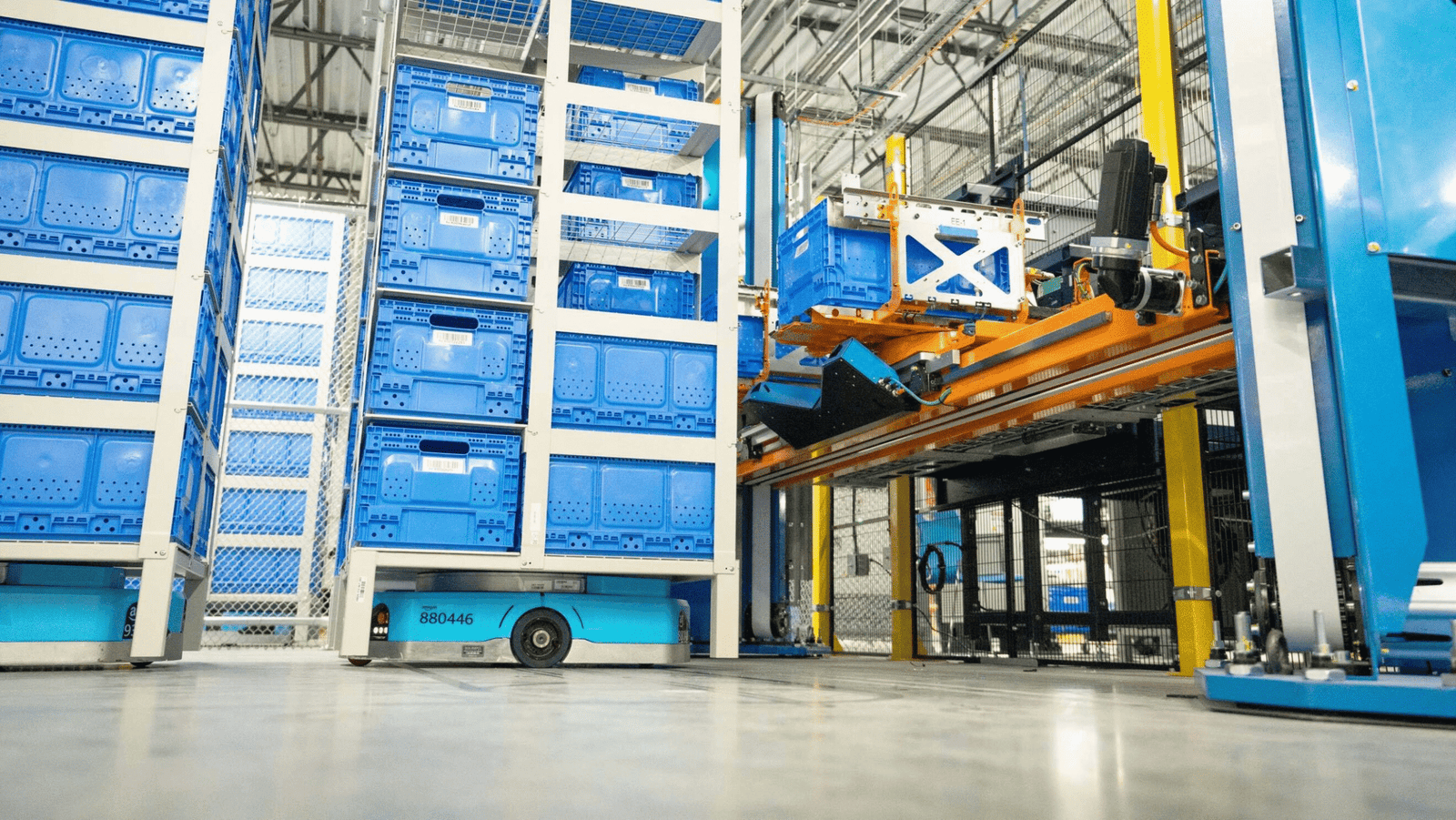
Smart warehouses are reshaping industrial real estate by integrating automation, data systems, and intelligent building design. Technologies such as robotics, IoT sensors, AI-driven logistics, and advanced inventory systems are influencing how warehouses are built, operated, and leased. Developers, logistics companies, and investors are increasingly prioritizing tech-ready facilities that improve efficiency, reduce costs, and support the rapid growth of e-commerce and modern supply chains.
Introduction: The Industrial Real Estate Transformation
Industrial real estate in the United States has undergone a major transformation over the past decade. The growth of e-commerce, supply chain modernization, and rapid advances in logistics technology have created new expectations for warehouse facilities. Traditional storage buildings designed primarily for bulk storage are increasingly being replaced—or retrofitted—with smart warehouses, facilities engineered to support advanced automation, data-driven operations, and high-speed distribution.
According to the U.S. Census Bureau, e-commerce sales in the United States exceeded $1.1 trillion in 2023, placing enormous pressure on logistics infrastructure. Retailers, manufacturers, and third-party logistics companies now depend on warehouse systems capable of handling faster order fulfillment, real-time inventory visibility, and scalable operations.
This shift is influencing not only warehouse operations but also industrial property design itself. Developers and investors are building facilities that integrate robotics, sensor networks, digital infrastructure, and flexible layouts that support future technologies.
Understanding how these technological shifts affect industrial property design is increasingly important for developers, investors, logistics companies, and policymakers.
What Is a Smart Warehouse?
A smart warehouse is a facility that uses automation, sensors, artificial intelligence, and data analytics to improve how goods are stored, managed, and distributed. Unlike traditional warehouses that rely heavily on manual labor and static storage layouts, smart warehouses use digital systems to coordinate inventory movement, optimize space, and accelerate order fulfillment.
Modern smart warehouses combine building design with operational technology. The physical structure itself often accommodates robotic systems, automated conveyors, and integrated data networks.
Key technologies commonly found in smart warehouses include:
- Automated storage and retrieval systems (AS/RS)
- Autonomous mobile robots (AMRs)
- Internet of Things (IoT) sensors
- AI-driven inventory management software
- Robotics-assisted picking systems
- Warehouse management systems (WMS)
- Advanced conveyor and sorting technologies
These tools work together to create an environment where goods move efficiently from inbound delivery to outbound shipping with minimal delays.
Why Smart Warehouses Are Expanding in the United States
Several economic and operational trends are driving the expansion of smart warehouse facilities.
First, e-commerce fulfillment expectations have fundamentally changed logistics requirements. Customers now expect rapid shipping, often within one or two days, and sometimes within hours in major metropolitan areas.
Second, labor shortages in logistics and warehousing have encouraged companies to adopt automation technologies that can reduce reliance on manual tasks.
Third, the growing complexity of supply chains requires real-time inventory visibility and faster coordination between suppliers, warehouses, and retailers.
According to a report from McKinsey & Company, warehouse automation adoption in North America has accelerated significantly since 2020, with companies increasingly investing in robotics and digital infrastructure to improve efficiency.
As a result, developers and investors are increasingly designing warehouses specifically to support these systems rather than retrofitting older facilities.
How Technology Is Shaping Warehouse Building Design
The shift toward smart warehouses has changed the way industrial properties are designed, built, and evaluated by investors.
Traditional warehouse design focused primarily on square footage and storage capacity. Today, technology integration influences everything from ceiling height to power capacity.
Higher Ceilings and Vertical Storage
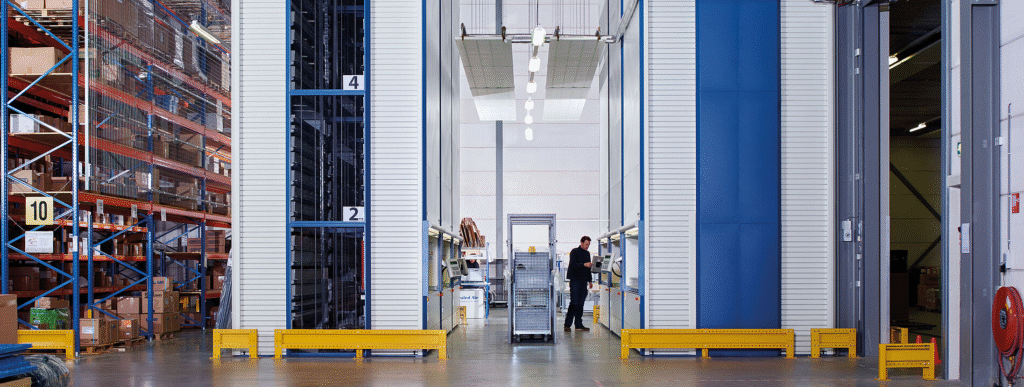
Modern automated storage systems rely heavily on vertical space. Many new warehouses now feature clear heights of 36 to 45 feet, allowing robotic storage systems to maximize vertical capacity.
This design improves inventory density while reducing the land footprint required for large distribution operations.
Reinforced Floors for Robotics and Automation
Automated systems such as robotic pickers and conveyor equipment place different stress loads on warehouse floors than traditional pallet storage. Developers increasingly build floors with higher load tolerances and smoother surfaces to support robotic movement and automated guided vehicles.
Expanded Power Infrastructure
Automation, robotics, and data centers require significantly more electrical capacity than traditional warehouse operations. As a result, developers are installing:
- Higher electrical service capacity
- Backup power systems
- Dedicated charging stations for robots and electric forklifts
- Enhanced cooling and ventilation systems
Facilities built with flexible power infrastructure are often more attractive to large logistics tenants.
Advanced Data Connectivity
Smart warehouses depend heavily on digital connectivity. Buildings now include extensive data infrastructure such as fiber networks, wireless coverage, and server-ready spaces.
Reliable connectivity allows warehouse management systems to track inventory, coordinate robotics, and provide real-time operational data across supply chains.
Robotics and Automation in Modern Warehouses
One of the most visible changes in smart warehouses is the growing use of robotics.
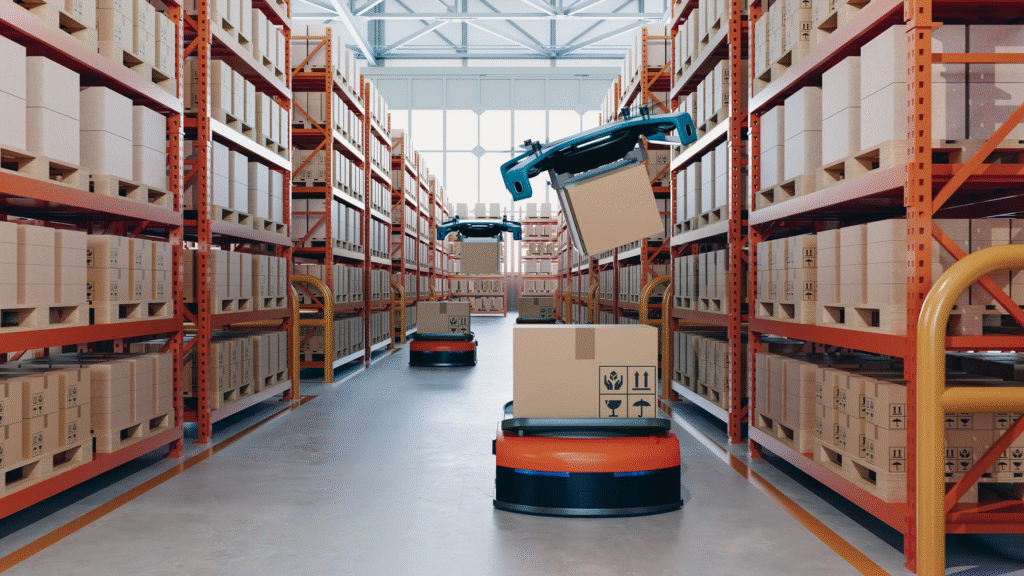
Autonomous robots are now used for tasks such as moving shelves, transporting goods, and assisting workers during order picking. These systems reduce travel time inside warehouses and increase productivity.
For example, companies such as Amazon have deployed thousands of warehouse robots that transport inventory shelves to human workers, dramatically reducing the time required to locate items.
Automation also includes high-speed sorting systems that process thousands of packages per hour. These technologies are particularly important for large e-commerce fulfillment centers.
While automation does not eliminate human labor entirely, it changes the role of workers by focusing their efforts on quality control, system monitoring, and complex tasks.
The Role of IoT Sensors and Data Analytics
Smart warehouses generate large volumes of operational data. IoT sensors placed throughout the facility track inventory movement, environmental conditions, and equipment performance.
These sensors provide real-time insights that help operators improve efficiency and prevent disruptions.
Common sensor applications include:
- Monitoring temperature in cold storage facilities
- Tracking pallet movement and location
- Measuring equipment performance and maintenance needs
- Monitoring energy usage throughout the facility
- Detecting safety risks in operational zones
By analyzing this data, warehouse operators can identify bottlenecks, predict equipment maintenance needs, and improve operational planning.
Smart Warehouses and Cold Storage Innovation
Technology is also transforming cold storage warehouses, which are essential for food distribution, pharmaceuticals, and grocery logistics.
Cold storage facilities are particularly complex because they must maintain strict temperature controls while managing large volumes of inventory.
Automation helps reduce the amount of time workers spend in cold environments while improving inventory management.
Design features often include:
- Automated pallet storage systems
- Temperature monitoring sensors
- Energy-efficient refrigeration systems
- High-speed insulated doors
- Robotics designed for cold environments
These innovations are helping cold storage operators improve efficiency while reducing energy consumption.
Why Industrial Developers Are Building Tech-Ready Facilities
Developers of industrial real estate are increasingly designing warehouses that anticipate future technology upgrades.
Rather than building facilities for a single tenant’s current needs, developers are creating flexible infrastructure that can support multiple operational models.
Important design considerations include:
- Flexible floor layouts
- Expandable power systems
- Scalable internet connectivity
- Robotics-ready floor surfaces
- Modular office and operational spaces
These features allow properties to remain competitive as logistics technology continues to evolve.
In high-demand logistics markets such as California’s Inland Empire, Dallas–Fort Worth, and Chicago, tech-ready warehouses often command higher lease rates and lower vacancy levels compared to older facilities.
How Smart Warehouses Influence Industrial Property Investment
The rise of smart warehouses has also influenced how investors evaluate industrial real estate.
Investors increasingly consider a property’s technology readiness when assessing long-term value. Facilities designed for automation and digital logistics systems are often seen as more resilient to market changes.
Key factors investors often evaluate include:
- Ceiling height and vertical storage potential
- Power capacity and infrastructure
- Access to transportation networks
- Technology integration capability
- Proximity to major population centers
Industrial properties located near large urban markets often benefit from the growing demand for rapid delivery logistics.
Challenges in Smart Warehouse Development
Despite the advantages of smart warehouses, implementing advanced technology within industrial properties also presents challenges.
High upfront costs can be a barrier for smaller logistics companies. Automated systems and robotics require significant capital investment, as well as technical expertise to maintain.
Older warehouse buildings may also require substantial retrofitting to support modern automation systems. In some cases, it is more cost-effective to build new facilities rather than upgrade older ones.
Additionally, workforce training is an ongoing challenge. Employees must learn to operate and maintain complex systems that integrate robotics, software platforms, and data analytics.
Despite these challenges, the long-term efficiency gains often justify the investment.
The Future of Industrial Warehouse Design
Looking ahead, smart warehouse technology is expected to continue evolving as artificial intelligence, robotics, and data analytics improve.
Developers are already exploring warehouse concepts that incorporate advanced robotics coordination, autonomous trucking systems, and fully digital inventory management platforms.
Emerging innovations include:
- AI-driven warehouse layout optimization
- Autonomous delivery vehicle integration
- Advanced robotics capable of complex picking tasks
- Real-time supply chain synchronization across multiple facilities
As supply chains become increasingly digital and global, industrial property design will likely continue adapting to support these technologies.
For developers, investors, and logistics companies, understanding how technology shapes warehouse design will remain essential for staying competitive in the industrial real estate market.
Frequently Asked Questions
What is a smart warehouse?
A smart warehouse is a logistics facility that uses automation, robotics, IoT sensors, and data analytics to manage inventory and operations more efficiently.
Why are smart warehouses becoming more common in the U.S.?
The growth of e-commerce, supply chain complexity, and labor shortages have encouraged companies to adopt automation and digital logistics systems.
How do robots improve warehouse operations?
Robots can transport goods, assist with picking orders, and move inventory quickly, reducing travel time and improving productivity.
Are smart warehouses more expensive to build?
Yes, smart warehouses often require higher upfront investment due to automation systems, electrical infrastructure, and data connectivity.
What industries benefit most from smart warehouses?
E-commerce retailers, third-party logistics providers, grocery distributors, pharmaceutical companies, and manufacturing firms frequently use smart warehouses.
Do smart warehouses reduce jobs?
Automation changes job roles rather than eliminating them entirely. Workers often shift toward technology management, quality control, and system monitoring.
What building features support warehouse automation?
High ceilings, reinforced floors, expanded electrical systems, and reliable data connectivity are key features for automation-ready warehouses.
Are older warehouses suitable for smart technology upgrades?
Some older facilities can be upgraded, but significant structural changes may be required to support robotics and automation systems.
Why do investors favor technology-ready warehouses?
Tech-ready facilities are more adaptable, attractive to major logistics tenants, and often maintain higher long-term occupancy rates.
What role does data play in smart warehouse operations?
Data from sensors and management systems helps optimize inventory flow, predict maintenance needs, and improve supply chain coordination.
The Strategic Shift Toward Intelligent Logistics Facilities
Industrial real estate is evolving alongside the technologies that power modern supply chains. Smart warehouses demonstrate how building design and digital systems are becoming closely interconnected.
For developers, this means designing facilities that anticipate automation and data integration. For investors, it requires evaluating properties based on their technological flexibility. And for logistics operators, it means leveraging intelligent systems to move goods faster and more efficiently.
As supply chains become increasingly digital and customer expectations for rapid delivery continue to rise, the integration of technology within industrial property design will likely remain a defining trend across the U.S. logistics landscape.
Key Insights at a Glance
- Smart warehouses integrate automation, robotics, and data systems.
- E-commerce growth is accelerating demand for advanced logistics facilities.
- Warehouse design now prioritizes vertical storage and high ceilings.
- Robotics and automation improve productivity and order fulfillment speed.
- IoT sensors provide real-time operational insights.
- Developers are building flexible, technology-ready facilities.
- Investors increasingly evaluate industrial properties based on tech readiness.
 Robert Weber