

Summary
The financial success of a dairy farm depends heavily on land values, facility design, and capital efficiency. Understanding how land costs, barn infrastructure, milking systems, and feed storage interact with milk revenue is critical for long-term profitability. This guide explains the real economics behind dairy farm land and facilities in the United States, including investment ranges, cost drivers, and strategic planning considerations.
Why Land and Facilities Define Dairy Farm Economics
Dairy farming is one of the most capital-intensive sectors in agriculture. Unlike many other livestock operations, dairy farms require continuous infrastructure: milking systems, barns, feed storage, manure management, and specialized land use.
For many American producers, the biggest financial decisions are not about cows but about land acquisition and facility construction.
According to data from the USDA Economic Research Service, real estate assets—including land and buildings—typically represent over 80% of total farm assets in U.S. agriculture. Dairy farms are often even more land- and infrastructure-heavy because they combine livestock housing with crop production for feed.
A successful dairy operation therefore depends on balancing three major economic variables:
- Land acquisition and long-term appreciation
- Capital costs for barns and milking systems
- Operational efficiency from facility design
Farmers who underestimate these costs often struggle with debt service even when milk prices are favorable.
Understanding Dairy Farm Land Requirements
Land plays multiple roles in dairy farming: forage production, manure management, and sometimes grazing. The amount required depends heavily on herd size, feeding strategy, and local regulations.
A typical rule used by agricultural planners in the United States is 1.5–2.5 acres per dairy cow when the farm produces most of its own feed. This includes corn silage, alfalfa, and pasture.
However, this ratio varies significantly.
For example:
- A Midwestern dairy producing its own silage and hay may require 2 acres per cow.
- A large Western dairy purchasing most feed may operate with far less land.
- A pasture-based dairy may need more acreage for rotational grazing.
Land prices vary dramatically across regions.
Recent USDA estimates show approximate averages:
- Midwest cropland: $6,000–$10,000 per acre
- Northeast dairy regions: $7,000–$14,000 per acre
- California Central Valley: $12,000–$25,000 per acre
These differences alone can dramatically change the economics of starting or expanding a dairy.
Example: Land Cost Comparison
A 500-cow dairy producing most of its feed might require around 1,000 acres.
If located in:
- Wisconsin at $8,000 per acre → $8 million land investment
- California at $18,000 per acre → $18 million land investment
The land price difference alone can double capital requirements before building a single barn.
Key Facility Investments in Modern Dairy Operations
Facilities are the second major capital driver after land. Dairy infrastructure must support daily milking, feed delivery, animal health, and manure management.
Unlike crop farming equipment, dairy facilities operate 365 days a year, making design efficiency critical.
Major facility categories include:
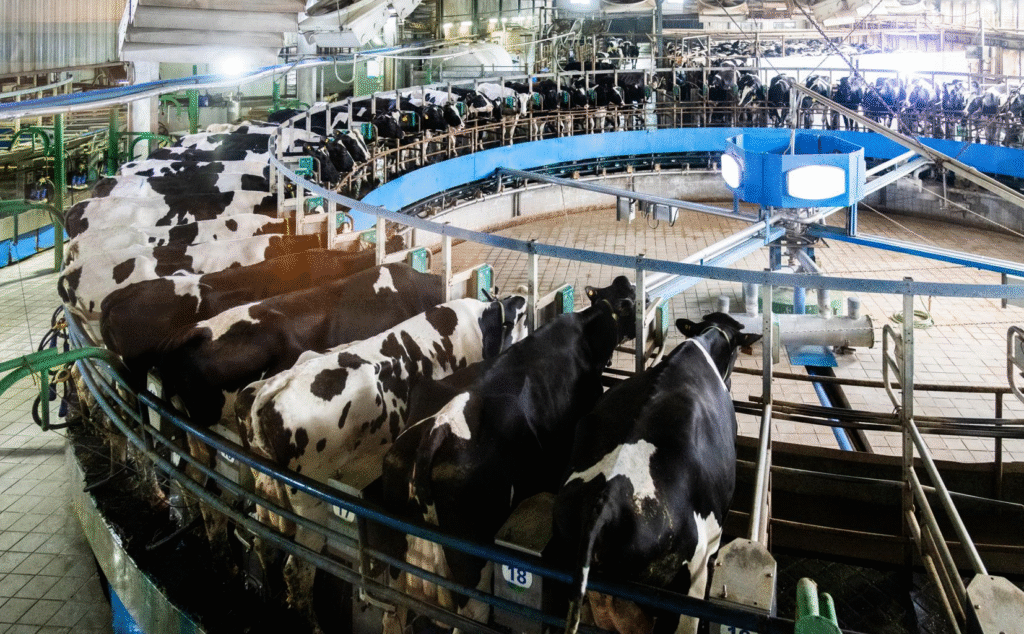
- Milking parlors or robotic milking systems
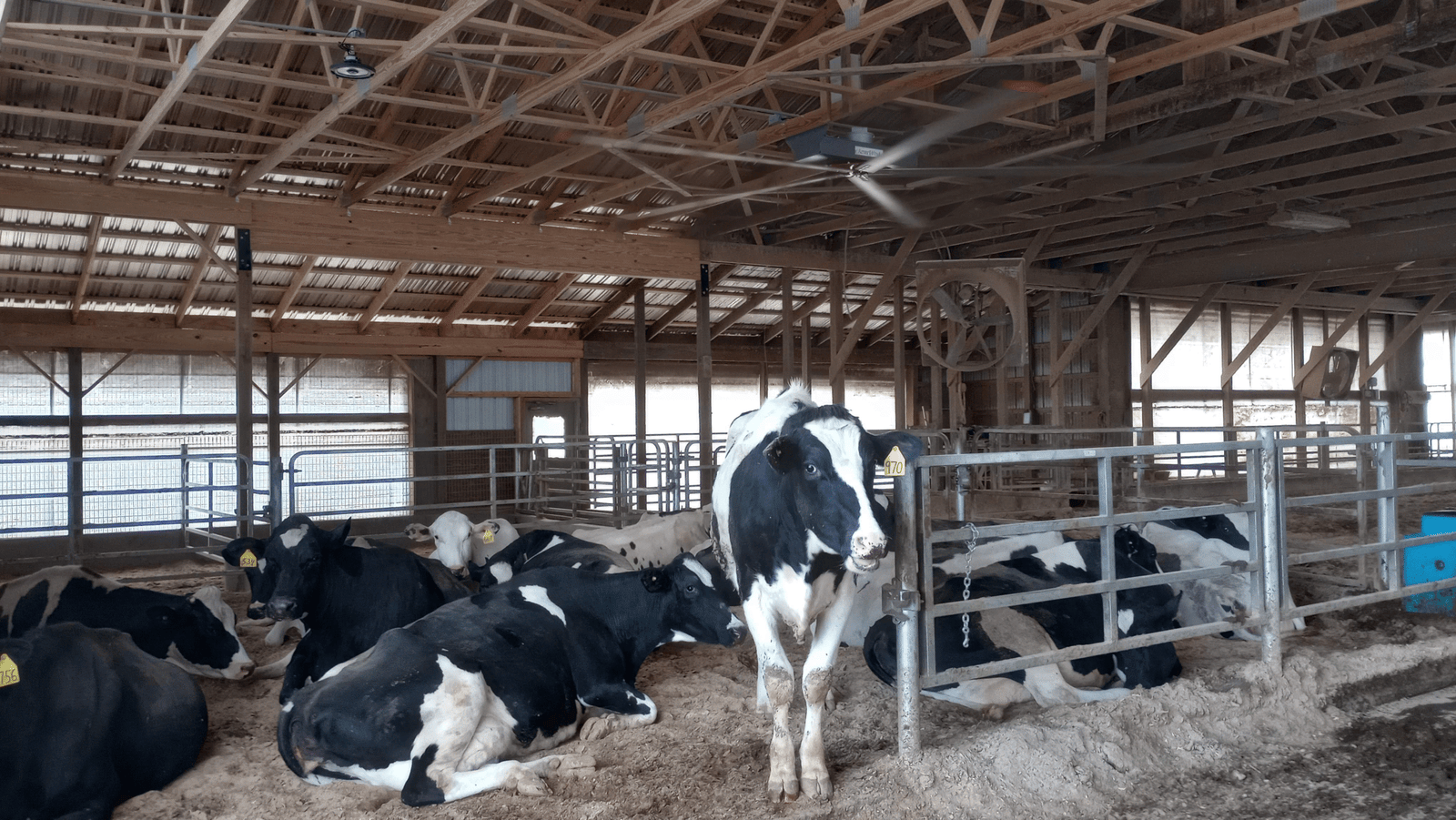
- Free-stall or bedded-pack barns
- Feed storage and silage bunkers
- Manure handling and lagoons
- Calf housing
- Milk cooling and storage facilities
Each of these systems has different cost ranges depending on technology level.
Typical Construction Cost Ranges
Approximate costs for new U.S. dairy construction:
- Free-stall barn: $2,000–$3,500 per cow space
- Milking parlor (double-20): $700,000–$1.5 million
- Robotic milking unit: $200,000–$250,000 per robot
- Manure lagoon system: $200,000–$800,000
- Feed storage infrastructure: $100,000–$500,000
For a 500-cow dairy, facility construction alone can easily exceed $4–7 million depending on technology and location.
Facility Design and Its Impact on Profitability
Efficient design can significantly improve labor productivity and cow health—two factors that directly influence farm economics.
Poor facility layouts often increase labor costs because workers must move animals inefficiently or spend more time handling feed and manure.
Modern dairy facilities typically focus on:
- Smooth cow flow to milking areas
- Efficient feed delivery systems
- Adequate ventilation and cooling
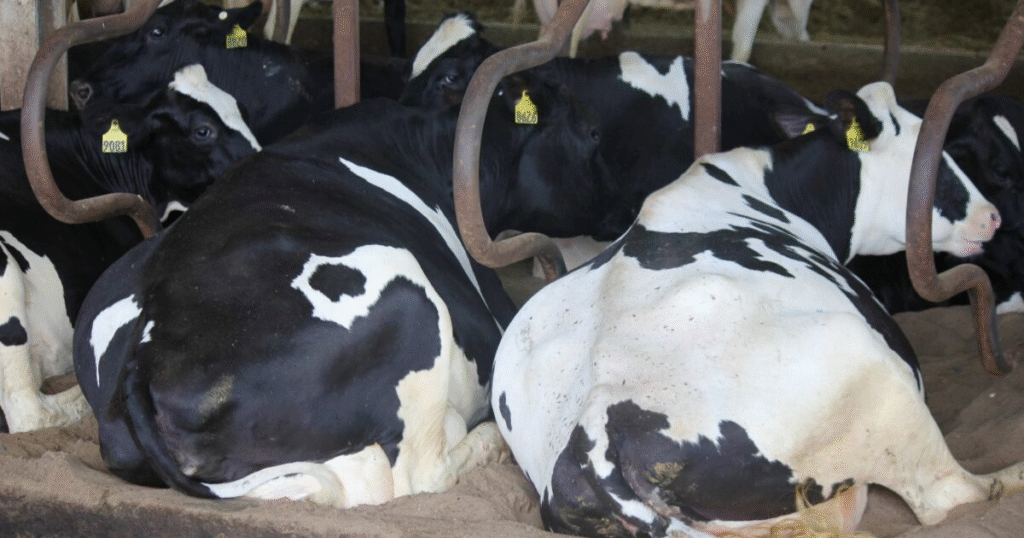
- Comfortable resting areas for cows
Research from several U.S. land-grant universities shows that cow comfort directly influences milk production. Even small improvements in stall design or ventilation can increase milk yield per cow.
For example:
A dairy improving cow comfort may increase production by 3–5 pounds of milk per cow per day.
On a 500-cow farm, that could mean 1,500–2,500 extra pounds daily, which significantly affects revenue.
Robotic Milking vs Traditional Parlors
One of the biggest infrastructure decisions in modern dairy economics is whether to adopt robotic milking.
Traditional parlors remain the most common system in the U.S., but robotic milking is growing rapidly.
Traditional Milking Parlor
Advantages:
- Lower upfront cost per cow
- Efficient for large herds
- Proven reliability
Challenges:
- Higher labor dependency
- Fixed milking schedules
- Cow movement logistics
Robotic Milking Systems
Advantages:
- Reduced labor needs
- Flexible milking frequency
- Detailed data on cow health
Challenges:
- Higher capital cost
- Maintenance complexity
- Learning curve for herd management
A typical robotic system handles 60–70 cows per unit.
For a 500-cow herd, this could require 7–8 robots, costing roughly $1.6–$2 million in equipment alone.
While the upfront investment is significant, many farms adopt robotics to address rural labor shortages, which have become a major issue in U.S. dairy regions.
Feed Infrastructure and Storage Economics
Feed accounts for the largest operating cost in dairy farming. Because of this, feed storage infrastructure plays a surprisingly large economic role.
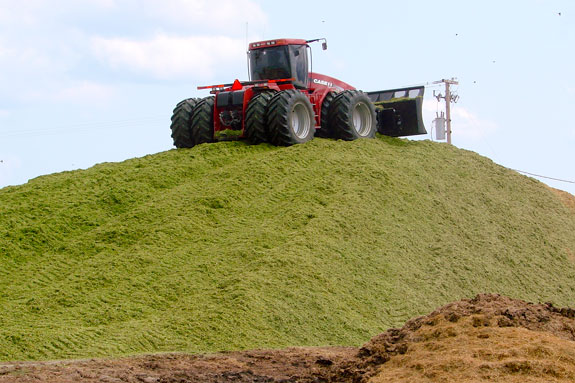
Most U.S. dairy farms rely heavily on corn silage and haylage, which must be stored efficiently to prevent spoilage.
Common storage systems include:
- Concrete bunker silos
- Silage bags
- Tower silos
- Commodity sheds for grain
Poor storage can lead to 10–20% feed loss, which dramatically increases feed costs per cow.
For example:
If a farm spends $1.5 million annually on feed, even a 10% loss equals $150,000 in wasted value.
This is why many farms invest heavily in well-designed bunker silos and packing equipment.
Manure Management Infrastructure
Environmental regulations make manure management a critical facility investment.
Most dairy farms must operate under nutrient management plans that regulate how manure is stored and applied to land.
Manure systems typically include:
- Concrete collection pits
- Lagoons or storage tanks
- Pumps and agitation equipment
- Land application equipment
These systems are expensive but necessary to avoid regulatory penalties and protect water quality.
Some farms are also turning manure into an energy source through anaerobic digesters, which produce renewable natural gas.
Digesters can cost $3–10 million, but government incentives and energy contracts can make them economically viable for large dairies.
Financing Dairy Land and Facilities
Because of the high capital requirements, most dairy farms rely heavily on long-term financing.
Common financing sources include:
- Farm Credit System lenders
- Agricultural banks
- USDA loan programs
- Private investors or partnerships
Loan structures often include:
- 20–30 year mortgages on land
- 10–20 year loans for facilities
- Shorter equipment loans
A healthy dairy operation typically tries to keep its debt-to-asset ratio below 40% to remain financially resilient during milk price fluctuations.
Milk prices can vary dramatically year to year, so farms with excessive facility debt may struggle during downturns.
Economic Tradeoffs: Expansion vs Efficiency
One of the most debated questions in dairy economics is whether farms should expand herd size or focus on efficiency.
Expansion spreads fixed costs across more cows, improving cost per unit of milk. However, it also requires major investments in land and facilities.
Efficiency strategies instead focus on:
- Improving milk yield per cow
- Reducing feed waste
- Enhancing labor productivity
- Improving cow health
Many successful dairies pursue a balanced strategy: moderate expansion combined with incremental facility upgrades.
Long-Term Asset Value of Dairy Land
Unlike many agricultural investments, land often appreciates over time.
This creates a unique financial dynamic: even if farm income fluctuates, land value may increase.
Historically, U.S. farmland has shown steady long-term appreciation, though short-term cycles occur.
For dairy farmers, land serves three economic roles:
- Production resource
- Environmental compliance asset (manure spreading)
- Long-term wealth storage
Because of this, many dairy producers prioritize land acquisition whenever financially possible.
FAQ: Dairy Farm Land and Facilities
How much land does a dairy farm need per cow?
Most U.S. dairy farms require 1.5–2.5 acres per cow if they grow their own feed. Farms purchasing feed may require less land.
What is the average cost to build a dairy farm?
A new dairy facility for 500 cows can cost $4–10 million, depending on technology, location, and construction choices.
Are robotic milking systems profitable?
They can be profitable for farms facing labor shortages, but they require higher upfront investment and careful herd management.
What is the most expensive part of starting a dairy farm?
Land is typically the largest cost, often representing the majority of farm asset value.
How long do dairy barns last?
Well-built barns can last 30–50 years with proper maintenance and periodic upgrades.
What size dairy farm is most profitable?
Profitability depends more on efficiency than herd size, though larger farms often benefit from economies of scale.
Do dairy farms grow their own feed?
Many U.S. dairies grow corn silage and hay, but some large operations purchase feed from nearby crop farms.
How do dairy farms finance construction?
Most rely on agricultural lenders, especially the Farm Credit System, with long-term loans secured by land and facilities.
Are manure digesters profitable?
They can be profitable when combined with energy contracts, carbon credits, or government incentives.
Is dairy farming still economically viable?
Yes, but success depends heavily on cost control, efficient facilities, and strong financial management.
Building Financial Resilience in Dairy Infrastructure
Land and facility investments shape the long-term financial structure of every dairy operation. While cows produce the milk, it is the efficiency of barns, feed systems, and land management that determines whether a farm thrives or struggles financially.
Farmers who carefully plan infrastructure, manage debt levels, and prioritize operational efficiency are far more likely to succeed across the volatile cycles of the dairy industry.
Key Insights for Dairy Farm Investment Planning
Balanced expansion strategies help manage financial risk
Land often represents the largest share of total farm assets
Facility design directly affects labor efficiency and milk production
Robotic milking can solve labor challenges but requires high capital investment
Feed storage infrastructure significantly impacts operating costs
Environmental regulations make manure systems a major infrastructure expense
Efficient facilities improve cow health and long-term productivity
 Robert Weber