

Summary
Township developers are reshaping American housing by building large-scale master-planned communities that combine housing, schools, retail, and recreation in a single integrated environment. These developments promise convenience, stronger property values, and community design. This article explains how township developers work, why master-planned communities are growing across the U.S., and what buyers should realistically expect.
Understanding the Township Developer Model
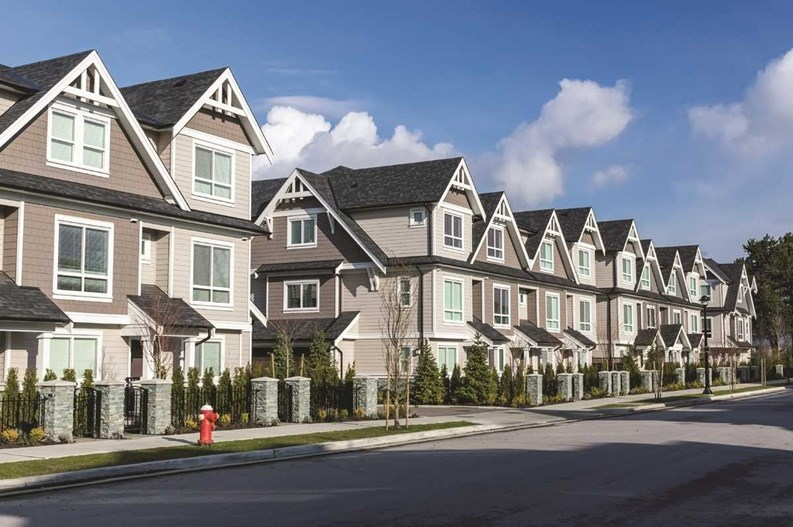
Township developers specialize in creating large, integrated residential communities, often built on hundreds or even thousands of acres. Unlike traditional subdivisions, these projects are designed as self-contained ecosystems where residents can live, work, shop, and socialize within the same development.
The concept is commonly referred to as a master-planned community (MPC). These developments include coordinated infrastructure, community amenities, and long-term planning that unfolds in phases over many years.
Instead of selling individual lots to independent builders with little coordination, township developers typically control the entire planning process, including:
- Land acquisition and zoning approvals
- Infrastructure such as roads, utilities, and drainage
- Community layout and neighborhood design
- Parks, trails, and recreational facilities
- Retail centers and commercial districts
- Partnerships with homebuilders and sometimes schools or healthcare providers
The result is a highly organized living environment where every component—from street patterns to green space—is intentionally designed.
In many ways, township developers function more like urban planners than traditional real estate developers.
Why Master-Planned Communities Are Growing Across the United States
Demand for master-planned communities has increased steadily over the last two decades. According to the National Association of Home Builders, large master-planned developments consistently rank among the top-selling residential communities in the country, particularly in states such as Texas, Arizona, Florida, and California.
Several forces are driving this trend.
First, many Americans want predictable neighborhood quality. Master-planned communities typically maintain design guidelines, landscaping standards, and architectural controls that help protect property values.
Second, buyers increasingly prioritize lifestyle amenities. Modern developments often include:
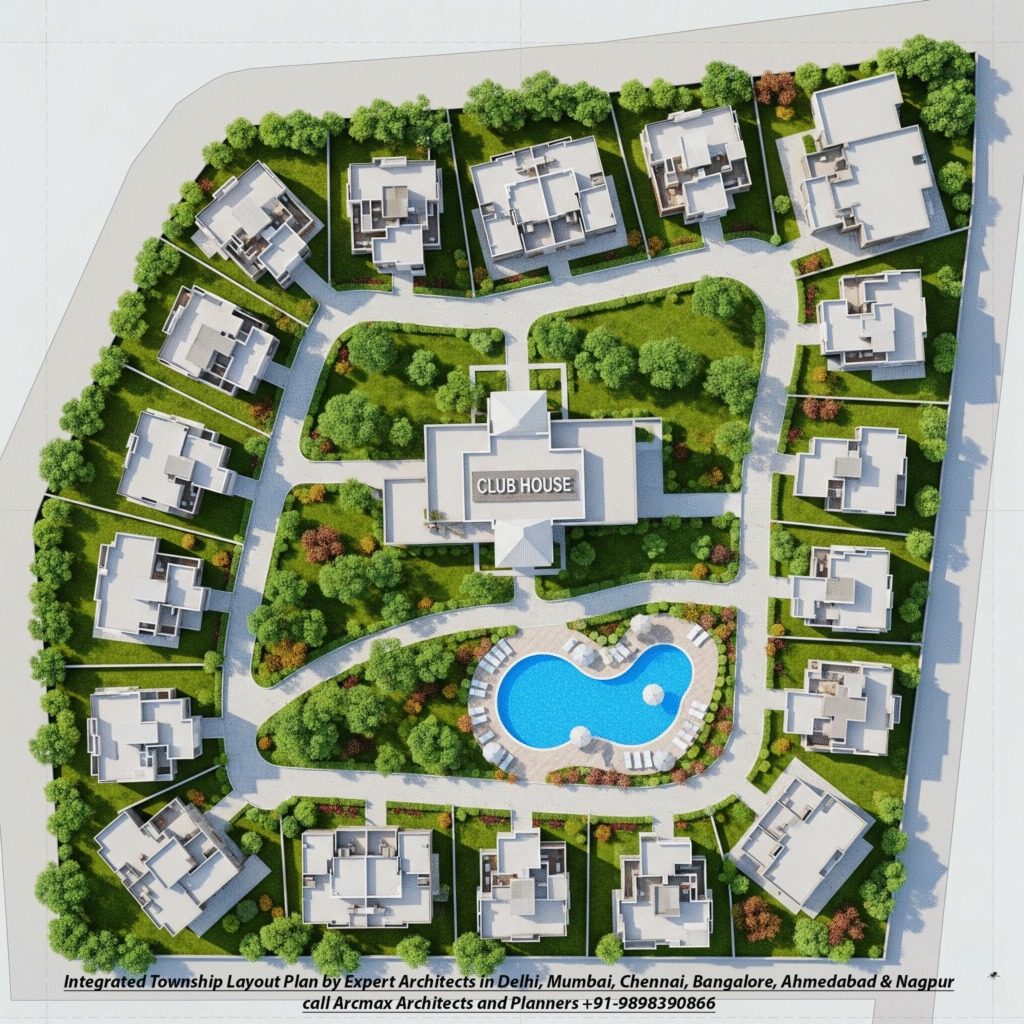
- Resort-style pools
- Walking and biking trails
- Clubhouses and fitness centers
- Community parks and sports fields
- Town centers with restaurants and retail
These features create the feeling of a complete neighborhood rather than a housing tract.
Third, master-planned communities help address suburban population growth. As metro areas expand, township developers can transform large parcels of undeveloped land into organized communities instead of scattered subdivisions.
Finally, remote work has made location flexibility easier. Many households now prefer well-designed suburban communities that offer space, amenities, and connectivity.
How Township Developers Design Entire Communities
Building a township-scale development is a complex process that can take 10 to 30 years from concept to completion.
The process usually begins with large land purchases on the edge of metropolitan areas. Developers then work with planners, architects, and local governments to create a comprehensive master plan.
The master plan defines:
- Residential density and housing types
- Road networks and traffic flow
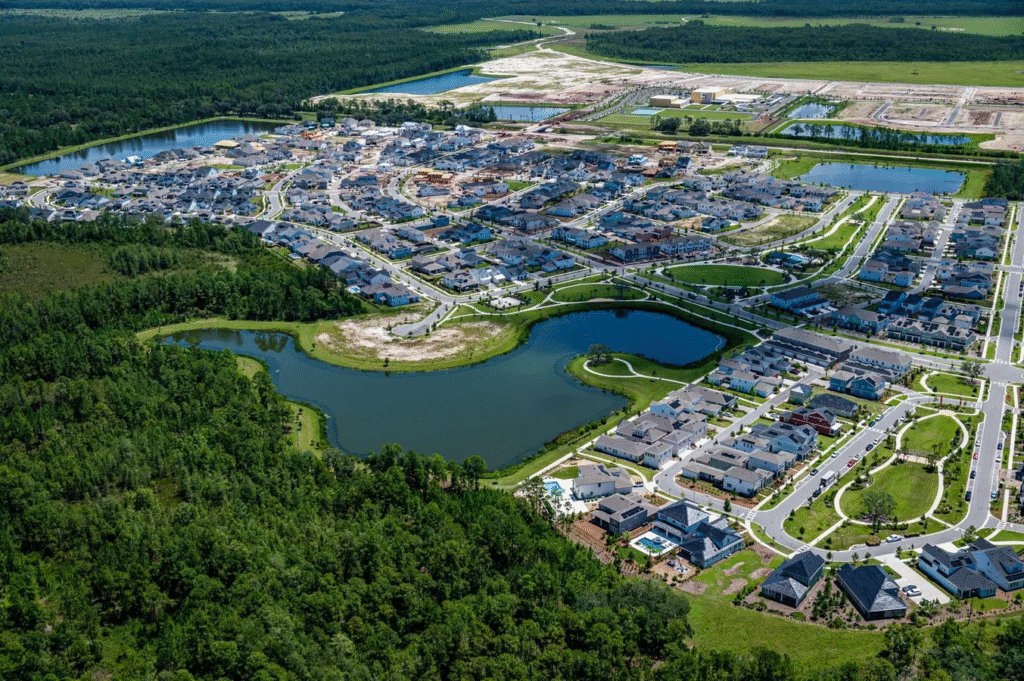
- Parks, open space, and environmental preservation
- School sites and civic facilities
- Commercial zones and employment areas
Infrastructure is typically built before homes are sold, which ensures that roads, utilities, and drainage systems are properly integrated.
Large township developers also rely on phased development strategies. Instead of building everything at once, the community evolves through multiple construction phases.
A typical progression might look like this:
- Core infrastructure and entry neighborhoods
- Parks and recreation amenities
- Additional housing districts
- Retail centers and commercial space
- Schools, offices, and civic facilities
This phased approach allows the development to grow organically while maintaining design consistency.
The Role of Builders Within Master-Planned Communities
Township developers rarely construct every home themselves. Instead, they typically partner with multiple homebuilders.
This approach benefits buyers because it introduces variety in architecture, pricing, and home sizes while still maintaining community standards.
For example, a single master-planned development might include:
- Entry-level homes priced around $350,000
- Move-up homes in the $500,000–$700,000 range
- Luxury homes exceeding $1 million
Builders must follow design guidelines set by the developer, which helps maintain visual cohesion and property value stability.
In many communities, builders compete for buyers while still collaborating within the larger development framework.
Notable Examples of U.S. Master-Planned Communities
Across the United States, several township-scale developments demonstrate how this model can shape entire regions.
One of the most widely cited examples is The Woodlands in Texas, developed north of Houston. Spanning over 28,000 acres, it includes residential neighborhoods, corporate campuses, hospitals, schools, and retail centers.
Another example is Daybreak in Utah, a sustainability-focused community near Salt Lake City featuring walkable neighborhoods, parks, and transit connections.
In Florida, Lakewood Ranch has become one of the fastest-growing master-planned communities in the country, combining residential areas with medical facilities, business districts, and recreational amenities.
These communities illustrate how township developers can create long-term urban frameworks rather than isolated housing developments.
Benefits for Homebuyers
For many families, master-planned communities offer a set of advantages that traditional neighborhoods may not provide.
Lifestyle Convenience
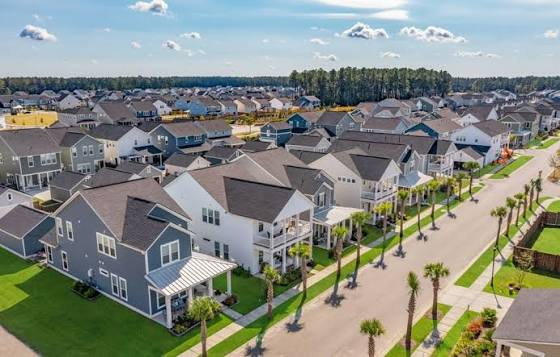
Residents often have parks, schools, and retail within walking or short driving distance, reducing the need for long commutes for daily needs.
Community Design
Planned streets, sidewalks, and green spaces encourage outdoor activity and social interaction.
Stable Property Values
Because design standards are enforced across the community, neighborhoods often maintain consistent visual quality.
Amenity Access
Shared amenities—such as pools, sports courts, and clubhouses—can significantly improve quality of life.
Potential Drawbacks Buyers Should Consider
Despite their advantages, master-planned communities are not the perfect fit for every household.
Buyers should consider several practical realities.
Homeowners Association (HOA) Rules
Most communities enforce HOA regulations governing:
- Landscaping
- Exterior home changes
- Parking rules
- Rental policies
These rules protect neighborhood standards but can feel restrictive to some homeowners.
HOA Fees
Residents typically pay monthly or annual HOA fees to maintain amenities and common areas.
Longer Build Timelines
Because these communities develop in phases, construction activity may continue for many years.
Limited Architectural Freedom
Design guidelines may limit customization options for homes.
Understanding these factors helps buyers make realistic expectations about planned communities.
The Economic Impact of Township Development
Large-scale developments can significantly influence local economies.
A single master-planned community may generate:
- Thousands of construction jobs
- Retail and service employment
- Increased property tax revenue
- Infrastructure investment
According to the Urban Land Institute, well-designed master-planned developments often act as regional growth centers, attracting employers and public services over time.
Some developments eventually evolve into fully independent towns, complete with commercial districts and civic institutions.
For local governments, township development can provide an organized alternative to uncoordinated suburban sprawl.
Sustainability and Environmental Planning
Modern township developers increasingly incorporate environmental design principles.
Common sustainability strategies include:
- Preserving natural wetlands or forests
- Designing extensive trail systems
- Creating stormwater management lakes
- Incorporating energy-efficient building standards
- Encouraging walkability and mixed-use districts
These elements can reduce environmental impact while improving resident quality of life.
Many communities now emphasize green infrastructure and open space preservation, recognizing that environmental design also adds long-term property value.
Questions Americans Often Ask About Township Developers
What is a township developer?
A township developer plans and builds large master-planned communities that integrate housing, infrastructure, and amenities across large land areas.
How large are master-planned communities?
Many span 1,000 to 30,000 acres and may take decades to complete.
Are master-planned communities more expensive?
Home prices vary widely. Some communities include affordable housing while others focus on luxury properties.
Do these communities include schools?
Many developments coordinate with local school districts to reserve land for public schools.
Are master-planned communities good investments?
They can hold value well due to design consistency, amenities, and strong demand, though market conditions still matter.
Who maintains parks and amenities?
Most are maintained by homeowners associations funded through resident fees.
Can businesses operate inside these communities?
Yes. Many developments include retail centers, offices, and medical facilities.
Are these communities walkable?
Newer developments increasingly prioritize walkable design and trail systems.
Do master-planned communities reduce traffic?
They can reduce short daily trips, but regional commuting patterns still affect traffic levels.
How long do these developments take to finish?
Large communities often build out over 15–30 years.
Where Township Development Is Headed Next
The next generation of township development is likely to combine urban planning principles with suburban space.
Future master-planned communities are increasingly designed with:
- Mixed-use districts where residents can live and work
- Transit connections to nearby cities
- Smart infrastructure and digital connectivity
- Expanded green space networks
Developers are also responding to demographic shifts. Younger buyers often prioritize walkability and community experiences, while older homeowners may seek amenity-rich neighborhoods designed for aging in place.
As housing demand continues to grow across major metropolitan areas, township developers will likely remain central to how new neighborhoods are built in the United States.
Key Insights From the Growth of Master-Planned Communities
- Township developers build entire community ecosystems rather than simple housing tracts
- Master-planned communities often span thousands of acres and develop over decades
- Lifestyle amenities and design standards attract many homebuyers
- HOA rules and fees are a common tradeoff for structured community design
- These developments can shape regional economic growth and infrastructure planning
- Sustainability and walkability are becoming central design priorities
The Broader Shift Toward Designed Communities
Township developers are reshaping how suburban housing is planned in the United States. Instead of fragmented subdivisions, master-planned communities offer coordinated infrastructure, amenities, and long-term design strategies.
While they are not without trade-offs, these developments reflect a growing demand for neighborhoods that combine housing, lifestyle, and thoughtful urban planning.
As metropolitan regions continue expanding, master-planned communities will likely remain one of the most influential models shaping the future of American residential development.
Quick Recap: What Matters Most
- Township developers build large master-planned communities across hundreds or thousands of acres
- These developments combine housing, amenities, retail, and infrastructure
- Demand is growing due to lifestyle convenience and design consistency
- HOA rules and phased construction are common realities
- Successful developments can become major regional growth centers
 Robert Weber