

Summary
Sustainable development in real estate focuses on reducing environmental impact while improving long-term property value and livability. Modern projects increasingly integrate energy efficiency, responsible materials, water conservation, and community-focused design. Developers, investors, and municipalities across the United States are prioritizing sustainable practices to meet regulatory standards, lower operating costs, and respond to growing demand from environmentally conscious buyers and tenants.
Why Sustainability Has Become Central to Real Estate Development
Over the past decade, sustainability has moved from a niche concept to a core principle in modern real estate development. Developers, investors, and city planners increasingly recognize that environmentally responsible buildings are not just beneficial for the planet—they also make strong financial and operational sense.
Buildings account for roughly 40% of global energy-related carbon emissions, according to the International Energy Agency (IEA). In the United States, the U.S. Green Building Council (USGBC) reports that buildings represent a major share of energy use and water consumption nationwide. As a result, sustainable construction has become an essential strategy for reducing environmental impact.
At the same time, demand from buyers and tenants is shifting. Homeowners increasingly want energy-efficient homes that reduce utility bills, while companies seek environmentally responsible office spaces that align with corporate sustainability goals. Investors are also paying closer attention to environmental, social, and governance (ESG) standards when evaluating property portfolios.
Sustainable development practices help meet these expectations while improving long-term asset performance.
What Sustainable Development Means in Real Estate
In practical terms, sustainable real estate development refers to designing, constructing, and operating buildings in ways that reduce environmental impact while enhancing economic and social value.
This approach typically addresses three key pillars:
- Environmental responsibility
- Economic efficiency
- Community well-being
Developers who integrate these elements aim to create properties that perform well financially while supporting healthier environments and communities.
Modern sustainable projects consider the entire lifecycle of a building—from site selection and construction materials to energy systems and long-term maintenance.
Energy Efficiency: The Foundation of Sustainable Buildings
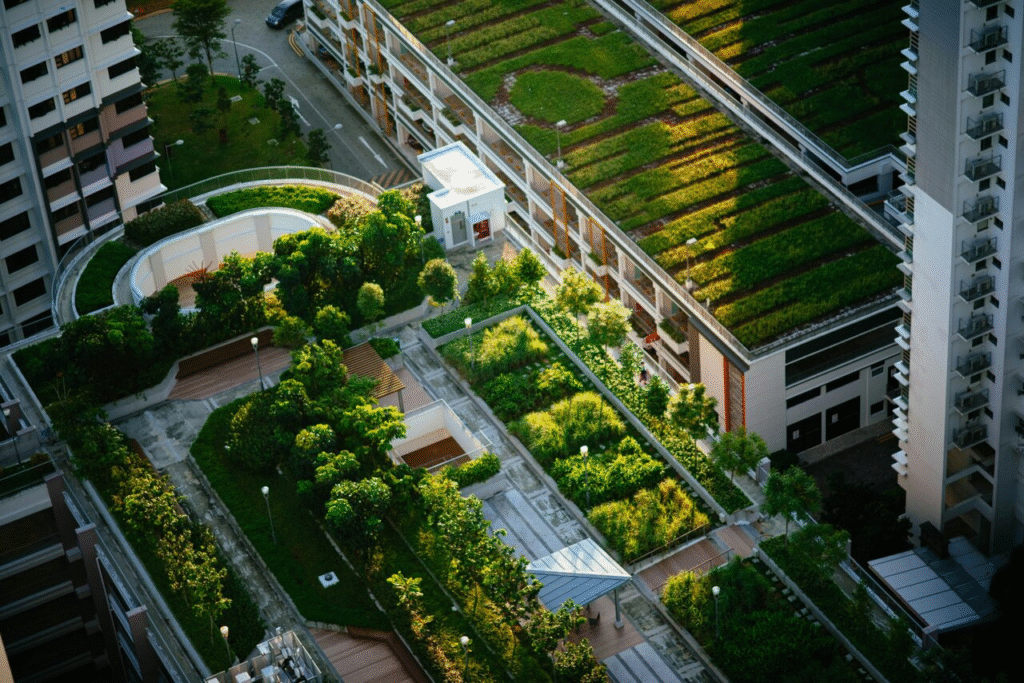
Energy efficiency is often the starting point for sustainable development. Reducing energy consumption lowers operating costs, decreases emissions, and increases property appeal to buyers and tenants.
Developers are implementing several strategies to achieve these goals.
High-Performance Building Design
Modern buildings are increasingly designed with energy performance in mind. Architects and engineers use modeling tools to optimize building orientation, insulation, and ventilation before construction begins.
Common design features include:
- High-performance windows and insulation
- Passive solar design
- Advanced HVAC systems
- Smart thermostats and building automation systems
These features help buildings maintain comfortable indoor temperatures while minimizing energy use.
Renewable Energy Integration
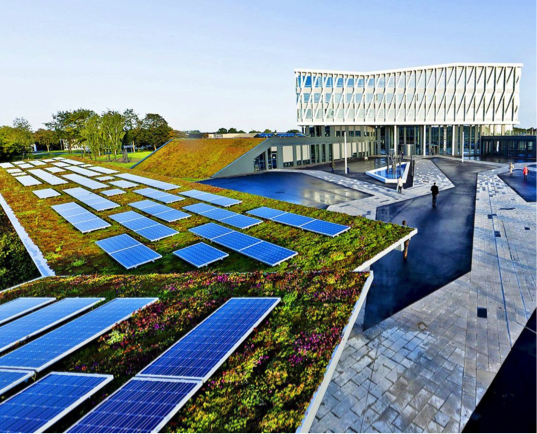
Solar panels are becoming a common addition to residential communities, office buildings, and industrial facilities across the United States.
Large-scale developments may also incorporate:
- Solar carports
- Community solar installations
- Battery energy storage systems
In some cases, renewable energy systems allow buildings to approach net-zero energy performance, meaning they generate as much energy as they consume annually.
Sustainable Materials and Responsible Construction
Another major component of sustainable real estate is the careful selection of construction materials.
Traditional building materials often carry high environmental costs due to extraction, manufacturing, and transportation processes. Developers are increasingly choosing alternatives that reduce these impacts.
Examples include:
- Recycled steel and reclaimed wood
- Low-carbon concrete
- Locally sourced materials
- Low-VOC paints and finishes
These materials help reduce construction-related emissions while improving indoor air quality for occupants.
Construction practices themselves are also evolving. Waste reduction strategies such as construction recycling programs allow developers to divert large volumes of material from landfills.
According to the Environmental Protection Agency (EPA), construction and demolition debris represents one of the largest waste streams in the United States. Recycling and reuse programs significantly reduce this environmental burden.
Water Conservation in Modern Real Estate Projects
Water conservation has become an increasingly important element of sustainable development, particularly in regions experiencing drought or water scarcity.
Modern buildings often include systems designed to reduce water consumption while maintaining usability and comfort.
Common water-saving strategies include:
- Low-flow plumbing fixtures
- Smart irrigation systems
- Rainwater harvesting
- Greywater reuse systems
In large residential communities, landscaping choices also play an important role. Developers frequently incorporate native plants and drought-tolerant landscaping, which require less irrigation than traditional lawns.
These strategies can significantly reduce operating costs while conserving valuable natural resources.
Smart Technology and Sustainable Building Management
Technology is transforming how buildings operate, enabling property managers to monitor energy use, water consumption, and building performance in real time.
Smart building systems use sensors and data analytics to optimize operations.
Examples include:
- Automated lighting systems that adjust based on occupancy
- Smart HVAC controls that respond to weather conditions
- Energy monitoring dashboards for property managers
These systems not only improve sustainability but also enhance tenant comfort and operational efficiency.
For example, commercial buildings equipped with advanced building management systems often see 10–20% reductions in energy use, according to studies from the U.S. Department of Energy.
Community-Centered Development
Sustainability in real estate extends beyond environmental performance. Many modern projects also emphasize community design and social sustainability.
Developers are increasingly incorporating features that support healthier, more connected communities.
These may include:
- Walkable neighborhoods
- Access to public transit
- Green spaces and parks
- Mixed-use development with retail and services nearby
Urban planners often refer to this approach as “placemaking.” By creating environments where people can live, work, and socialize within the same neighborhood, developers reduce transportation emissions while improving quality of life.
Master-planned communities across the United States increasingly adopt these principles to attract residents seeking balanced lifestyles.
Certifications and Standards for Sustainable Buildings
To demonstrate environmental performance, many real estate projects pursue third-party certifications. These programs provide measurable standards for sustainability.
Some of the most recognized certifications in the United States include:
- LEED (Leadership in Energy and Environmental Design)
- ENERGY STAR certification
- WELL Building Standard
- Living Building Challenge
LEED, developed by the U.S. Green Building Council, is one of the most widely used green building certification systems worldwide. Projects earn points across categories such as energy efficiency, water conservation, and sustainable materials.
These certifications help investors, buyers, and tenants identify buildings that meet recognized sustainability benchmarks.
Financial Benefits of Sustainable Real Estate Development
Sustainable development is often perceived as expensive, but research increasingly shows that environmentally responsible buildings can deliver strong financial returns.
Several factors contribute to these benefits.
Lower Operating Costs
Energy-efficient systems reduce electricity and heating expenses. Water-saving technologies also lower utility costs.
Higher Property Value
Studies from organizations such as CBRE and JLL suggest that green-certified buildings often command higher rental rates and sale prices.
Reduced Regulatory Risk
Many cities and states are introducing stricter energy codes and emissions targets. Sustainable buildings are better positioned to meet these future requirements.
Increased Investor Interest
Institutional investors increasingly prioritize ESG performance when evaluating real estate assets.
These factors make sustainability not only an environmental choice but also a strategic investment decision.
Challenges Developers Still Face
Despite clear advantages, sustainable real estate development is not without challenges.
Developers must navigate several obstacles when implementing environmentally responsible practices.
Common challenges include:
- Higher upfront construction costs
- Limited availability of certain sustainable materials
- Regulatory complexity across jurisdictions
- Need for specialized expertise in green design
However, as technology improves and sustainability becomes more widespread, many of these barriers are gradually decreasing.
Government incentives and tax credits also help offset some initial costs, particularly for renewable energy systems and energy-efficient construction.
Real-World Examples of Sustainable Real Estate
Across the United States, several projects demonstrate how sustainable practices are shaping modern development.
Hudson Yards in New York City, one of the largest private real estate developments in U.S. history, incorporates advanced energy systems, water recycling infrastructure, and extensive green spaces.
The Bullitt Center in Seattle is widely recognized as one of the greenest commercial buildings in the world, designed to meet the rigorous standards of the Living Building Challenge.
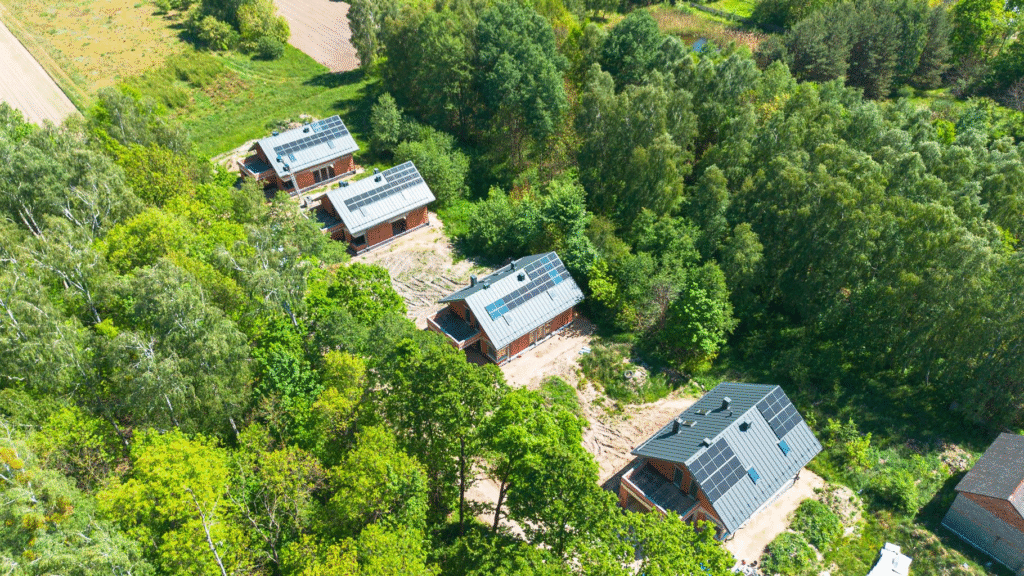
Many suburban residential communities are also adopting sustainable design principles, including solar-powered homes, energy-efficient appliances, and pedestrian-friendly layouts.
These projects illustrate how sustainability can be integrated into developments of many sizes and types.
Frequently Asked Questions
What is sustainable real estate development?
Sustainable real estate development refers to designing and constructing buildings in ways that minimize environmental impact while improving energy efficiency, resource conservation, and community well-being.
Why is sustainability important in real estate?
Sustainability helps reduce environmental impact, lower operating costs, and meet growing demand from buyers, tenants, and investors who prioritize environmentally responsible buildings.
Do sustainable buildings cost more to build?
Initial construction costs may be slightly higher, but many sustainable buildings deliver long-term savings through lower energy and maintenance expenses.
What are LEED-certified buildings?
LEED-certified buildings meet sustainability standards established by the U.S. Green Building Council, covering areas such as energy efficiency, water conservation, and indoor environmental quality.
How do sustainable buildings save energy?
They use advanced insulation, efficient HVAC systems, renewable energy sources, and smart building technologies to reduce energy consumption.
What role does technology play in sustainable buildings?
Smart building systems monitor energy use, control lighting and climate systems, and help optimize building performance.
Are sustainable homes more valuable?
Many studies suggest that energy-efficient homes and green-certified buildings can achieve higher resale values and rental rates.
What are the most common sustainable building materials?
Recycled steel, reclaimed wood, low-carbon concrete, and low-VOC finishes are widely used in sustainable construction.
How does sustainable development benefit communities?
It encourages walkable neighborhoods, green spaces, improved air quality, and reduced transportation emissions.
Is sustainable development becoming mandatory?
Many cities are introducing stricter building codes and emissions targets, making sustainability increasingly important for compliance.
Looking Ahead: The Future of Sustainable Real Estate
Sustainable development is no longer an optional feature of modern real estate—it is becoming a defining standard for responsible construction and long-term investment.
As environmental concerns grow and regulatory expectations evolve, developers are increasingly integrating sustainability into every phase of a project. Innovations in building technology, renewable energy, and urban design will likely continue shaping the next generation of residential, commercial, and industrial developments.
The most successful real estate projects of the coming decades will likely be those that balance financial performance with environmental stewardship and community well-being.
Key Insights at a Glance
- Buildings account for a large share of global energy consumption and emissions.
- Sustainable development focuses on energy efficiency, responsible materials, and water conservation.
- Smart building technologies improve operational efficiency and tenant comfort.
- Green certifications help validate sustainability performance.
- Sustainable buildings often achieve higher property values and lower operating costs.
- Community-focused design enhances livability and long-term development success.
 Robert Weber