


As retirement approaches, many Americans are focusing less on investment returns alone and more on how taxes could affect long-term income. Financial planners are increasingly helping clients use Roth conversions, tax-diversified accounts, capital gains planning, and withdrawal sequencing to reduce future tax burdens. These strategies are gaining attention because even small tax adjustments made before retirement can significantly influence retirement cash flow, healthcare costs, and estate planning outcomes.
Why Tax Planning Has Become a Bigger Retirement Conversation
For years, retirement planning in the United States centered primarily on saving enough money. But many Americans approaching retirement are now realizing that what matters just as much is how much of that money they actually keep after taxes.
Financial planners across the country are seeing a growing shift in client priorities. Instead of asking only whether they have enough saved in a 401(k), pre-retirees are increasingly asking:
- How much tax will I owe when I retire?
- Should I convert part of my IRA into a Roth account?
- How do taxes affect Social Security income?
- Can withdrawals increase Medicare premiums?
- Is there a better way to structure retirement income?
These questions have become more relevant because many retirees today hold a large percentage of their wealth in tax-deferred retirement accounts. Traditional 401(k)s and IRAs allowed contributions to grow tax-deferred for decades, but withdrawals are taxed as ordinary income later.
That means retirement can trigger unexpected tax exposure if withdrawals are not planned carefully.
According to data from the Investment Company Institute, Americans hold trillions of dollars inside tax-deferred retirement accounts. Financial planners are paying attention because future required withdrawals, changing tax laws, and longer retirements may create tax pressure that many households underestimate.
Why Many Financial Planners Are Encouraging “Tax Diversification”
Investment diversification has long been considered standard practice. Increasingly, planners are applying the same thinking to taxes.
Tax diversification refers to holding retirement assets across different tax categories:
- Tax-deferred accounts (Traditional IRA, 401(k))
- Tax-free accounts (Roth IRA, Roth 401(k))
- Taxable brokerage accounts
The goal is flexibility.
If all retirement income comes from tax-deferred accounts, retirees may have fewer options when managing annual taxable income. By spreading assets across different account types, retirees can potentially control how much taxable income they report each year.
For example, someone needing an additional $20,000 in retirement income could choose to withdraw:
- From a traditional IRA and pay income tax
- From a Roth IRA with no federal income tax
- From taxable investments using long-term capital gains treatment
That flexibility may help retirees:
- Stay within lower tax brackets
- Reduce taxes on Social Security benefits
- Avoid higher Medicare premium surcharges
- Improve long-term withdrawal efficiency
Financial planners are increasingly emphasizing that retirement tax planning is not only about minimizing taxes today. It is often about creating flexibility decades into retirement.
The Growing Popularity of Roth Conversions
One of the most discussed retirement tax strategies in recent years has been the Roth conversion.
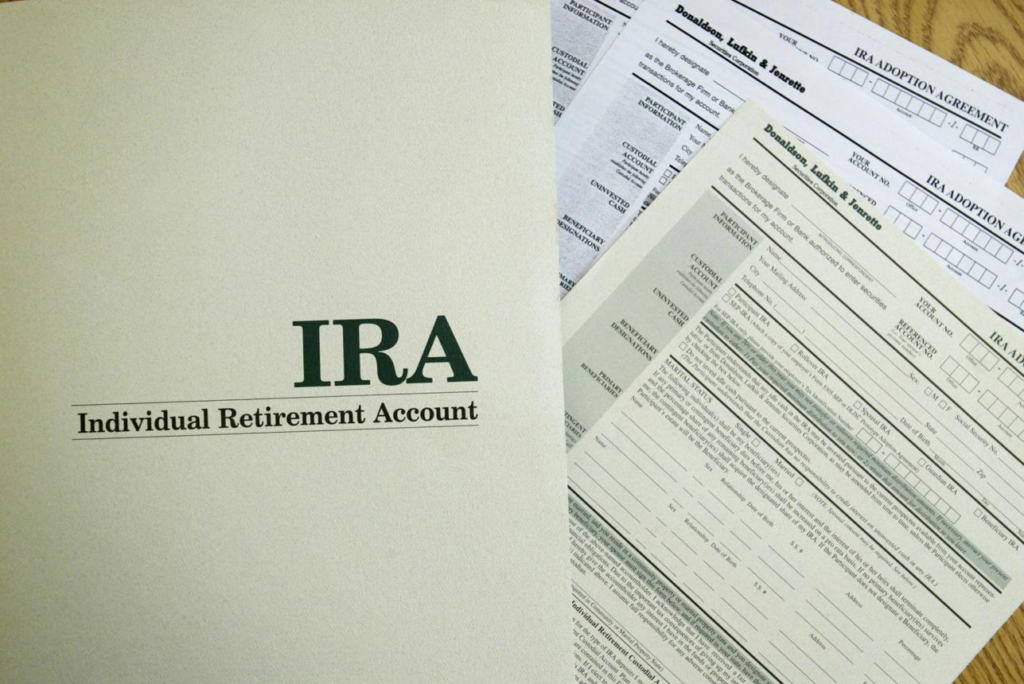
A Roth conversion involves moving money from a traditional IRA into a Roth IRA. Taxes are paid at the time of conversion, but future qualified withdrawals from the Roth account are generally tax-free.
Financial planners are paying close attention because many Americans are entering temporary low-income years before retirement. These years sometimes create strategic opportunities.
For example:
A 62-year-old professional retires early but delays Social Security benefits until age 67. During those five years, taxable income may temporarily fall. A planner may recommend gradually converting portions of a traditional IRA into a Roth IRA during that lower-income period.
The reasoning is straightforward:
Paying taxes at a moderate rate today may reduce larger taxable withdrawals later.
Several factors have increased interest in Roth conversions:
Lower Current Tax Rates
Current federal tax brackets established under the Tax Cuts and Jobs Act are scheduled to sunset after 2025 unless extended by Congress.
Some planners believe future tax rates could rise, particularly for middle- and upper-income households.
Required Minimum Distributions (RMDs)
Traditional retirement accounts eventually require mandatory withdrawals beginning at a certain age under IRS rules.
Large RMDs can push retirees into higher tax brackets even if spending needs remain modest.
Estate Planning Considerations
Roth accounts can provide tax advantages for heirs because qualified withdrawals remain tax-free.
However, Roth conversions are not automatically beneficial for everyone.
Potential drawbacks include:
- Higher current-year tax bills
- Increased Medicare premiums
- Effects on tax credits
- Higher state taxes in some locations
This is why planners often recommend multi-year conversion strategies instead of large one-time conversions.
How Withdrawal Sequencing Can Affect Retirement Taxes
One of the least understood retirement tax strategies involves withdrawal sequencing — the order in which retirees take money from various accounts.
Many retirees assume withdrawals are simple: take money as needed.
But the source of retirement income can dramatically influence annual taxes.
Consider two retirees with identical spending needs but different withdrawal approaches.
One withdraws primarily from traditional retirement accounts, triggering taxable income. Another combines smaller IRA withdrawals with Roth funds and taxable investment accounts.
Even with the same spending level, their tax outcomes may look very different.
Financial planners often evaluate:
- Which accounts to tap first
- Whether to delay Social Security
- How capital gains affect taxes
- Whether large purchases should come from Roth funds
- How charitable giving strategies interact with withdrawals
These decisions can influence:
- Federal taxes
- State taxes
- Medicare IRMAA surcharges
- Taxation of Social Security benefits
For households with substantial retirement savings, withdrawal sequencing can become one of the most impactful retirement planning variables.

Why Medicare Premiums Have Become Part of Tax Planning
Many Americans are surprised to learn that Medicare premiums can increase based on income.
Under Medicare IRMAA rules (Income-Related Monthly Adjustment Amount), higher-income retirees may pay significantly more for Medicare Part B and Part D coverage.
Financial planners increasingly monitor taxable income carefully because certain actions can unintentionally trigger premium increases, including:
- Large Roth conversions
- Capital gains realizations
- Property sales
- Large IRA withdrawals
For example, a retiree selling appreciated investments during the same year as a sizable Roth conversion may unknowingly cross IRMAA thresholds.
The result may not appear immediately because Medicare calculations typically use income from two years earlier.
This delayed effect is one reason planners are placing greater emphasis on multi-year tax forecasting rather than annual tax filing alone.
The Rising Importance of Capital Gains Planning
Tax planning before retirement increasingly extends beyond retirement accounts.
Many Americans now hold significant assets in taxable brokerage accounts due to long bull markets and rising home values.
Capital gains planning has become an important conversation because investment sales can create varying tax consequences depending on timing and income levels.
Some retirees intentionally realize gains during lower-income years to take advantage of favorable long-term capital gains rates.
Others strategically harvest losses to offset gains.
Financial planners may also evaluate:
- Whether appreciated assets should be gifted
- Which investments are most tax-efficient
- Whether municipal bonds fit retirement income goals
- How dividends affect taxable income
For retirees balancing multiple income streams, even relatively small adjustments can affect overall tax efficiency.
Why More Americans Are Delaying Social Security Benefits
Although Social Security timing is often viewed primarily as an income decision, tax planning has become a major factor as well.
Delaying Social Security can create several potential planning opportunities:
- More years for Roth conversions
- Lower taxable income during early retirement
- Larger guaranteed monthly benefits later
- Reduced pressure on portfolio withdrawals later in life
For married couples, coordination becomes especially important.
In some cases, planners help couples structure withdrawals strategically so that Social Security income begins after certain tax-planning windows are fully utilized.
This does not mean delaying benefits is always best. Health, longevity expectations, employment plans, and cash flow needs still matter significantly.
But tax flexibility has become an increasingly important piece of the Social Security conversation.
Estate Planning Is Becoming More Tax-Aware
Recent legislative changes have altered how inherited retirement accounts are treated.
Under provisions associated with the SECURE Act, many non-spouse beneficiaries must now withdraw inherited retirement accounts within 10 years.
That can accelerate taxable income for heirs.
As a result, some retirees are reevaluating:
- Roth conversion strategies
- Charitable giving plans
- Trust structures
- Beneficiary designations
- Lifetime gifting approaches
Financial planners are increasingly coordinating with estate attorneys and CPAs to align retirement tax strategies with legacy planning goals.
This integrated approach has become more common among upper-middle-income households, not only ultra-wealthy families.

Common Retirement Tax Mistakes Financial Planners Frequently See
Even financially responsible savers sometimes overlook retirement tax risks.
Some of the most common issues include:
Waiting Too Long to Plan
Many households begin retirement tax planning only after retiring. By then, certain opportunities may already be limited.
Over-Concentrating in Tax-Deferred Accounts
Heavy dependence on traditional retirement accounts can reduce future flexibility.
Ignoring State Taxes
State retirement taxation varies significantly across the U.S.
Triggering Unnecessary Medicare Surcharges
Unexpected taxable income spikes can raise healthcare costs.
Forgetting About Widow’s Penalty Risks
When one spouse dies, the surviving spouse may face higher tax rates filing as a single taxpayer.
Assuming Tax Rates Will Stay Constant
Future tax policy remains uncertain, especially as federal deficits grow.
Financial planners increasingly emphasize scenario modeling rather than relying on a single assumption about future tax conditions.
Frequently Asked Questions
What is the most common tax strategy before retirement?
Many planners currently focus on Roth conversions, tax diversification, and strategic withdrawal planning.
At what age should retirement tax planning begin?
Many experts recommend beginning serious retirement tax planning in your 50s, though earlier planning can provide more flexibility.
Are Roth conversions always beneficial?
No. Roth conversions can increase short-term taxes and may not benefit everyone equally.
How do taxes affect Social Security benefits?
Depending on total income, a portion of Social Security benefits may become taxable under federal rules.
Can retirement withdrawals increase Medicare premiums?
Yes. Higher taxable income can trigger IRMAA surcharges for Medicare Part B and Part D.
What is tax diversification?
Tax diversification means holding assets across taxable, tax-deferred, and tax-free account types.
Why do financial planners focus on withdrawal sequencing?
Different withdrawal sources create different tax consequences.
Are state taxes important in retirement planning?
Very important. Some states tax retirement income heavily while others provide exemptions.
What are required minimum distributions?
RMDs are mandatory withdrawals from certain retirement accounts beginning at specific ages under IRS rules.
Should retirees work with both a CPA and a financial planner?
For many households, coordinated planning between tax professionals and financial planners can improve long-term outcomes.
The Retirement Window Many Americans Are Starting to Reevaluate
One of the most significant shifts happening in retirement planning is the recognition that the years immediately before retirement may offer unique tax-planning opportunities.
Financial planners are paying attention because those transition years can create rare flexibility:
- Income may temporarily decline
- Social Security may not have started yet
- RMDs may still be years away
- Investment withdrawals can be managed strategically
For many Americans, retirement is no longer viewed simply as a savings milestone. It is increasingly becoming a tax-management phase that may last decades.
That shift is changing how planners structure portfolios, withdrawals, estate plans, and retirement income strategies across the country.
Key Insights Worth Remembering
- Retirement tax planning now extends far beyond annual tax filing
- Roth conversions remain one of the most discussed pre-retirement strategies
- Tax diversification can improve long-term flexibility
- Withdrawal sequencing may significantly affect retirement income efficiency
- Medicare premiums are increasingly tied to tax planning decisions
- Capital gains management plays a growing role in retirement preparation
- Social Security timing often intersects with broader tax strategies
- Estate planning and retirement taxes are becoming more connected
- Multi-year planning is replacing short-term tax thinking
- Financial planners are increasingly using integrated tax forecasting models